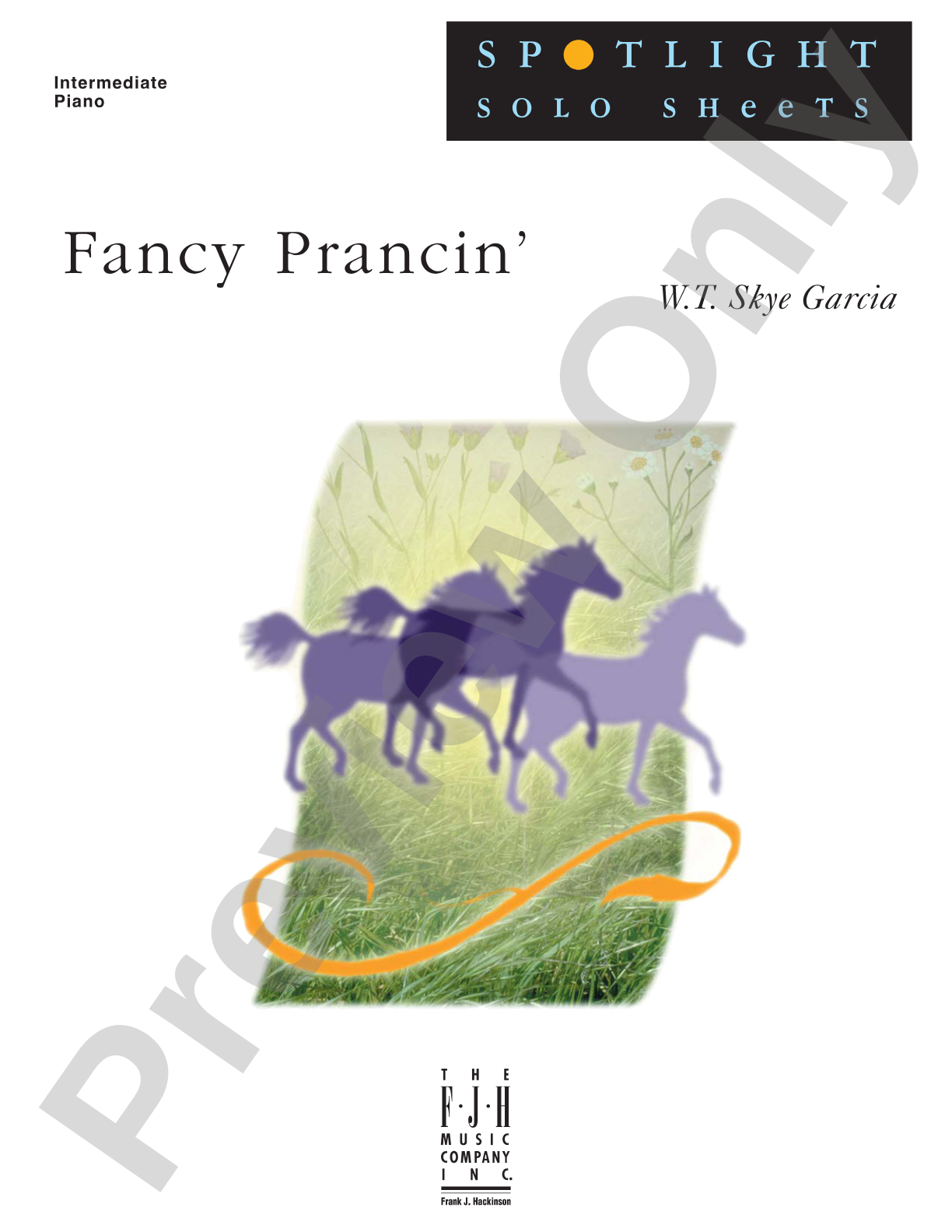
Garcia nails the balance between technical purpose and genuine musicality here. Students drill arpeggios and slurs because the piece itself demands precision and spirit, not because they're slogging through exercises. That's the mark of smart intermediate writing.
What to expect
Prancing suggests motion and playfulness, and this piece delivers exactly that. Bright harmonies and bouncing rhythms create forward momentum, while the precision required keeps everything crisp and controlled rather than meandering.
Who it's for
Intermediate pianists ready to apply technical work in a musical context. This suits students who respond well to character pieces that disguise their pedagogical spine and those preparing for recitals who want something spirited without heavy romantic demands.
How to get the most out of it
Shape the right-hand arpeggios with clear trajectory. Each one should feel like it's climbing or descending with intention, not just running through the notes.
Keep the left-hand slurs smooth and connected; they anchor the playfulness without dragging. Think of them as gentle, bouncing steps.
Maintain the bright character by staying rhythmically crisp in the right hand while keeping those left-hand figures singing underneath.
How to use it
This works beautifully in a student recital as a lighter palate-cleanser between heavier works or as an opener that catches the audience's attention immediately. Its moderate length and cheerful character also make it ideal for informal performance settings, competitions, or studio showcase events where personality matters as much as polish.
Skills your students will build
Right-hand arpeggio fluency and evenness
Two-note legato slurs in the left hand
Musical interpretation of character pieces
Balance between technical precision and interpretive expression
Rhythmic clarity at moderate tempo
You May Also Like
Scan to Complete Your Purchase
Use your phone's camera to scan the code below
You'll log in on your phone and the order will be added to your account