
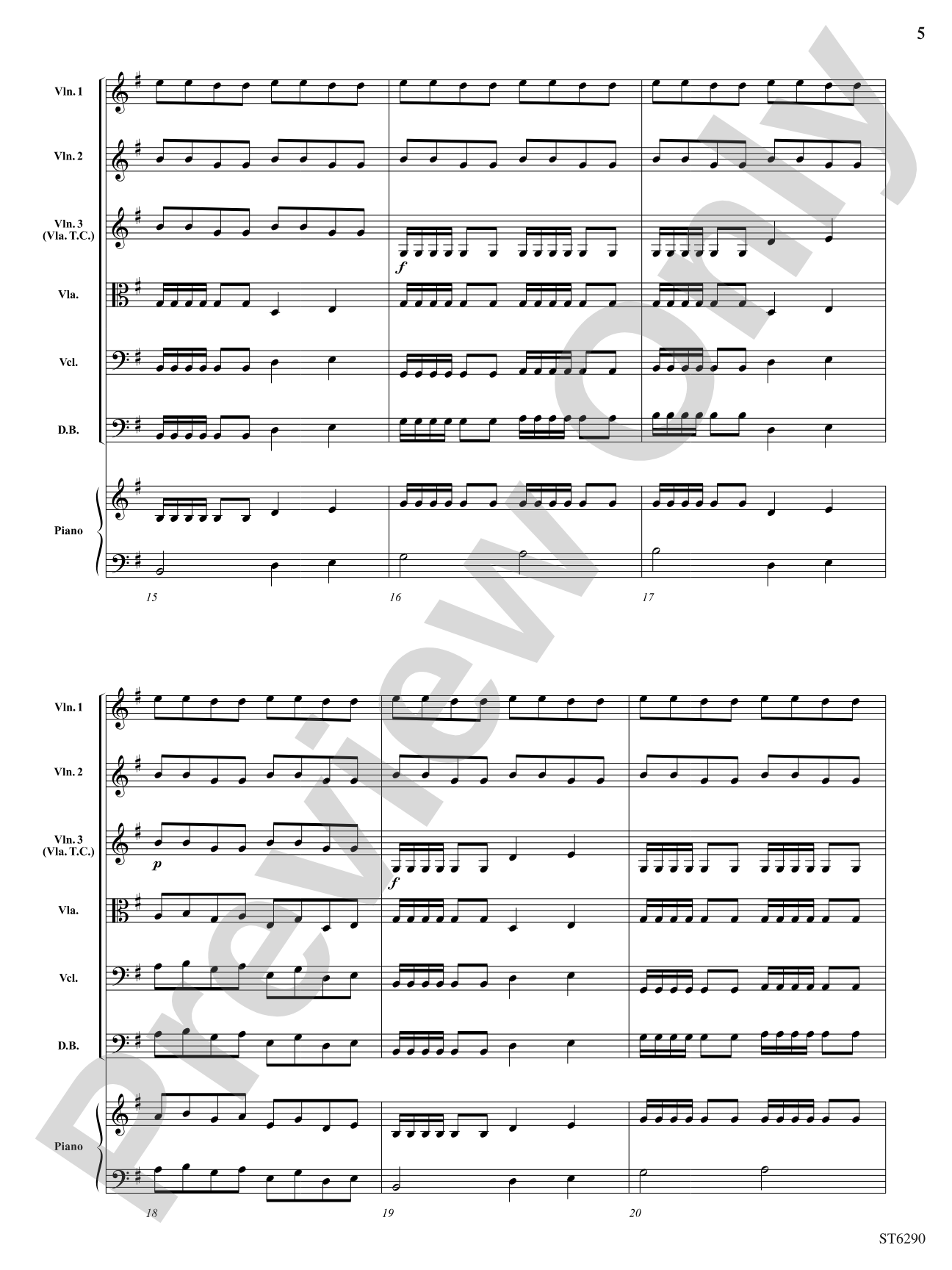
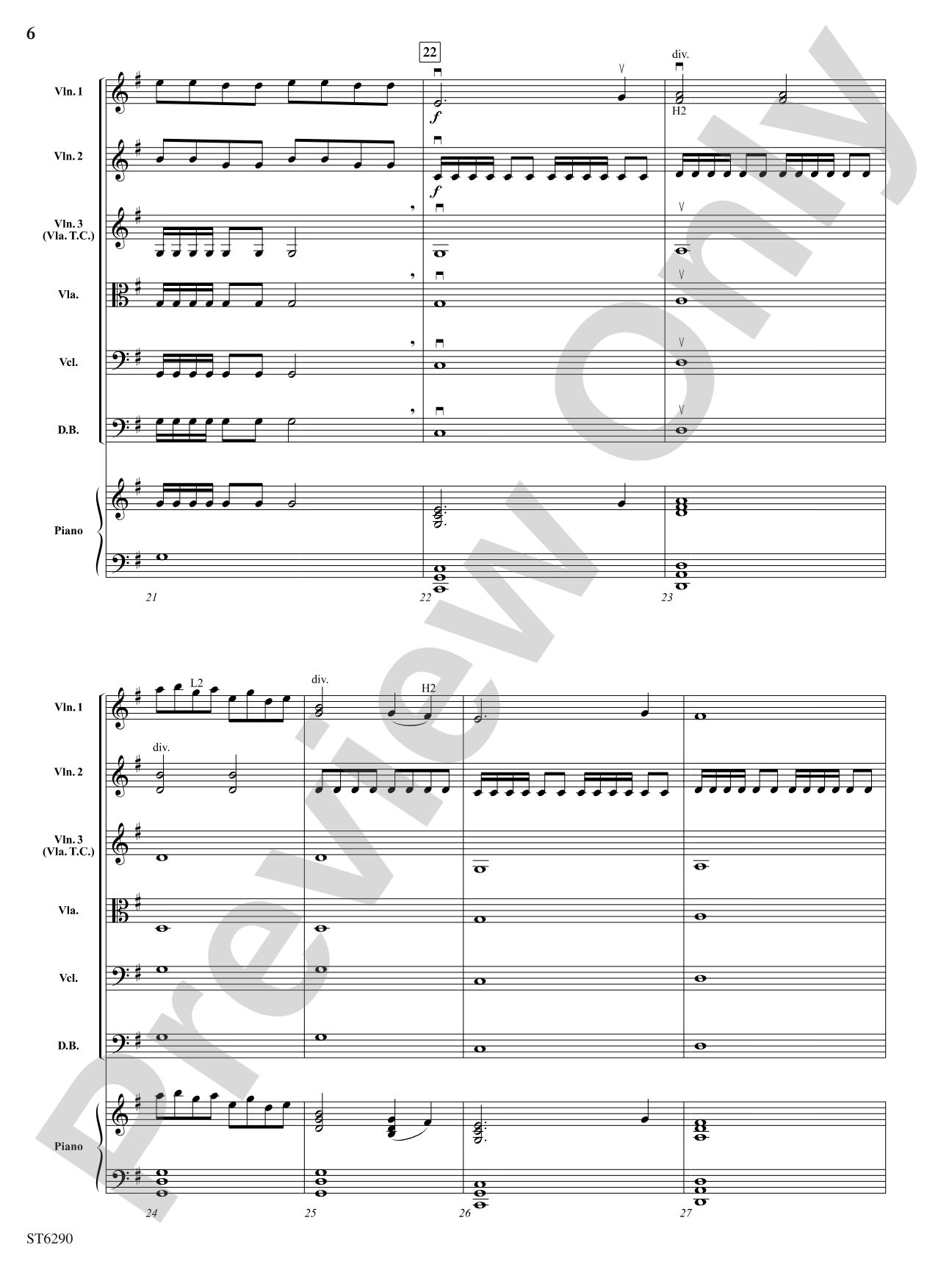
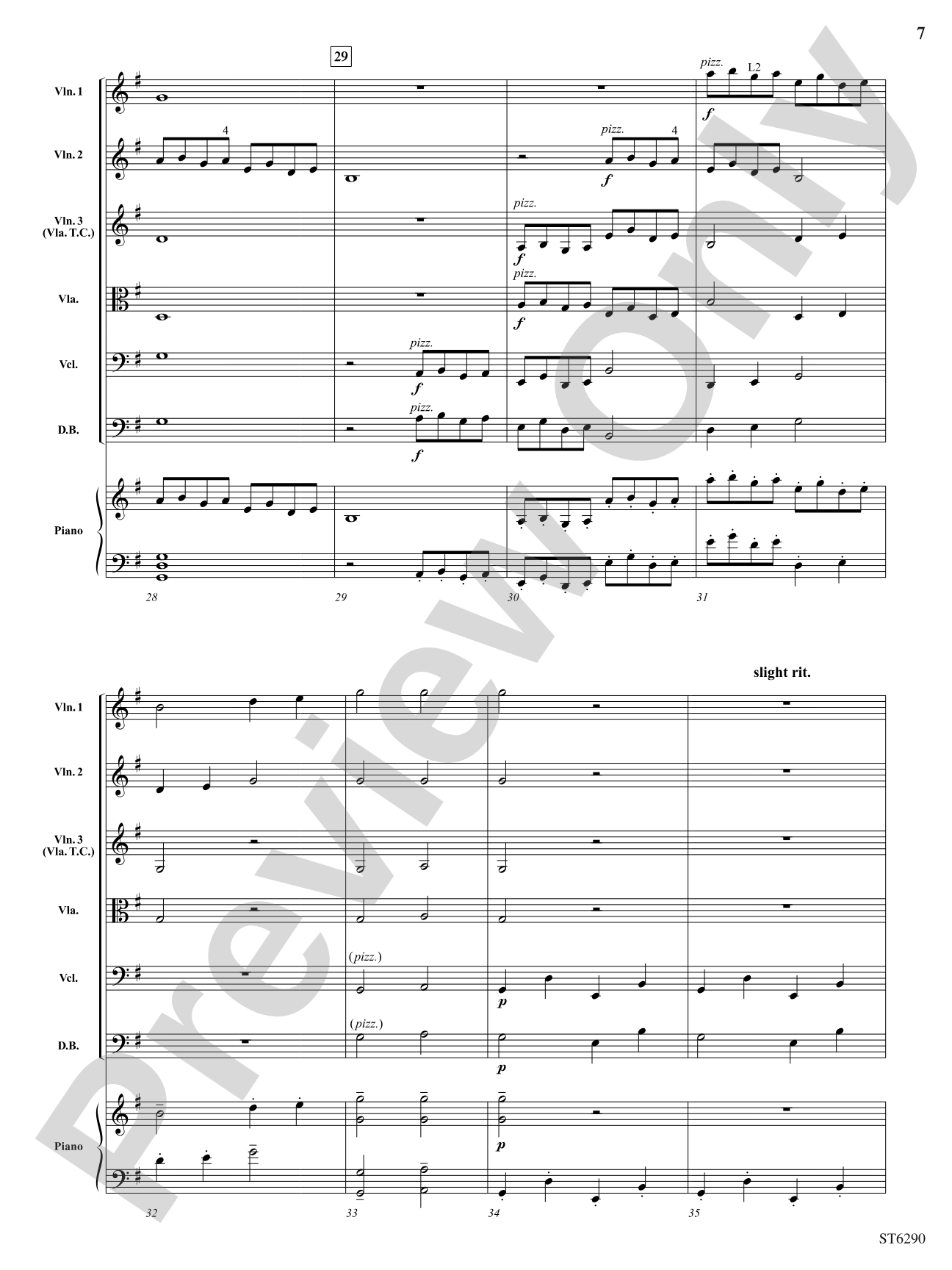
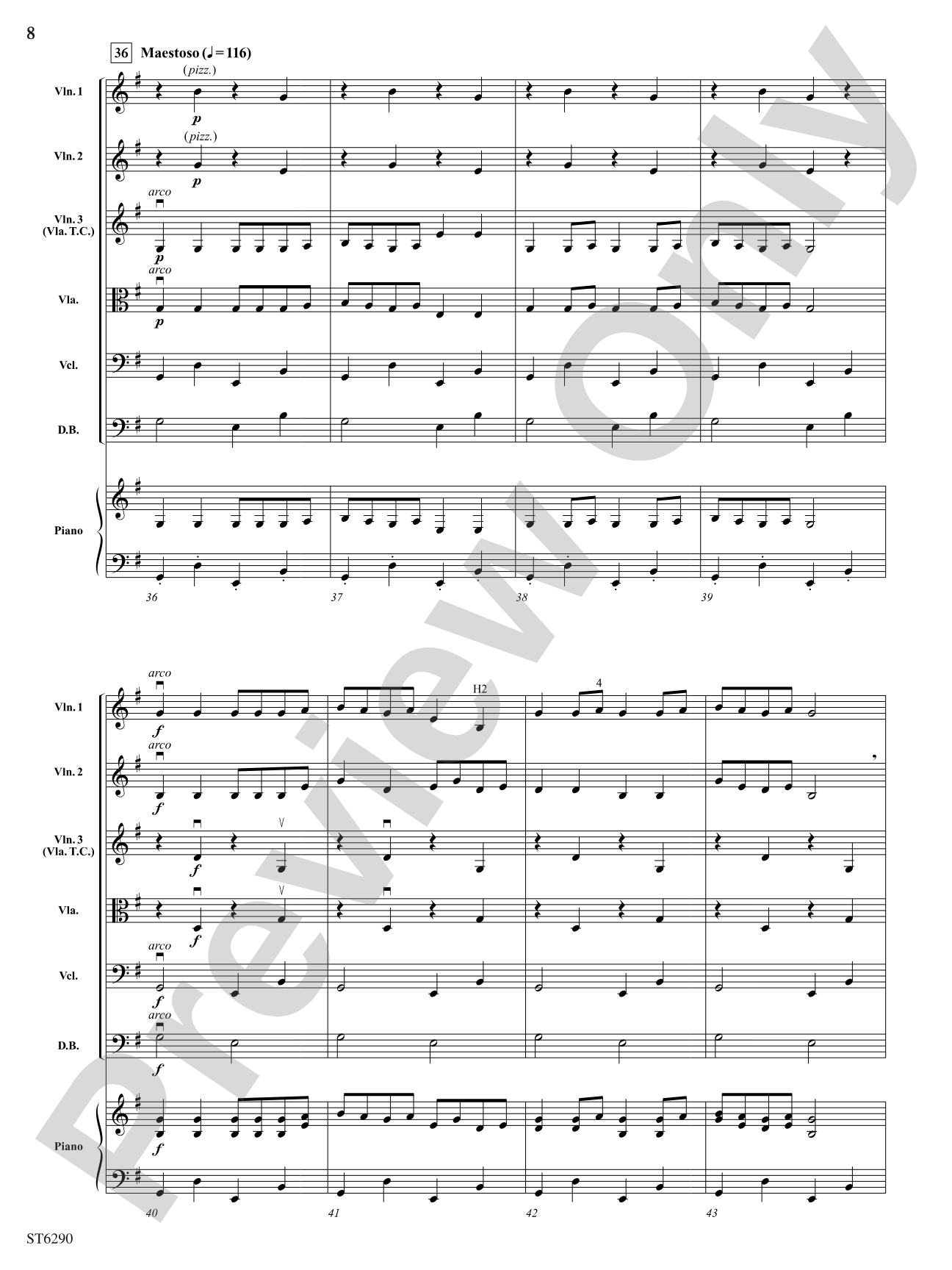

Fan Dance: Score
By Soon Hee Newbold
Grade: 2
Item: 98-DST6290S
$11.00
Pickup currently not available
Description
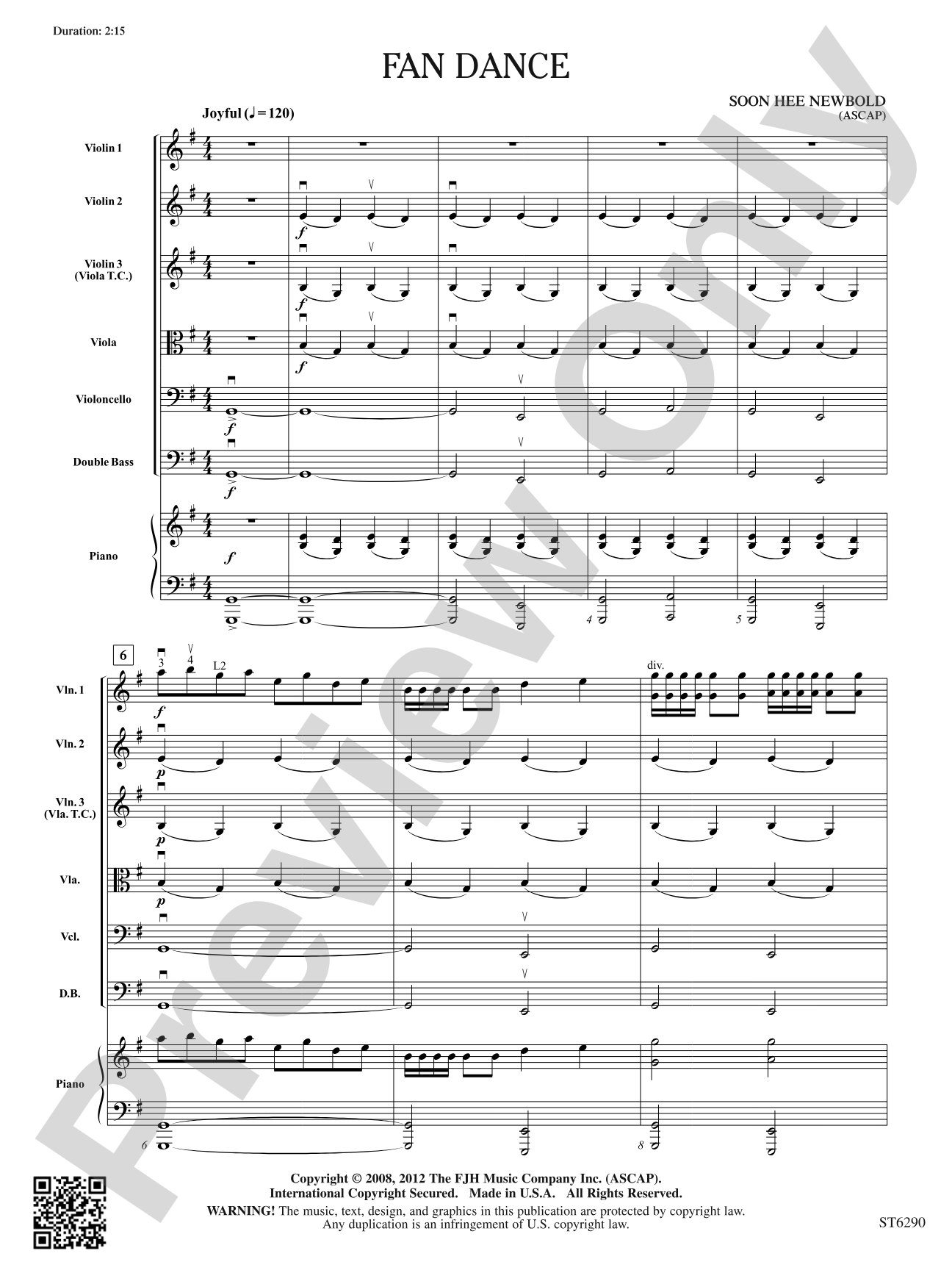
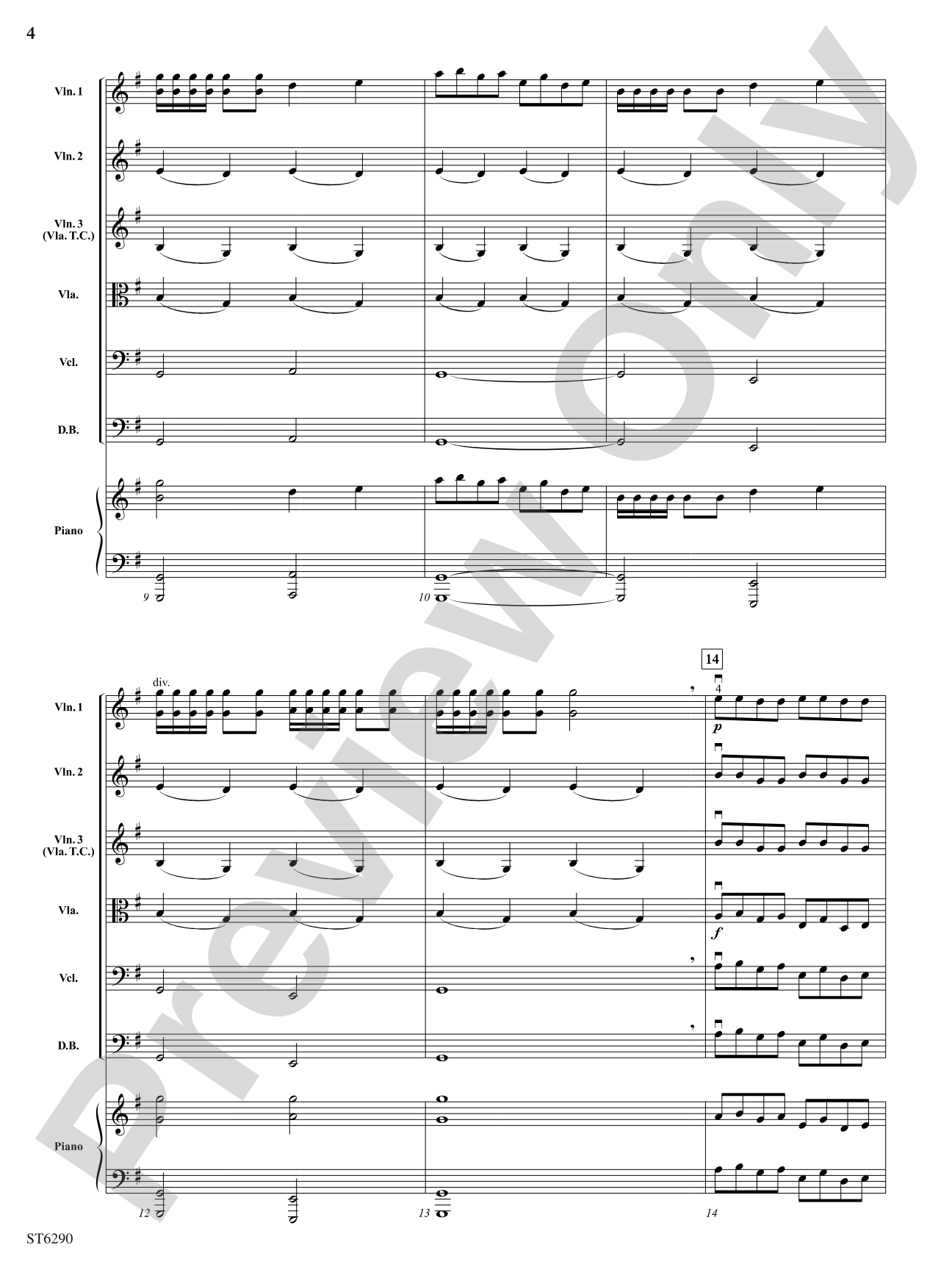
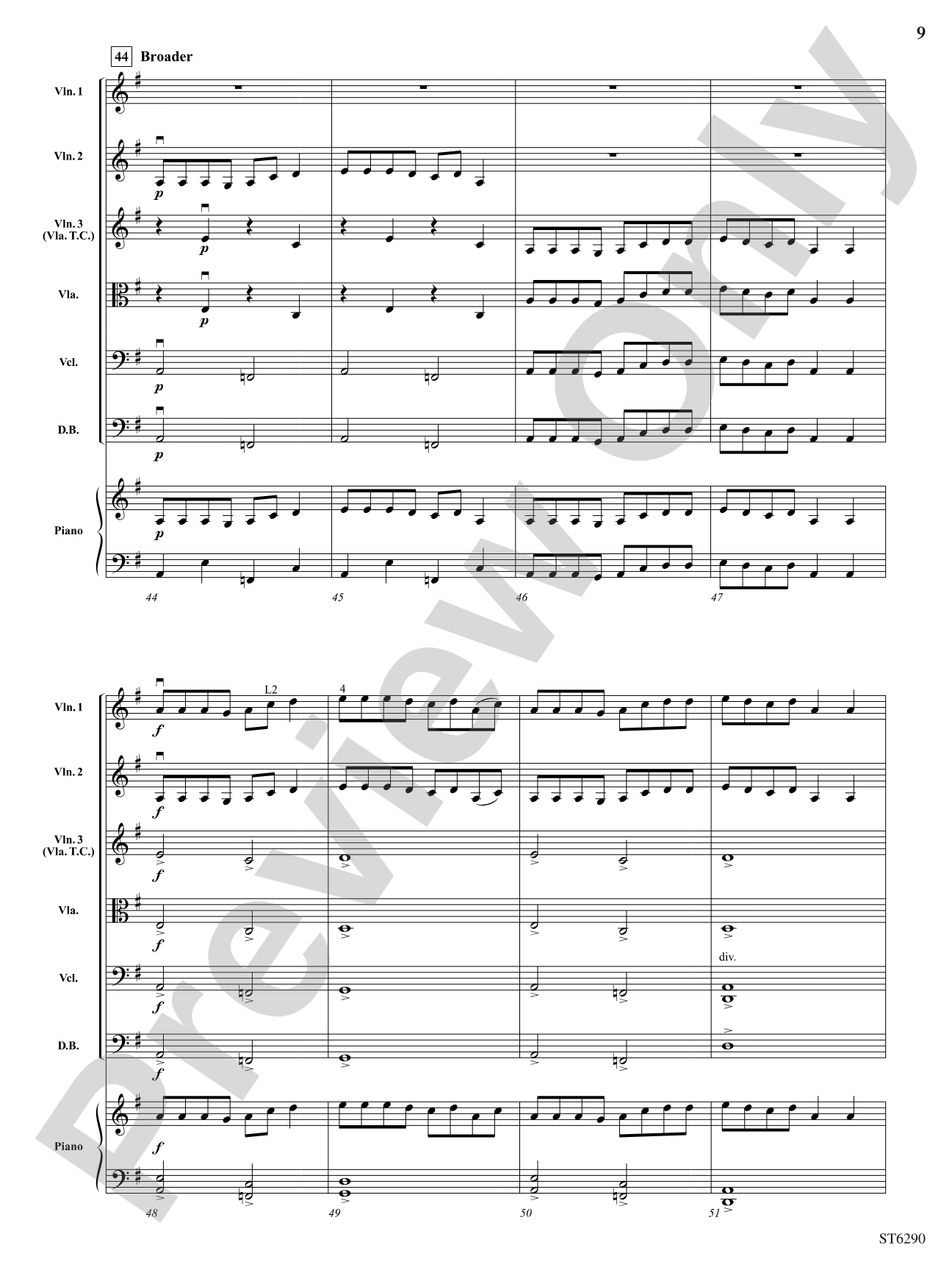
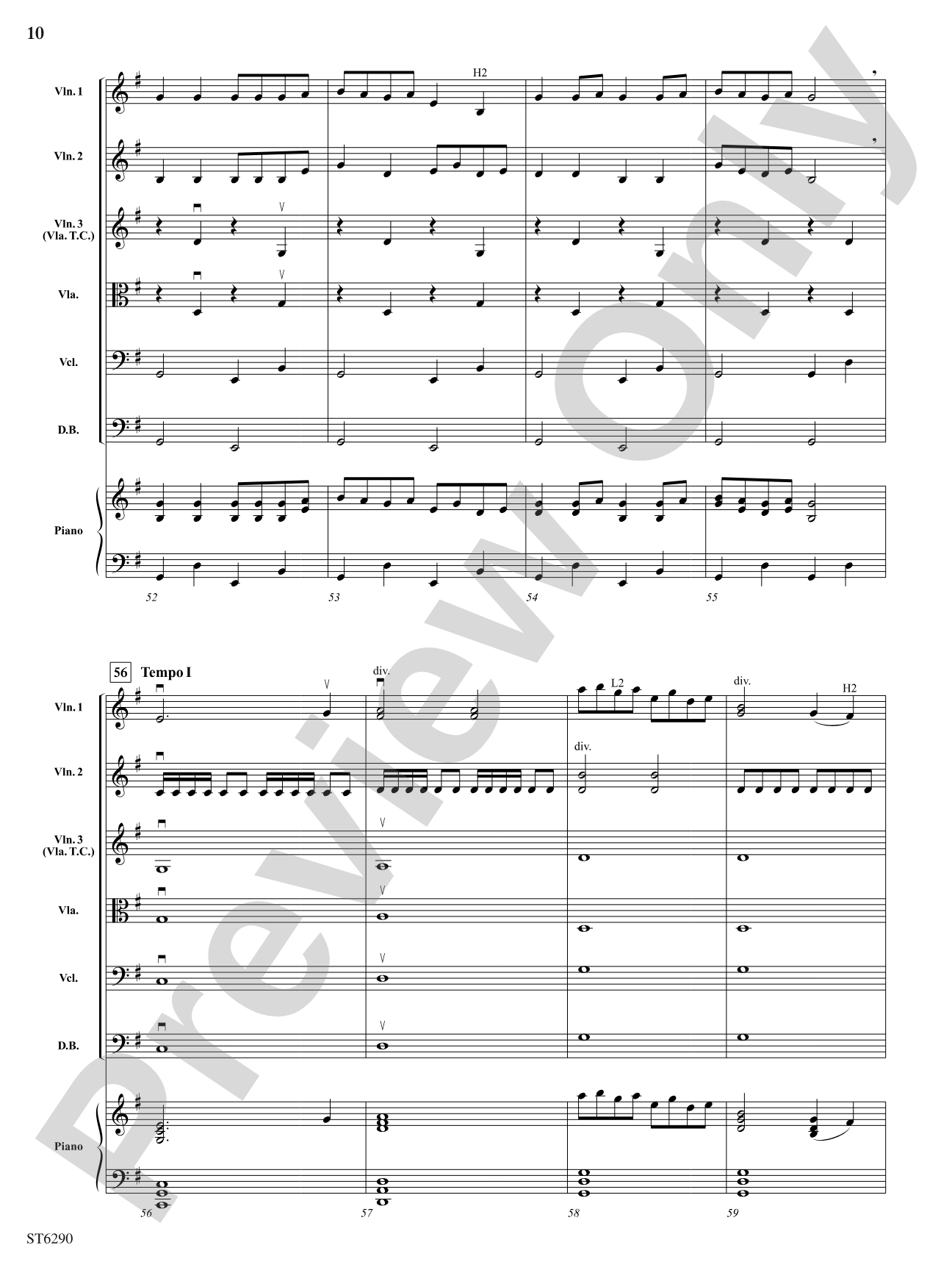
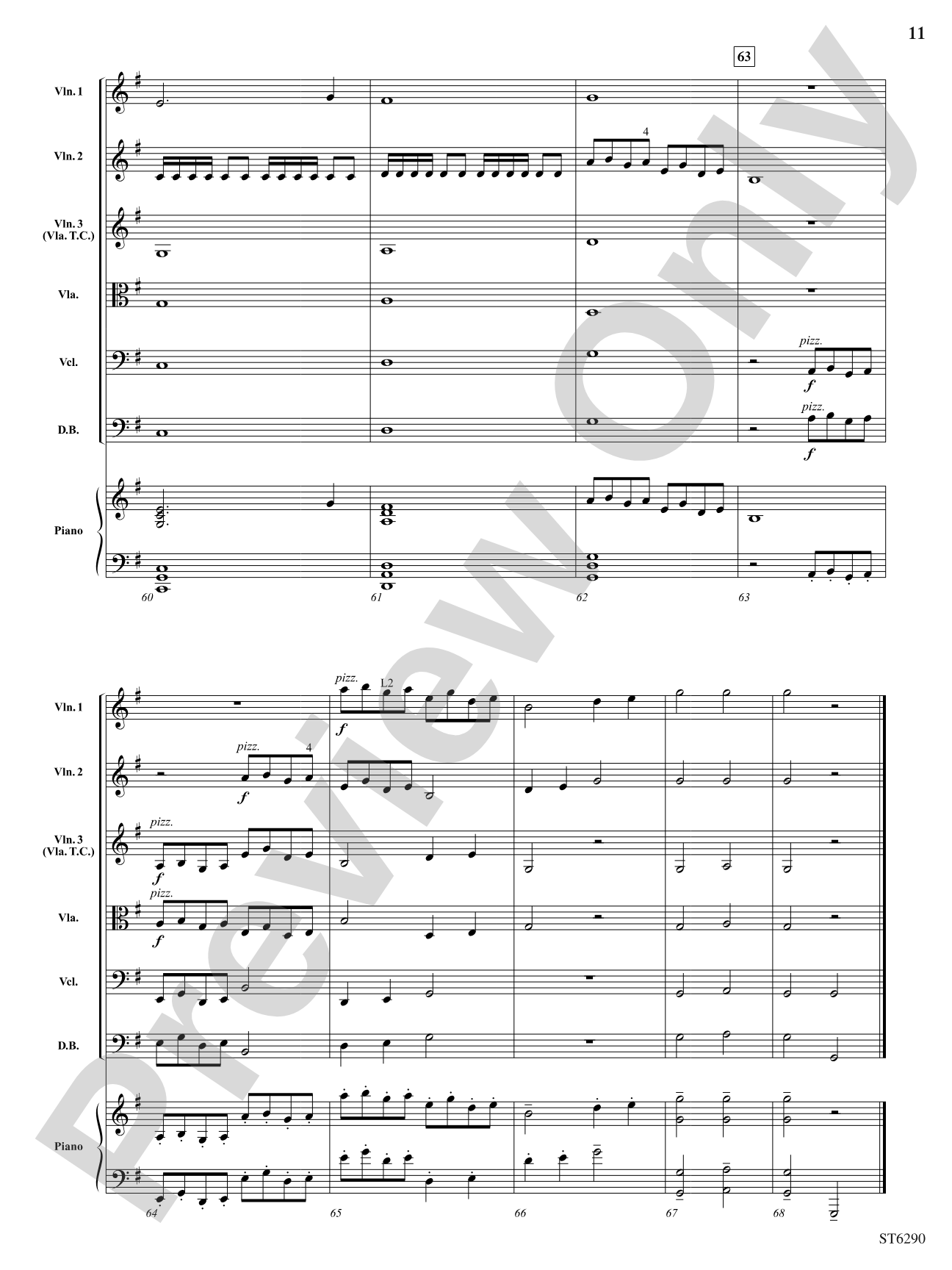
Enjoy the spectacular colors of a fan dance, invoking pictures of bright kimonos and the graceful movements of Japanese dancers. This is a great piece to focus on staccato or spiccato bowing while also utilizing some low 2 fingerings in first violins. The melody travels to each voice in the orchestra and pizzicato adds the authentic feel of traditional instruments. A unique and lovely addition to round out any program.


Don't just read it, hear it, play along with it, and watch your students grow with it. In MakeMusic Cloud, Fan Dance: Score comes alive with professional accompaniment, adjustable tempo, and built-in practice tools that turn solo practice into real progress.
Open in the Player
Jump straight in and assign it today.
Start Your Free Trial
Open this title and explore the full library in minutes.
Sample Audio
1
Audio File
--:--
0:00
0:00
Sample Video
No sample videos found.
Additional Details
Series:
FJH Developing Strings
Publisher:
The FJH Music Company, Inc.
SKU:
98-DST6290S
More about this title
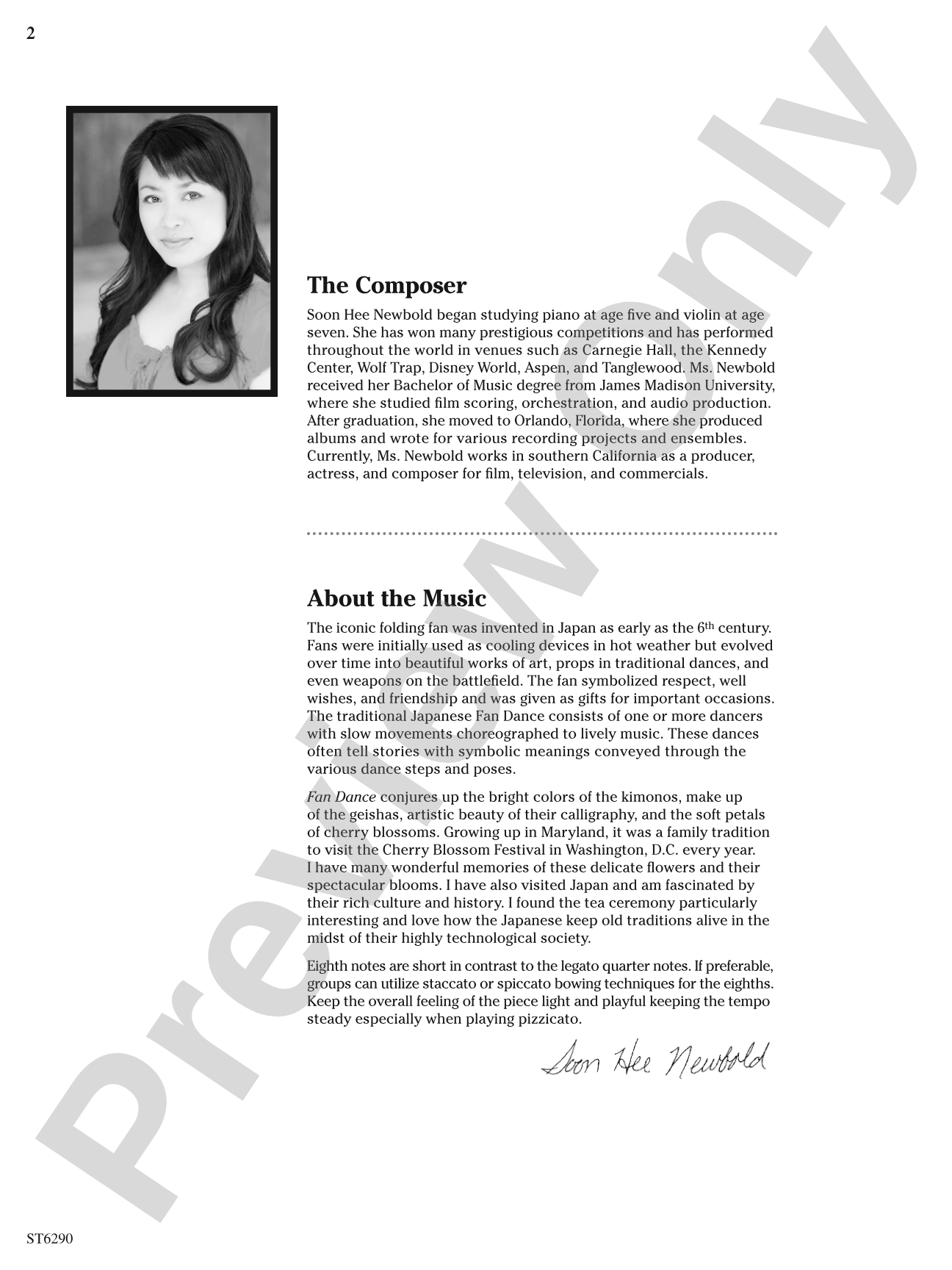
About the Composer: Soon Hee Newbold

Soon Hee Newbold draws on her multicultural background and global performance experience to create works that bridge classical traditions with world music influences. Beginning piano studies at age five and violin at seven, she developed into a concert artist who performed with professional ensembles internationally. Her compositional voice reflects decades of conducting and collaborating with orchestras and bands across the United States, Europe, Asia, and beyond.
Newbold's music appears regularly on stages from Carnegie Hall and the Kennedy Center to the Midwest Band and Orchestra Clinic, performed by ensembles at every developmental level. Beyond concert music, she has composed for film and recording projects in Hollywood. As a keynote speaker and guest clinician, she brings firsthand insight into the pedagogical and artistic challenges music educators face.
Why we love this
This piece captures the visual and sonic essence of Japanese dance without resorting to superficial exoticism. Newbold's orchestration ensures the melody passes through every section, keeping all students engaged while the combination of staccato bowing, pizzicato effects, and first position fingering work creates authentic color at a Grade 2 level. Directors will appreciate how naturally the technical demands integrate with musical storytelling.
What to expect
Graceful and shimmering, with the bright flutter of staccato notes and the delicate snap of pizzicato creating a dreamlike quality. The melody floats between instruments like fabric in motion, evoking the flowing sleeves and deliberate gestures of traditional dance.
Who it's for
Grade 2 string orchestras ready to expand their technical palette beyond basic bowing patterns. This piece works equally well for ensembles developing confidence in shifting registers and learning to shape longer melodic phrases across an orchestral texture.
How to get the most out of it
- Establish the staccato articulation early in sectional rehearsals. Have strings practice the stroke separately from the pizzicato sections to build clean separation and control.
- Balance the pizzicato passages carefully so they support rather than overshadow the bowed melody. This helps maintain the piece's delicate character.
- Highlight the melodic journey as it passes between sections. Mark entrances clearly in parts so students recognize when their voice carries the primary line.
- Experiment with tone color when the melody shifts. A slightly warmer, more singing approach to upper strings and a lighter touch in lower voices will enhance the contrast.
How to use it
Program this as a cultural bridge piece that pairs naturally with Western repertoire on the same concert. Its moderate length and accessible charm make it ideal for spring pops concerts or young people's orchestral events where you want to highlight musical diversity without overwhelming newer players.
Skills your students will build
- Staccato and spiccato bowing articulation and control
- Low second finger positions in first violin
- Pizzicato technique with rhythmic accuracy
- Following a melody as it travels between sections
- Listening for balance and tonal blend when melody passes to different voices