

Famous & Fun Favorites, Book 3: 13 Appealing Piano Arrangements: Piano
13 Appealing Piano Arrangements
Arranged by Carol Matz
Level: Elementary / Late Elementary
Item: 00-PB-0000856
$7.99
Pickup currently not available
Related Items
Famous & Fun Favorites, Book 3: Piano Book |
$7.99
|
View |
Description
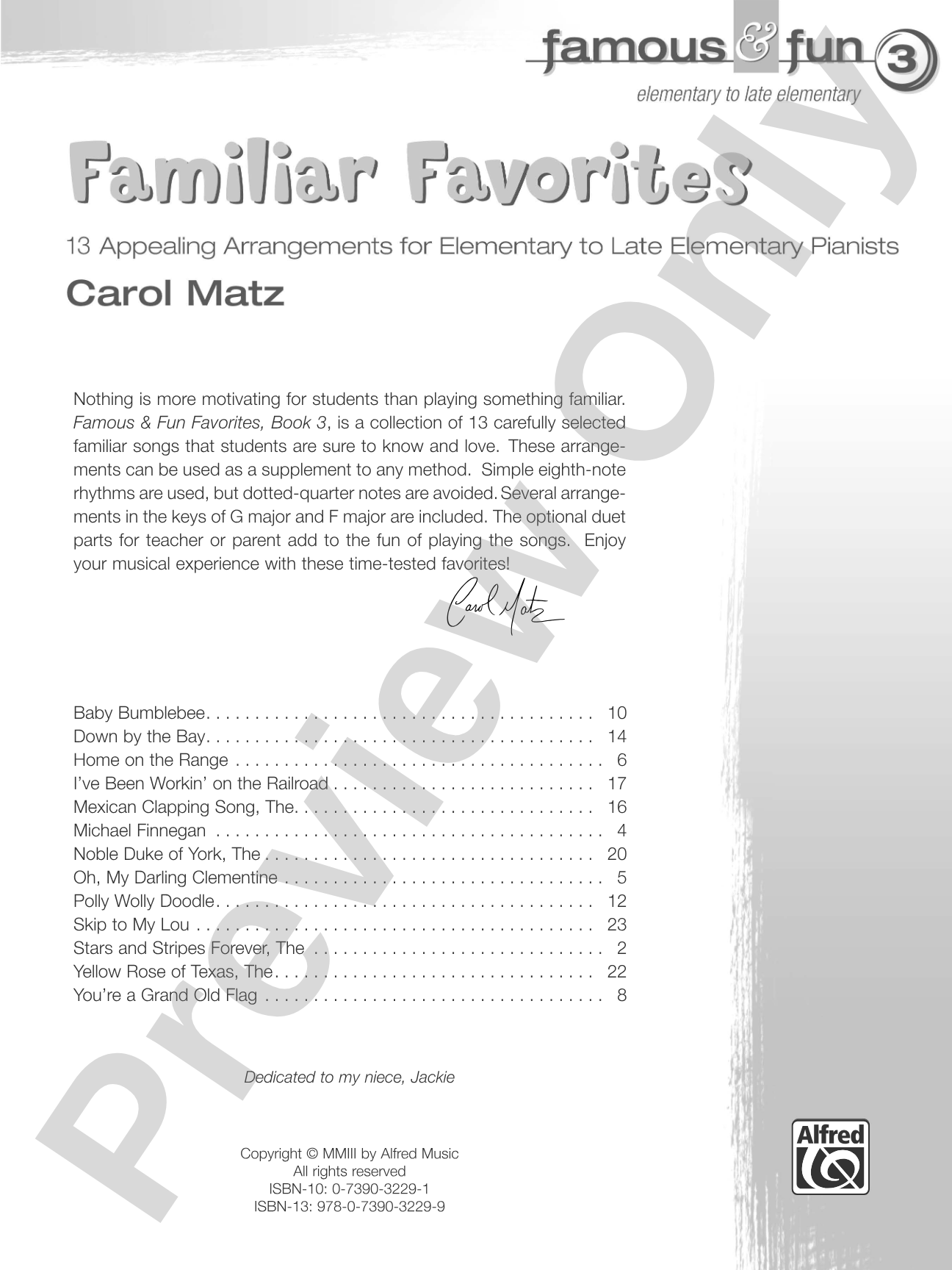
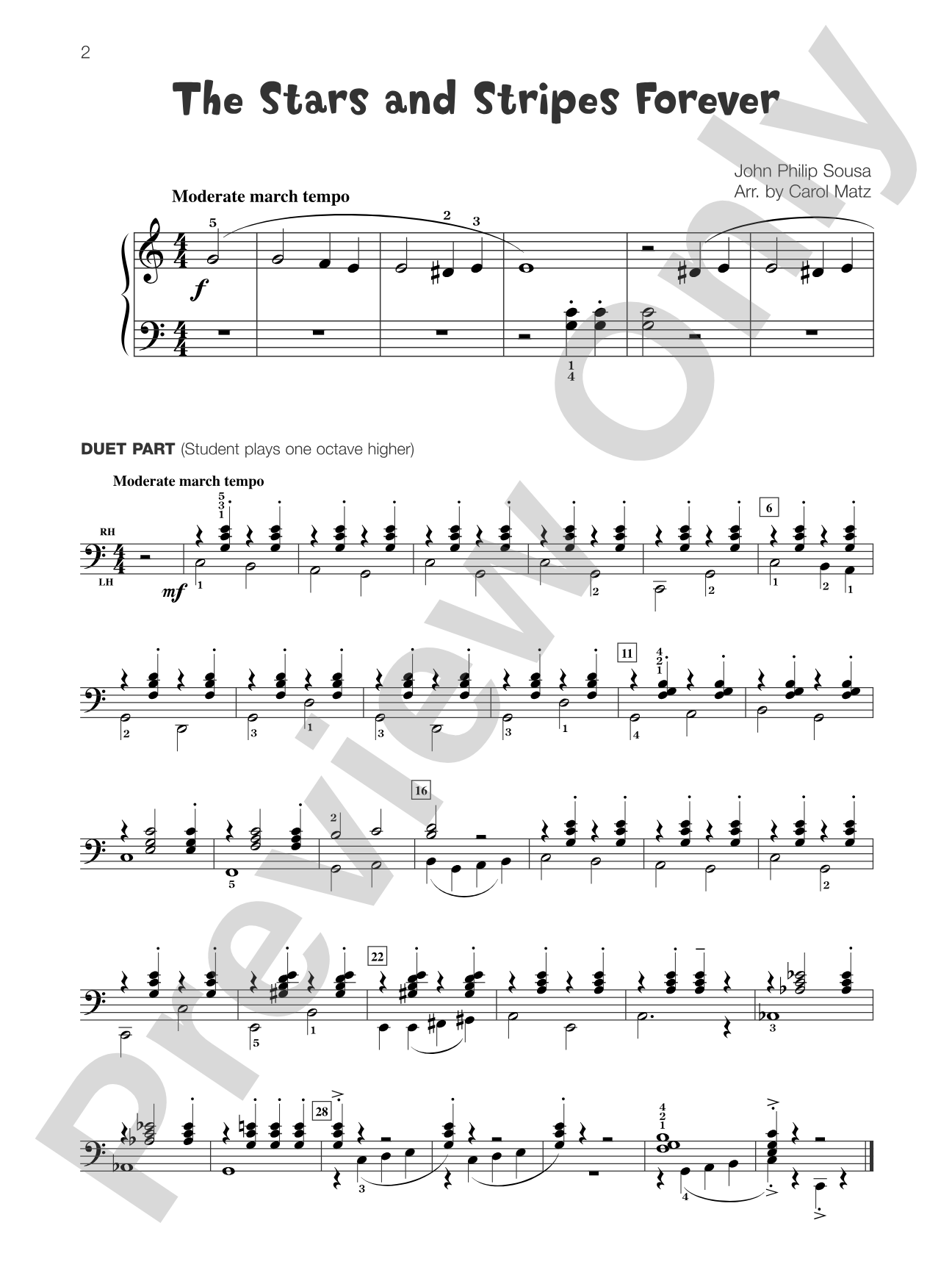
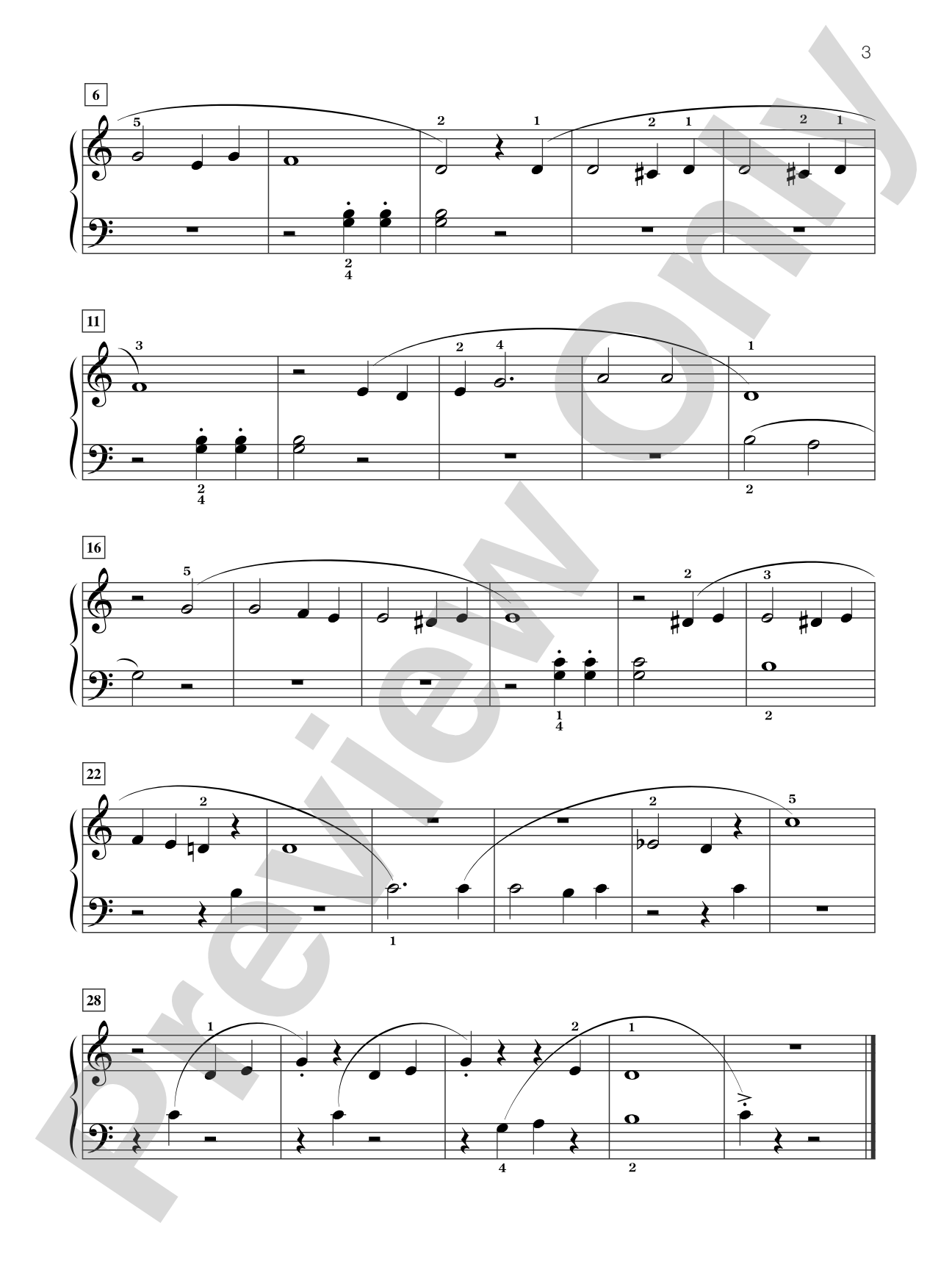
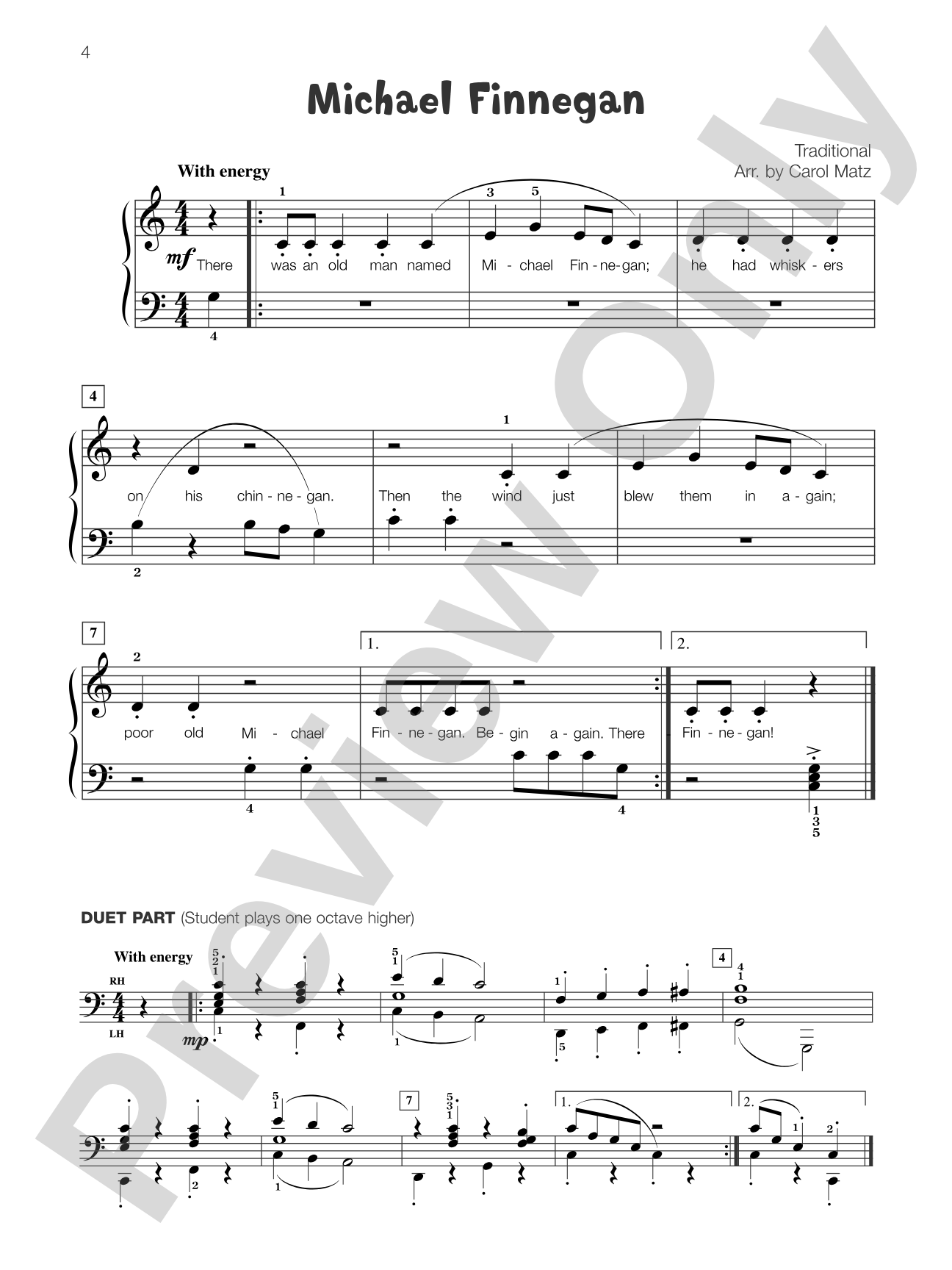
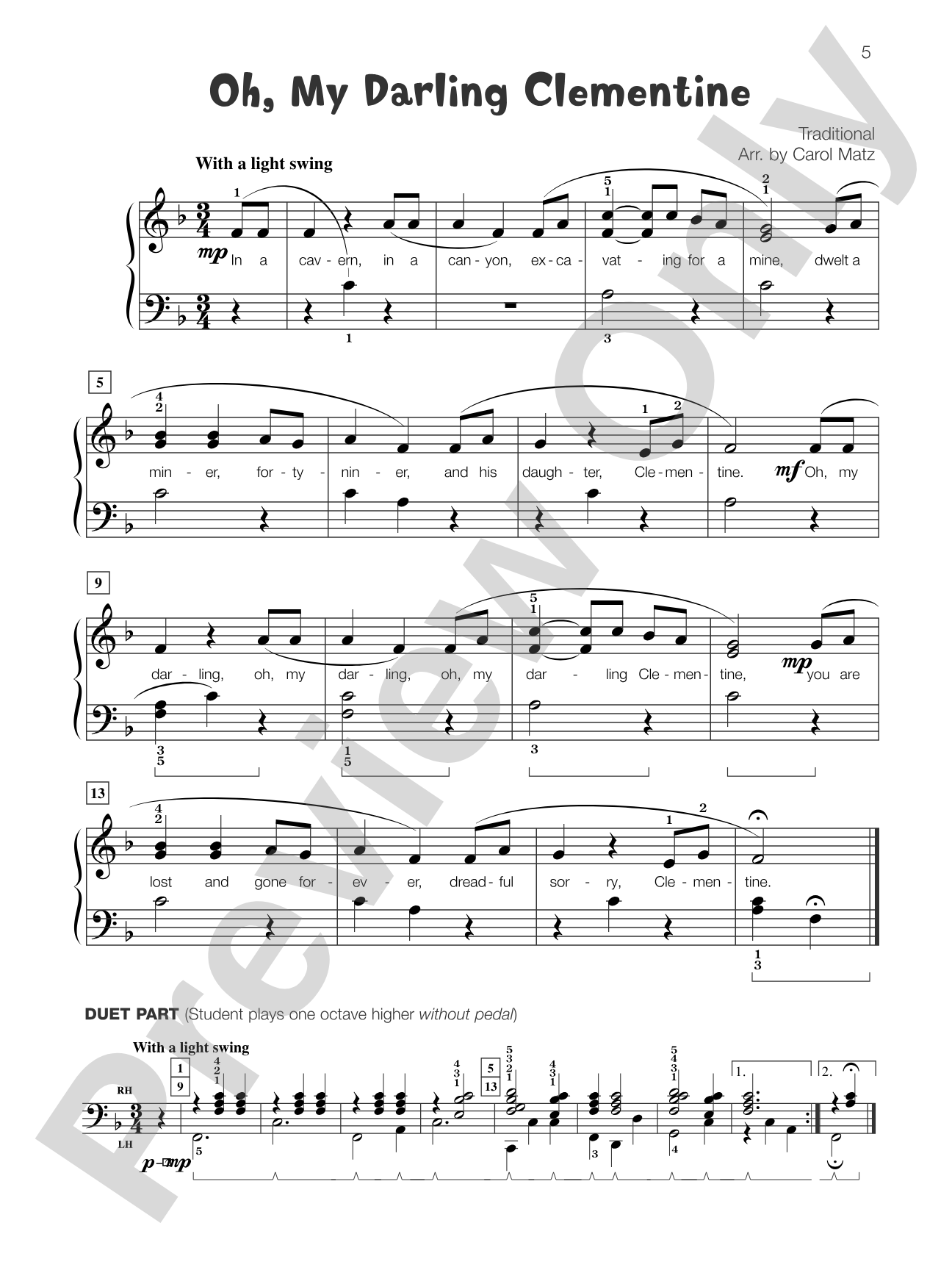
Famous & Fun: Familiar Favorites, Book 3 is a collection of appealing arrangements of familiar songs that students are sure to know and love. Written at the elementary/late elementary level, it may be used as a supplement to any method. The optional duet parts for teacher or parent add to the fun. "Baby Bumblebee," "Polly Wolly Doodle," and "Skip to My Lou" are Federation Festivals 2016-2020 selections. A Federation Festivals 2020-2024 selection.


Famous & Fun Favorites, Book 3: 13 Appealing Piano Arrangements: Piano isn't in MakeMusic Cloud just yet...but it could be. Let us know you'd like to see it, and you'll help shape what comes next. In the meantime, start a free trial and dive into thousands of interactive titles your students can play along with today.
Request This Title
Tell us you want it.
Start Your Free Trial
Explore everything that's ready to play right now.
Sample Audio
No sample audio found.
Sample Video
No sample videos found.
Additional Details
Series:
Famous & Fun
Publisher:
Alfred Music
Page Count:
24
SKU:
00-PB-0000856
More about this title
About the Arranger: Carol Matz

Carol Matz brings three decades of classroom experience to her arranging work, having taught piano students across multiple proficiency levels while simultaneously building a catalog of over 300 published titles. Her compositions and arrangements have been shaped by direct knowledge of what works in lessons: pieces that engage students without oversimplifying the musical content. She studied composition, arranging, and orchestration at the University of Miami and has worked across genres including orchestra, jazz big band, chamber ensembles, and commercial studio recording.
Matz's Famous & Fun series has become a staple in elementary piano studios precisely because it bridges the gap between method book work and genuine musical repertoire. Her international workshop presentations (throughout the United States, Canada, England, New Zealand, and Australia) consistently focus on how teachers can extend student motivation and musical literacy through well-chosen arrangements.
Why we love this
Students know these melodies by heart, which means they can focus entirely on reading, phrasing, and interpretation rather than decoding unfamiliar material. The optional duet parts transform practice into genuine collaboration, turning solo piano work into something social that rewards both student and teacher. Programming any of these pieces on a studio recital feels effortless because the songs belong to the students already.
What to expect
These arrangements tap into the comfort of knowing a song while discovering it anew on the keyboard. There's immediate gratification in recognizing a melody, paired with the quiet satisfaction of playing something that feels polished and real rather than pedagogical.
Who it's for
Elementary and late elementary piano students who are ready to move beyond method book pages and play genuine repertoire. Teachers seeking supplemental material that maintains technical appropriateness while offering genuine musical satisfaction and recognition through festival participation.
How to get the most out of it
- Treat the duet part as a genuine musical partner, not background filler. If you're teaching the piece, record yourself playing the accompaniment and have the student practice against it; this builds independence and rhythmic confidence.
- Bring out the melody without forcing it. These familiar tunes deserve a singing tone that lets the shape of the music speak for itself rather than pushing volume.
- Use the federation festival repertoire choices as motivation. Students often practice harder when they know their piece has been recognized at a national level.
- Balance simplicity in the left hand with clarity in the right. The arrangements are designed so neither hand dominates technically, but the student must maintain independence between them throughout.
How to use it
Build a studio recital around a theme of American folk songs and let three or four students from different lesson times each perform one piece; the thematic continuity makes programming coherent while keeping rehearsal demands minimal. Alternatively, assign individual pieces across your studio as supplemental repertoire during the same month to create informal peer performance opportunities in group lessons.
Skills your students will build
- Reading and executing consistent rhythm patterns across a 24-page collection
- Maintaining melodic independence in the right hand while managing accompaniment patterns in the left hand
- Phrasing familiar melodies with musicality rather than mechanical execution
- Ensemble listening and rhythmic synchronization through the optional duet parts
- Confidence and musicianship through recognizable, era-appropriate repertoire