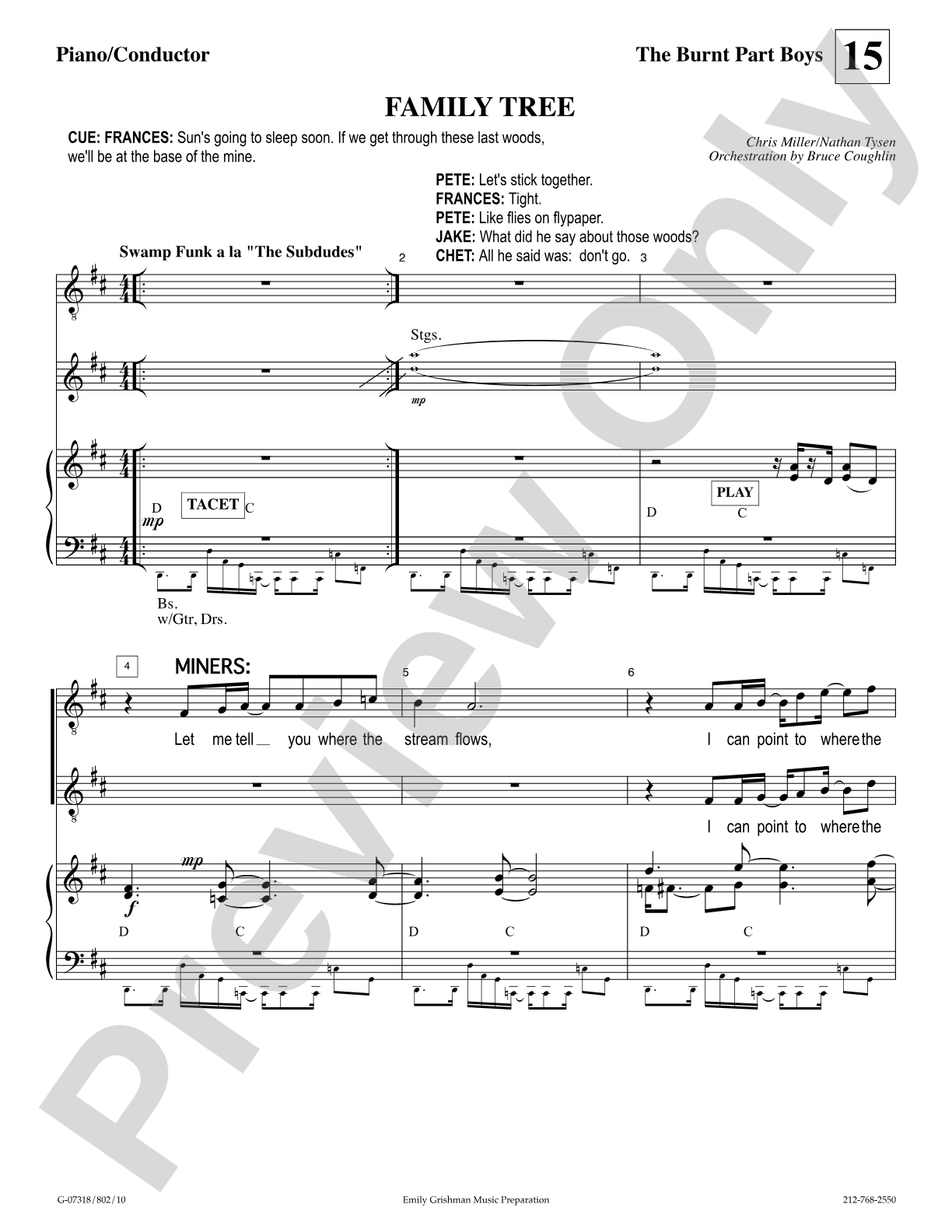
Family Tree (from "The Burnt Part Boys"): Piano/Vocal/Chords Digital Sheet Music

Family Tree (from "The Burnt Part Boys"): Piano/Vocal/Chords Digital Sheet Music

Chris Miller, Nathan Tysen, Bruce Coughlin

Item: 00-PS-0013588

Digital Download
$3.99
Description

Family Tree (from "The Burnt Part Boys"): Piano/Vocal/Chords Digital Sheet Music isn't in MakeMusic Cloud just yet...but it could be. Let us know you'd like to see it, and you'll help shape what comes next. In the meantime, start a free trial and dive into thousands of interactive titles your students can play along with today.

Sample Audio
No sample audio found.
Sample Video
Additional Details
SKU: 00-PS-0013588

More about this title

Why we love this

This arrangement gives singers and pianists direct access to a contemporary song with genuine theatrical character. The chord notation makes it friendly for collaboration between vocalist and pianist, whether you're in a voice studio, rehearsing for a cabaret, or building a solo recital with a mix of classical and musical theatre material.

What to expect

A song with the conversational directness of modern theatre music. The arrangement honors both voice and piano as equal partners in storytelling, creating an intimate musical environment where clarity of text and emotional authenticity matter as much as technical display.

Who it's for

Vocalists preparing solo repertoire, voice students exploring musical theatre literature, and pianists accompanying singers in studio or recital settings. This works equally well for performers building a diverse program or studying contemporary composition in vocal music.

How to get the most out of it

  • Balance the vocal line so it sits clearly above the piano without overwhelming the harmonic support; let the accompaniment establish the song's emotional foundation without competing.
  • Pay attention to where chords shift or resolve; these moments often carry the dramatic weight of the song, so mark them in your score and rehearse the coordination between voice and piano through those transitions.
  • Experiment with rubato in sections that call for it. Contemporary theatre writing often benefits from subtle tempo flexibility that mirrors the natural speech rhythm of the lyrics.

How to use it

Include this in a recital that mixes classical and contemporary vocal music, or pair it with other musical theatre selections to build a cohesive program. It also serves as an excellent addition to a studio class exploring how arrangers adapt theatre songs for intimate performance settings.

Skills your students will build

  • Sight-reading chord symbols in a contemporary context
  • Coordinating vocal phrasing with piano accompaniment
  • Interpreting dynamics and expression in modern musical theatre writing
  • Understanding how vocal and piano lines interact in a singer-pianist partnership

You May Also Like