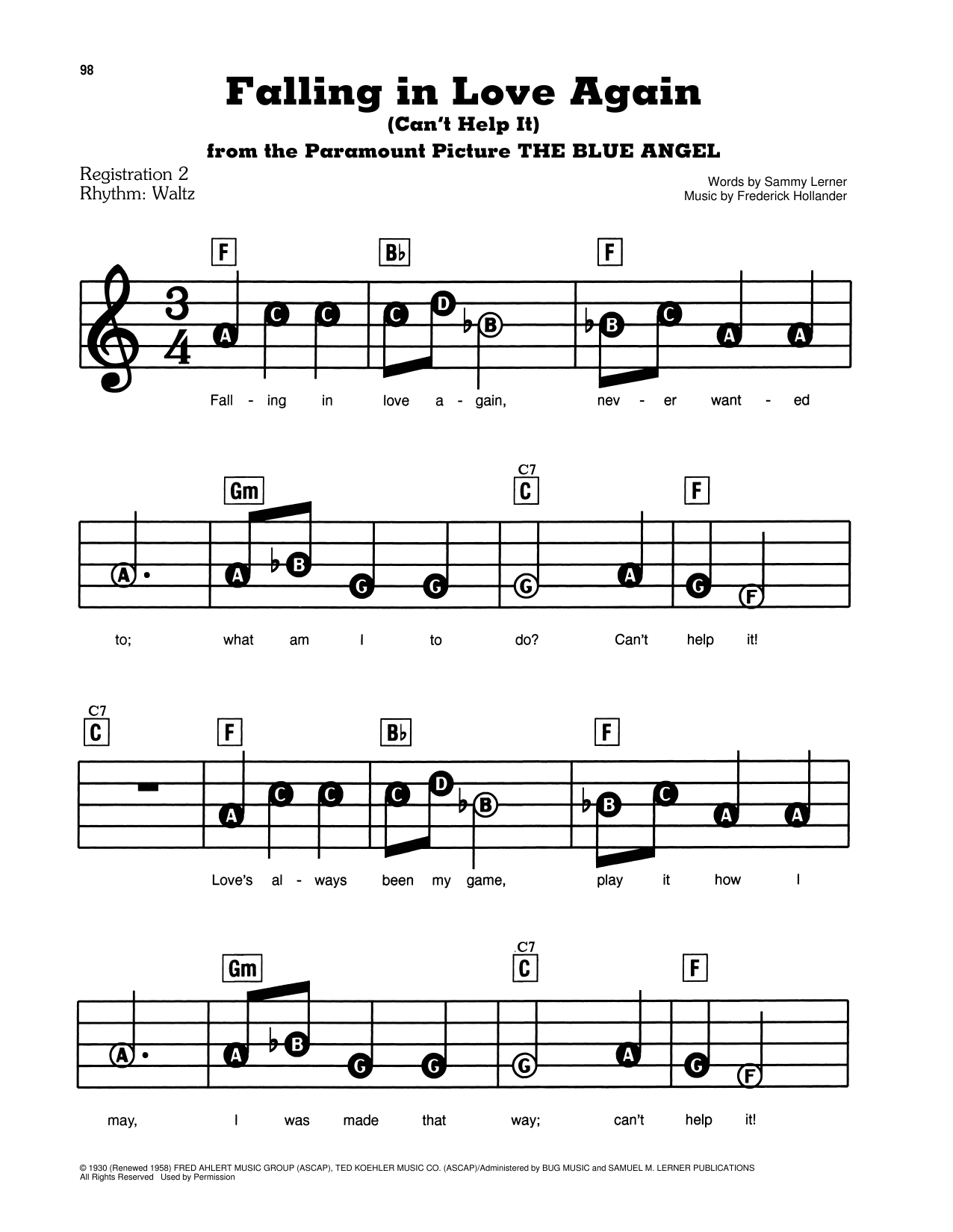
Falling In Love Again (Can't Help It) Sheet Music Preview

Falling In Love Again (Can't Help It): E-Z Play Today

As performed by Marlene Dietrich

Item: 35-DS00460005

Digital Download
$4.99
Description

Falling In Love Again (Can't Help It): E-Z Play Today isn't in MakeMusic Cloud just yet...but it could be. Let us know you'd like to see it, and you'll help shape what comes next. In the meantime, start a free trial and dive into thousands of interactive titles your students can play along with today.

Sample Audio
No sample audio found.
Sample Video
Additional Details
Publisher: Hal Leonard
Page Count: 2
SKU: 35-DS00460005

More about this title

About the Artist: Marlene Dietrich

Marlene Dietrich (1901-1992) was a German-American performer whose contralto voice and sophisticated stage presence defined an era of cabaret and film music. Her interpretations of standards like this one established a template for jazz-inflected vocal delivery that piano students encounter across countless arrangements and recordings.

Why we love this

This E-Z Play arrangement captures the sultry, conversational quality of Dietrich's original without requiring advanced technical skills. The vocal melody sits naturally under the hands, and the harmonic language introduces students to the chromatic voice leading and seventh chords that define the Great American Songbook.

What to expect

Smoky and knowing, with a touch of resignation and humor. The melody carries a wry sophistication; the harmony beneath it shimmers with chromatic color and suspended tension that resolves with warmth rather than sentiment.

Who it's for

Pianists exploring standards and jazz repertoire, particularly those developing comfort with swing rhythms and bluesy harmonies. Adult students and younger players with solid sight-reading skills will find this accessible yet musically rewarding.

How to get the most out of it

  • Let the left hand establish a steady, relaxed pulse rather than pushing the tempo; this tune lives in the pocket, not in a rush.
  • Shape the phrase contours around the lyrical content. The melody dips and rises with emotional intention, so respond to the text even in an instrumental performance.
  • Balance the melody prominently while keeping accompaniment figures transparent. This isn't a solo showcase for the left hand.

How to use it

Pair this with other Dietrich numbers or period standards in a cabaret-style concert set. It works equally well as a solo piece or as accompanying music for a vocalist exploring the Great American Songbook.

Skills your students will build

  • Swing rhythm interpretation and jazz articulation
  • Reading and realizing seventh chords and chromatic passing tones
  • Balancing melodic and accompaniment voices in a two-hand texture
  • Sustaining a relaxed, conversational musical tone across a full phrase

You May Also Like