Falconer: String Bass Sheet Music Preview

Falconer: String Bass

By Doug Spata

Grade: 2

Item: 00-PC-0017996_SB

Digital Download
$5.99
Description
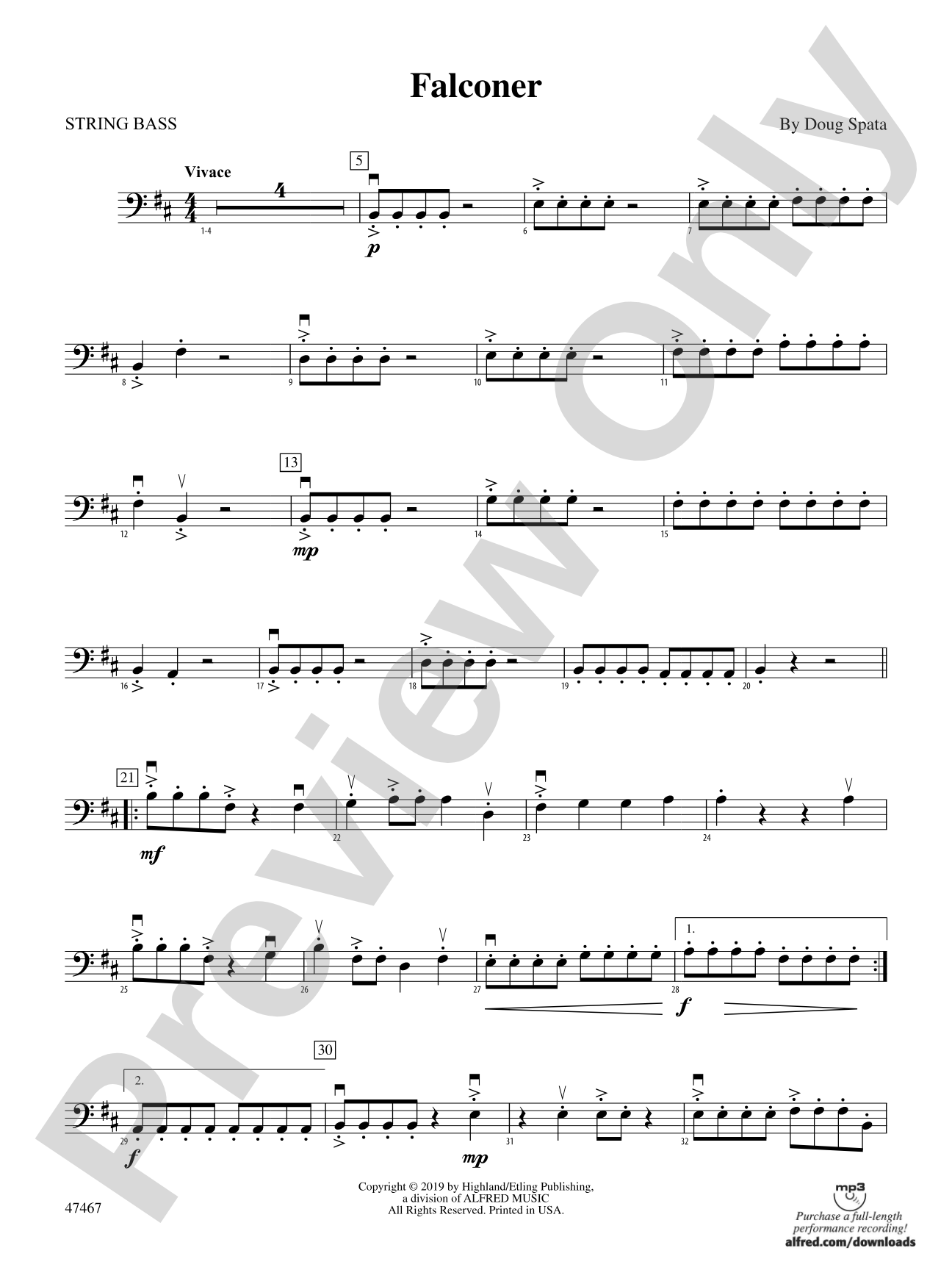
Perfect for late-beginner and early-intermediate orchestras, this work features simple eighth-note ostinatos; dramatic melodies; and a bold, cinematic sound. Rhythmic independence is limited, and the notes can all be played on the D and A strings (G string for the basses). But the piece retains a mature style that students will love. (1:45)

Don't just read it, hear it, play along with it, and watch your students grow with it. In MakeMusic Cloud, Falconer: String Bass comes alive with professional accompaniment, adjustable tempo, and built-in practice tools that turn solo practice into real progress.

Sample Audio
0:00
0:00
Sample Video
Additional Details
Series: Highland/Etling String Orchestra
Publisher: Alfred Music
Page Count: 124
SKU: 00-PC-0017996_SB

More about this title

About the Composer: Doug Spata

Doug Spata

Doug Spata trained as a clarinetist but found his primary voice as a composer for strings, shaped by years spent teaching orchestra. His music has earned recognition at festivals and concert halls across North America and beyond, resonating with the educators and young musicians who perform it. Beyond his prolific output for student ensembles, Spata has created operas, ballets, symphonies, and chamber works spanning the full range of ensemble sizes.

Why we love this

Spata writes for the orchestra that actually exists in your rehearsal room, not an imaginary advanced ensemble. The piece delivers genuine dramatic sweep and cinematic flair without requiring your students to master complex rhythms or navigate the full fingerboard, which means they hear themselves playing something substantial instead of a simplified exercise.

What to expect

Cinematic and bold, with the character of a film score compressed into a tight ninety-second arc. The straightforward rhythmic patterns create space for dramatic melody to soar, while the ostinatos hum underneath like an engine propelling the narrative forward. It feels like something worth playing.

Who it's for

Late-beginner and early-intermediate string orchestras ready to perform a piece with real musical personality and concert appeal. These students have enough technical foundation to handle independent parts while still playing primarily in first position, and they respond to repertoire that sounds more grown-up than what they might expect at this level.

How to get the most out of it

  • Build awareness of the ostinato foundation by having non-melody sections tap or play their eighth-note patterns while the first violins sing the melodic line; this locks the rhythmic support and lets students hear how their part shapes the whole sound.
  • Balance the melody against the supporting voices deliberately; melodic lines will project only if the accompaniment remains controlled and consistent in tone.
  • Work bow control on the sustained ostinatos to prevent the notes from sounding square or mechanical; smooth bow changes and consistent pressure keep the texture alive.

How to use it

Program this as a concert or contest opener that immediately establishes energy and maturity, signaling to the audience that this is a serious young orchestra. It works equally well as the anchor of a mixed orchestral set, paired with either classical standards or contemporary pieces at a similar level.

Skills your students will build

  • Maintaining steady ostinatos while other sections carry melodic material
  • Playing with limited rhythmic independence (primarily eighth-note patterns)
  • Reading and performing across D and A strings with confidence
  • Balancing accompaniment texture against featured melody
  • Sustaining tone across simple but extended note values

You May Also Like