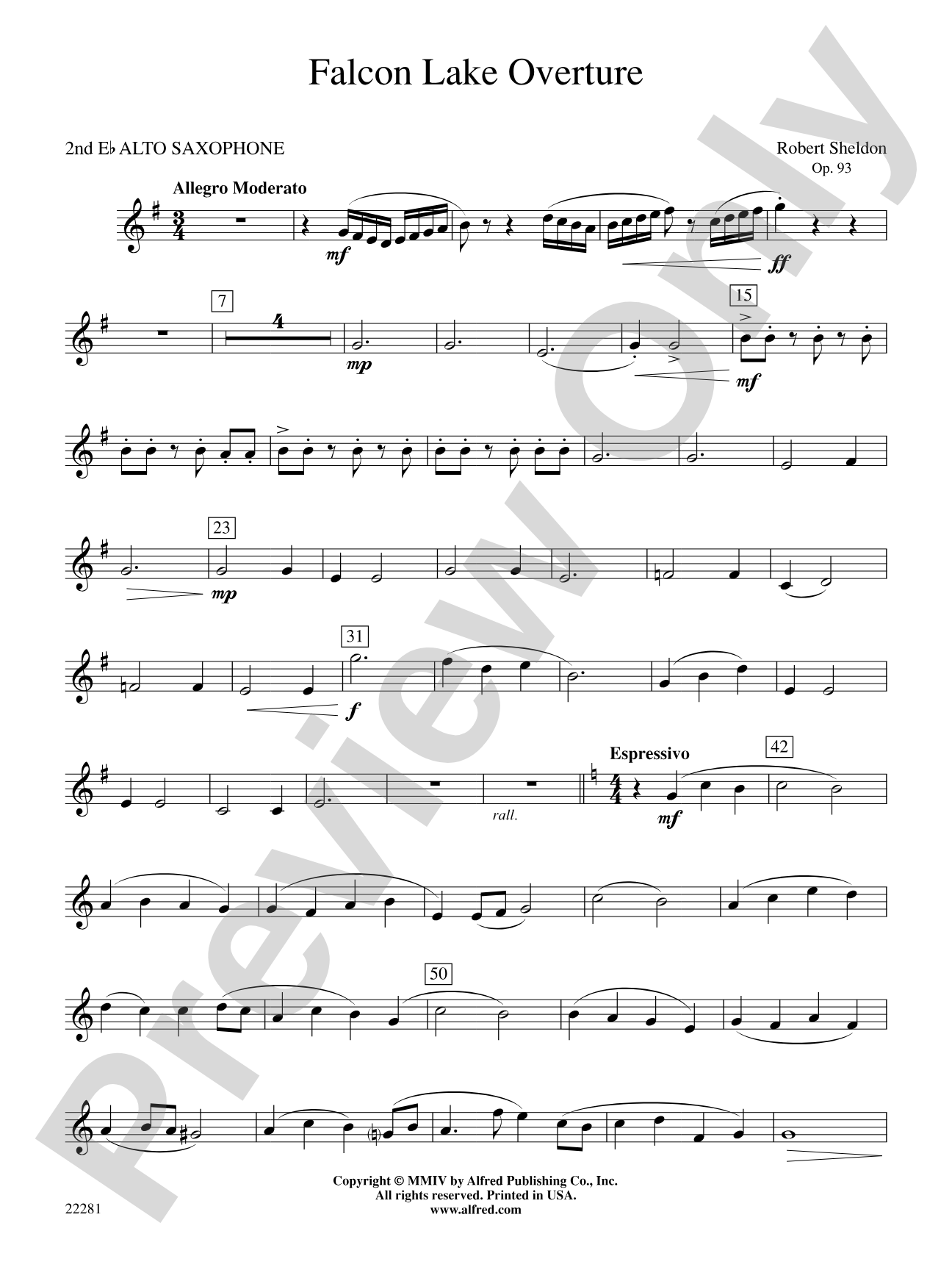
Falcon Lake Overture: 2nd E-flat Alto Saxophone Sheet Music Preview

Falcon Lake Overture: 2nd E-flat Alto Saxophone

By Robert Sheldon

Grade: 3 (Medium)

Item: 00-PC-0000535_AX2

Digital Download
$3.00
Description
This work takes the form of a lively overture with a spirited opening theme followed by a lyrical, expressive section. A brief development leads to a return to the opening theme and ending. The careful attention to musical line and orchestration makes this a very colorful and energetic work suitable for the opening of your next concert. This title is available in MakeMusic Cloud.

Don't just read it, hear it, play along with it, and watch your students grow with it. In MakeMusic Cloud, Falcon Lake Overture: 2nd E-flat Alto Saxophone comes alive with professional accompaniment, adjustable tempo, and built-in practice tools that turn solo practice into real progress.

Sample Audio
0:00
0:00
Sample Video
Additional Details
Series: Alfred Concert Band
Publisher: Alfred Music
Page Count: 264
SKU: 00-PC-0000535_AX2

More about this title

About the Composer: Robert Sheldon

Robert Sheldon

Robert Sheldon's compositions appear on more international concert and contest lists than perhaps any other wind band composer working today. His music has been performed at Carnegie Hall, the Kennedy Center, and the Sydney Opera House, yet his primary focus remains the concert band repertoire that defines American music education. A prolific composer and commissioned artist, Sheldon produces numerous publications annually while maintaining an active schedule as guest conductor and clinician across the United States, Europe, Asia, and Australia.

Beyond composition, Sheldon shaped wind band pedagogy as lead author of Sound Innovations for Concert Band. His work has earned recognition from the American School Band Director's Association, Phi Beta Mu, and ASCAP. In 2020, VanderCook College of Music awarded him an honorary doctorate in recognition of his sustained impact on the field.

Why we love this

Sheldon writes overtures that feel substantial without overwhelming a Grade 3 ensemble. The balance between an accessible harmonic language and genuine orchestral color means your students will sound more polished and professional than the difficulty level suggests. It's the kind of opening number that sets a confident tone for your entire concert.

What to expect

The opening crackles with spirited forward motion and clear thematic purpose. The middle section shifts into genuine lyricism, offering players a chance to sing through their instruments before the energy returns with renewed conviction. The work feels complete and polished, not like a brief interlude.

Who it's for

Concert bands at the Grade 3 level who need a confident, audience-friendly opener that showcases orchestral writing without requiring advanced technical demands. Directors seeking repertoire that reads cleanly in parts while delivering sophisticated sound will find this particularly valuable.

How to get the most out of it

  • Shape the lyrical middle section with gradual dynamic swells and careful attention to phrase endpoints; this is where listeners decide whether the piece is merely competent or genuinely musical.
  • Emphasize rhythmic clarity in the opening theme so the energy remains propulsive even at moderate tempos; rushing this section is the most common pitfall.
  • Balance the wind sections carefully during the colorful orchestration moments, as Sheldon's scoring often asks lighter instruments to carry important lines that can easily disappear.
  • Allow the return of the opening theme its own character by subtly adjusting articulation or slightly varying the tempo from the initial statement, rather than playing it identically.

How to use it

Program this as your concert opener to establish momentum and confidence in your ensemble from the first moment. It also works well as the opening selection in a contest or festival program where you need an accessible yet sophisticated impression of your band's capabilities.

Skills your students will build

  • Sustained phrasing across dynamic changes
  • Balancing individual melodic lines within ensemble texture
  • Articulation control for thematic clarity in fast-moving passages
  • Musical interpretation of contrast between sections (spirited and lyrical)
  • Part independence within an orchestrated texture

You May Also Like