

Faith's Waltz: Score
By Bob Cerulli
Grade: 1
Item: 00-PR-0000964
$6.00
Pickup currently not available
Description
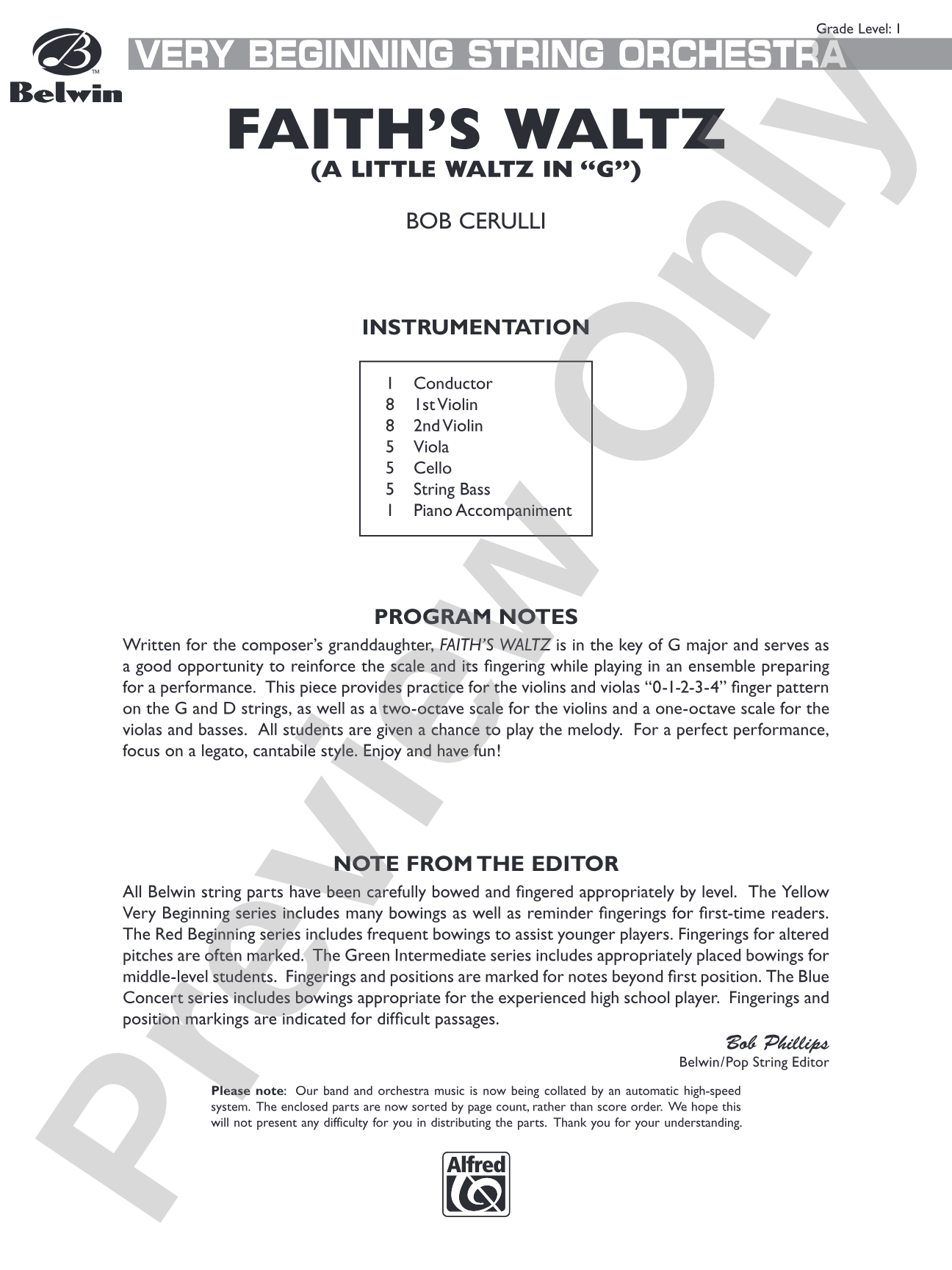
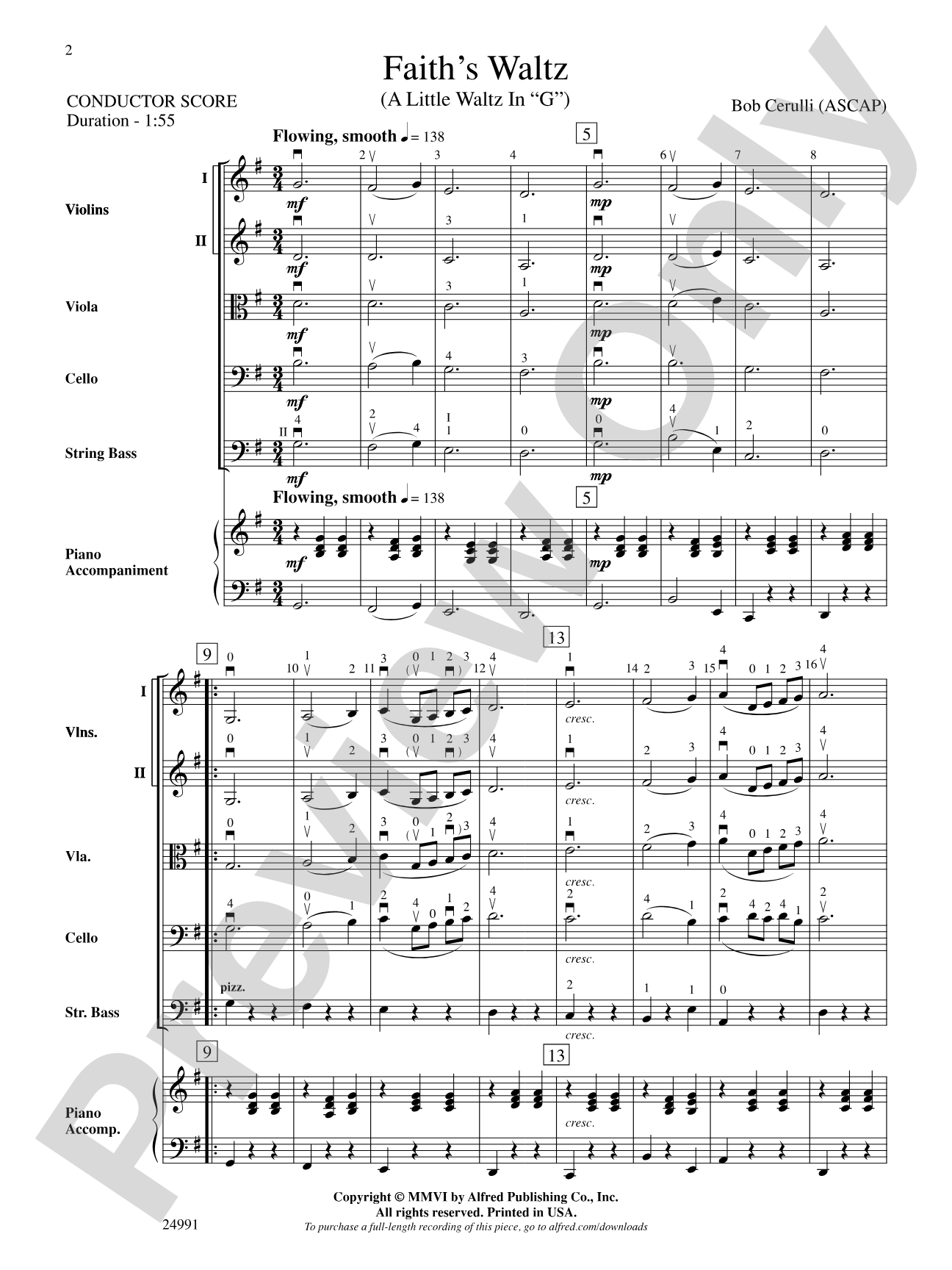
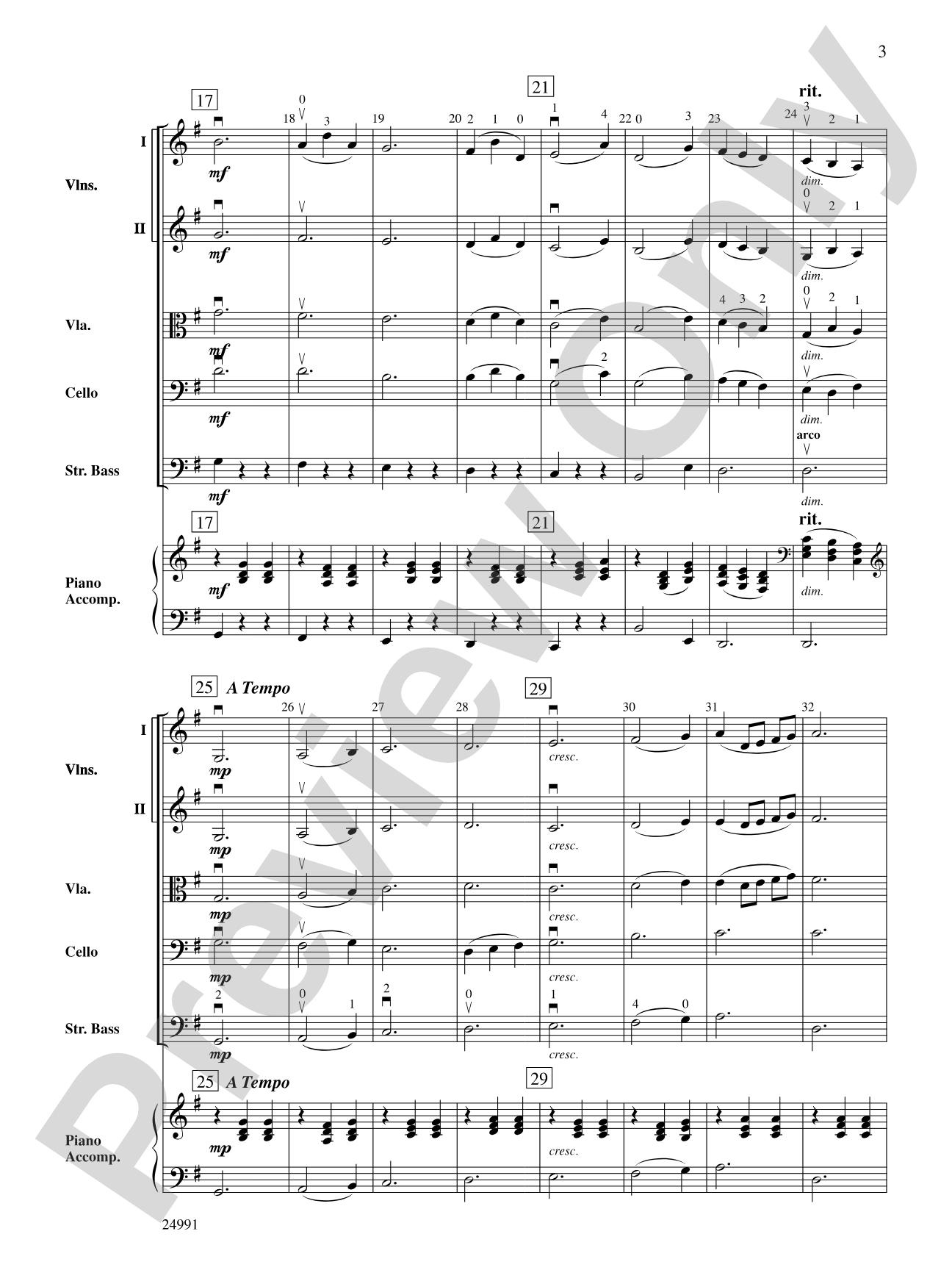
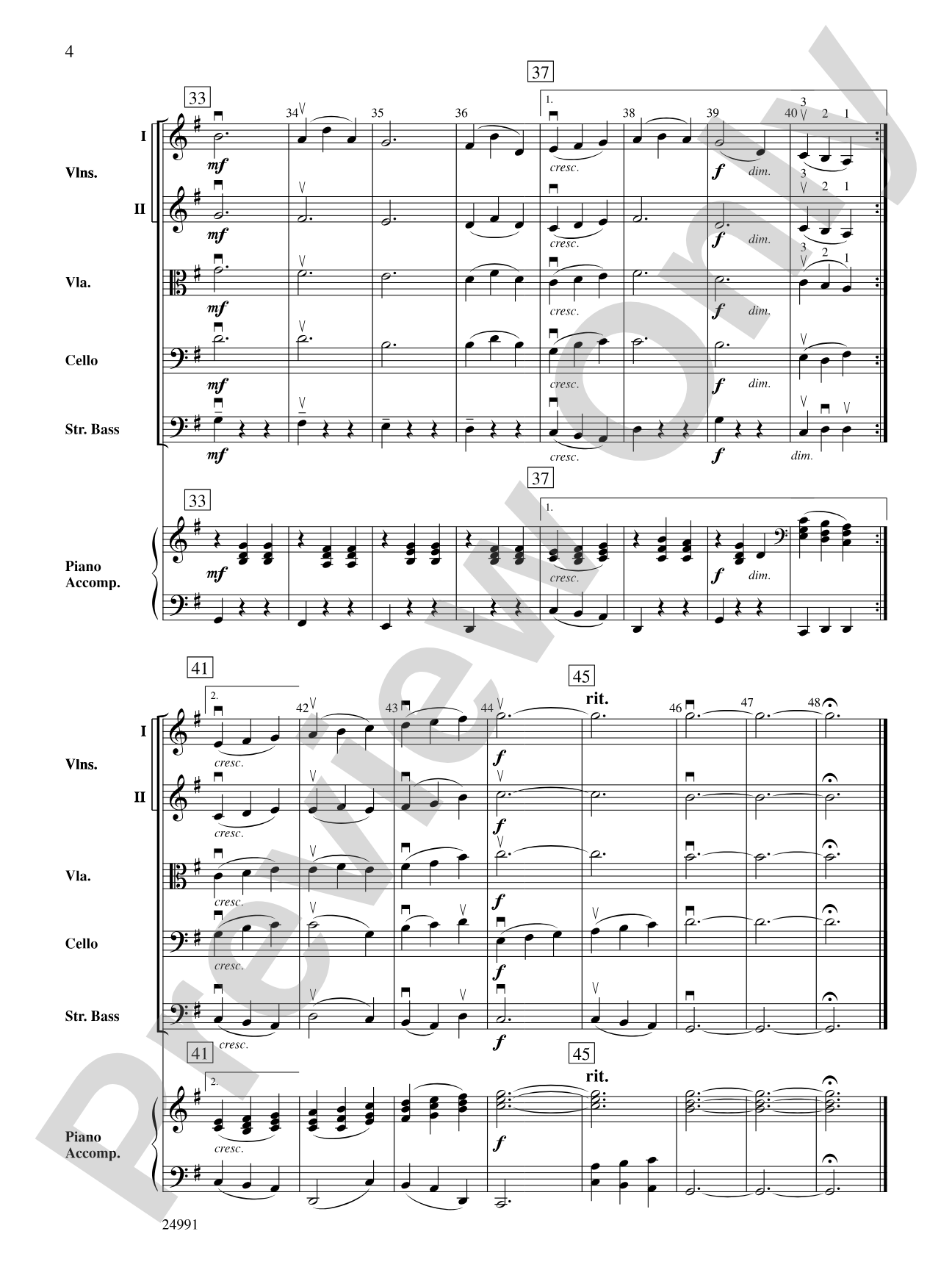
Composed for the author's granddaughter, Faith, Faith's Waltz is in the key of G Major and is a good opportunity to reinforce the scale and its fingering, while playing in an ensemble preparing for a performance. It provides good practice for the violins and violas "0-1-2-3-4" finger pattern on the G and D strings as well as a two-octave scale for the violins and a one octave scale for the violas and basses. All have a chance to play the melody. The focus should be on a legato, cantabile style. Enjoy and have fun.


Don't just read it, hear it, play along with it, and watch your students grow with it. In MakeMusic Cloud, Faith's Waltz: Score comes alive with professional accompaniment, adjustable tempo, and built-in practice tools that turn solo practice into real progress.
Open in the Player
Jump straight in and assign it today.
Start Your Free Trial
Open this title and explore the full library in minutes.
Sample Audio
1
Audio File
--:--
0:00
0:00
Sample Video
No sample videos found.
Additional Details
Series:
Belwin Very Beginning String Orchestra
Publisher:
Alfred Music
Page Count:
66
SKU:
00-PR-0000964
More about this title
About the Composer: Bob Cerulli

Bob Cerulli studied double bass at the Curtis Institute of Music under Roger Scott, then earned degrees in music education from the University of the Arts and conducting from the College of New Jersey. His performance career spanned orchestral positions including Principal Bass with the Greater Trenton Symphony, The New Jersey Capital Philharmonic Orchestra, and Delaware Valley Philharmonic Orchestra, alongside freelance work in Philadelphia and Atlantic City with Broadway artists and conductors including Henry Mancini, Bill Conte, and Michel LeGrand.
Cerulli's compositions have been performed by major ensembles, including his orchestral work Celebration by The Philadelphia Orchestra and Romance in D Major for cello and piano premiered by Philadelphia Orchestra Principal Cellist William Stokking. After 29 years teaching music in public schools, he continues as a Senior Adjunct Professor at Rowan College at Burlington County and regularly conducts orchestral performances and reading sessions at regional music festivals.
Why we love this
Cerulli's personal connection to this piece (composed for his granddaughter) shines through in its warmth and accessibility. The writing balances genuine musicality with clear pedagogical purpose, giving every section time with the melody while reinforcing fundamental string technique in a way that feels musical rather than mechanical.
What to expect
Faith's Waltz has the gentle, flowing character of a musical portrait. The G Major tonality feels bright and optimistic, while the cantabile style invites players to listen to each other and shape phrases together, creating an intimate ensemble sound that's both accessible and genuinely musical.
Who it's for
Grade 1 string orchestras ready to move beyond open strings and unison playing into ensemble textures and shared melodic responsibility. This is ideal for programs building confidence in young players who need reinforcement of basic fingering while gaining experience in transparent, musically coherent ensemble writing.
How to get the most out of it
- Shape the legato line by thinking of long, connected phrases rather than note-by-note articulation. Help students hear where the melody breathes and resolve.
- Use the one and two-octave G Major scales as technical preparation before rehearsals. Secure the fingerpattern on G and D strings so players can focus on tone quality and intonation during the piece itself.
- Balance the melody across sections as each instrument takes its turn. Adjust dynamics slightly so the current melodic voice sings through while other lines provide warm harmonic support.
How to use it
Program this as a confident early-season concert piece or as a feature during a family event where young string players can showcase developing ensemble skills in a work that values every voice. It also works well as a teaching piece for student conductors learning to balance multiple melodic lines.
Skills your students will build
- G Major scale fingering (0-1-2-3-4 pattern) on G and D strings
- Two-octave and one-octave G Major scales for appropriate registers
- Legato, cantabile style and phrase shaping in ensemble
- Listening and balancing when melody passes between sections
- Intonation awareness in a harmonic context