
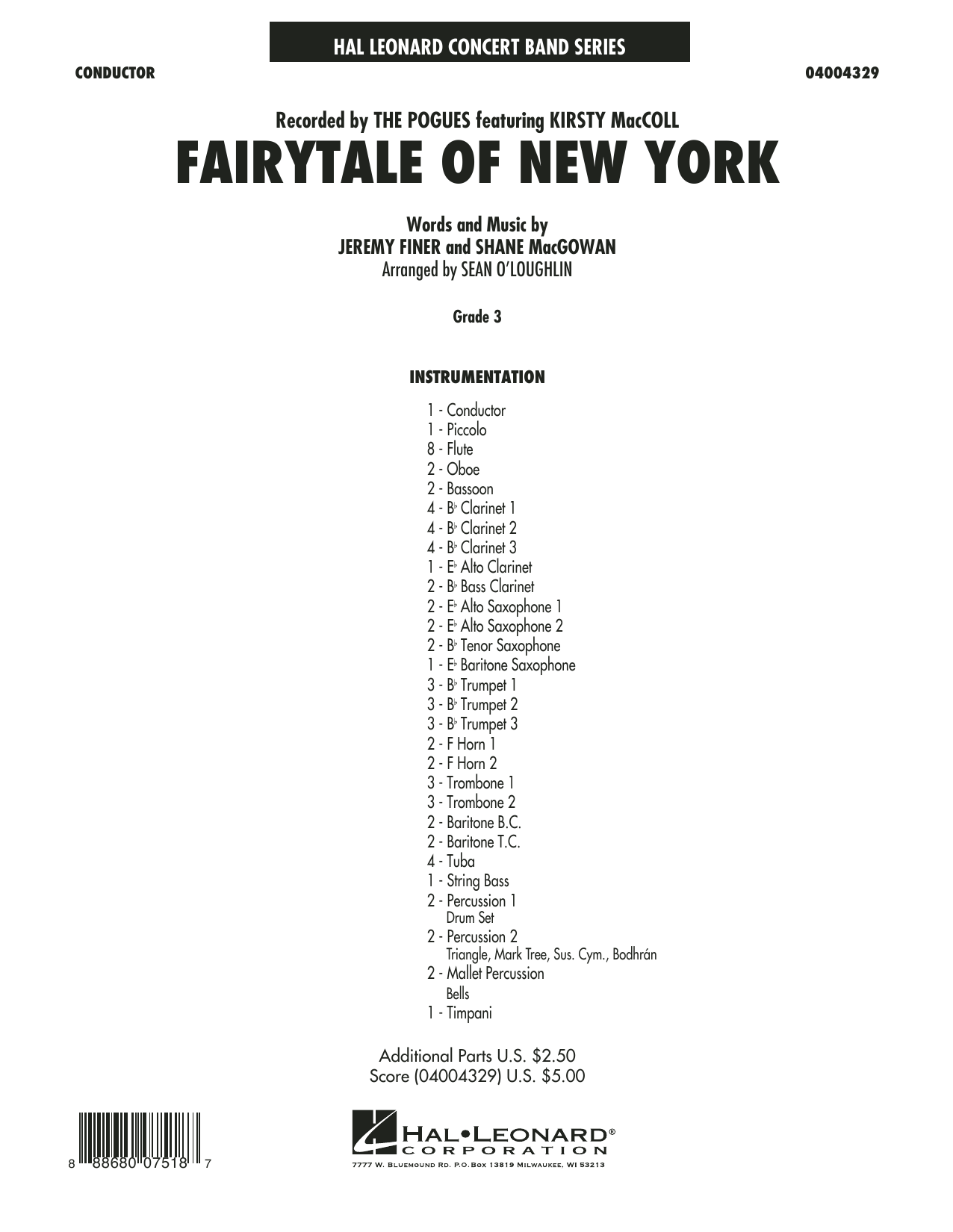

Fairytale of New York: Concert Band Conductor Score & Parts
As performed by The Pogues featuring Kirsty MacColl / Arranged by Sean O'Loughlin
Grade: 3
Item: 35-PK00311409
$60.00
Pickup currently not available
Buy Extra Parts (Digital PDF Download)
Parts Added to Cart!
Description
Recorded by the Celtic punk band The Pogues and featuring singer Kirsty MacColl, "Fairytale of New York" was released in 1987 and has remained an enduring and popular holiday favorite ever since. Comprised of two main sections, the opening is melancholy and lyrical, followed by the second part in a driving and energetic Irish-flavored groove. Sure to be a distinctive and appealing addition to any holiday concert.
Dur: 3:05


Fairytale of New York: Concert Band Conductor Score & Parts isn't in MakeMusic Cloud just yet...but it could be. Let us know you'd like to see it, and you'll help shape what comes next. In the meantime, start a free trial and dive into thousands of interactive titles your students can play along with today.
Request This Title
Tell us you want it.
Start Your Free Trial
Explore everything that's ready to play right now.
Sample Audio
No sample audio found.
Sample Video
No sample videos found.
Additional Details
Publisher:
Hal Leonard
SKU:
35-PK00311409
More about this title
About the Artist: The Pogues featuring Kirsty MacColl
The Pogues emerged from London's Irish immigrant community in the early 1980s, blending traditional Celtic music with punk energy and raw emotional honesty. Led by Shane MacGowan, the band created a distinctive sound that made Irish folk accessible to rock audiences while maintaining genuine respect for their musical roots. Kirsty MacColl, a Scottish singer and songwriter in her own right, brought a contrasting vocal clarity to "Fairytale of New York" that perfectly offset MacGowan's gruff delivery, creating one of popular music's most enduring duets.
Why we love this
This arrangement captures the emotional arc that makes the original so compelling: the wistful first section gives your band room to shape phrasing and dynamics before the infectious Irish groove takes over. Sean O'Loughlin's scoring respects the song's DNA while making it fully playable for a Grade 3 ensemble, so you get authentic flavor without technical overreach. Holiday programming often feels obligatory; this one genuinely excites both performers and audiences.
What to expect
Nostalgic and bittersweet at first, like reflecting on a moment that can never return. Then suddenly alive, with the kind of propulsive energy and joy that comes from communal music-making rooted in folk tradition. The piece walks a graceful line between melancholy and celebration, much like the original recording itself.
Who it's for
Directors seeking holiday repertoire that transcends the expected, with enough melodic substance and character to feel special rather than perfunctory. Concert bands at the intermediate level will find a piece that challenges musicality and interpretation without requiring advanced technical facility.
How to get the most out of it
- Shape the opening melancholy section with long, connected phrases and avoid rushing the harmonic changes. The lyrical quality depends on patience and breath control across the ensemble.
- Let the rhythmic drive of the second section breathe once it enters. The Irish groove should feel propulsive but grounded, not frantic.
- Balance the melodic voices carefully during the transition between sections so the shift registers clearly without sounding disjointed.
- Pay attention to articulation during the driving section. Crisp attacks on the rhythmic figures will lock in the ensemble and enhance the Celtic character.
How to use it
Position this late enough in a holiday concert to establish an emotional foundation, then use it as a momentum shift that energizes the audience. It works equally well as a standalone feature or paired with other seasonal selections that value arrangement and personality over pure sentimentality.
Skills your students will build
- Dynamic control across sustained lyrical passages
- Balance between melody and accompaniment in multi-textured arrangements
- Rhythmic precision in syncopated, groove-oriented sections
- Stylistic interpretation of folk-influenced melodic material
- Ensemble articulation during driving rhythmic sections