
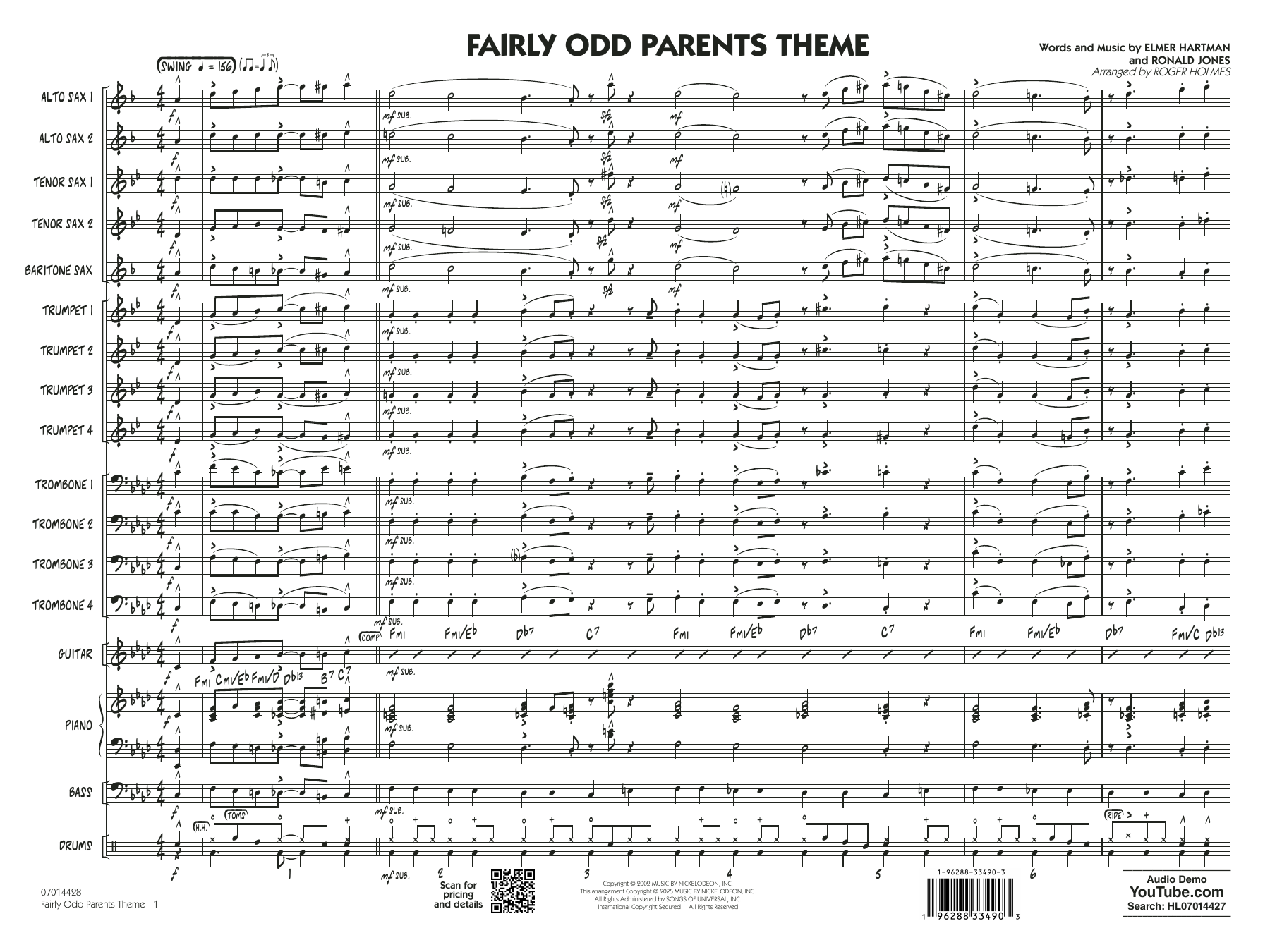

Fairly Odd Parents Theme (arr. Roger Holmes): Jazz Ensemble Conductor Score & Parts
Arranged by Roger Holmes
Grade: 3
Item: 35-PK01702493
$50.00
Pickup currently not available
Buy Extra Parts (Digital PDF Download)
Parts Added to Cart!
Description
Lighten things up at your next performance with hip and hard swinging theme from the hit Nickelodeon cartoon series. Your students won't want to stop practicing it and the audience will love it even more! Written solos for Alto, Tenor and Trumpet.


Fairly Odd Parents Theme (arr. Roger Holmes): Jazz Ensemble Conductor Score & Parts isn't in MakeMusic Cloud just yet...but it could be. Let us know you'd like to see it, and you'll help shape what comes next. In the meantime, start a free trial and dive into thousands of interactive titles your students can play along with today.
Request This Title
Tell us you want it.
Start Your Free Trial
Explore everything that's ready to play right now.
Sample Audio
No sample audio found.
Sample Video
No sample videos found.
Additional Details
Publisher:
Hal Leonard
SKU:
35-PK01702493
More about this title
About the Arranger: Roger Holmes
Roger Holmes is a composer and arranger with deep roots in television and film scoring. His work bringing popular media into educational settings demonstrates both his understanding of what engages student musicians and his facility with orchestration across different ensemble formats.
Why we love this
Holmes captures the infectious energy of the source material while writing solos that give your section leaders real moments to shine. Grade 3 accessibility never means sacrificing the swing feel and rhythmic drive that makes this arrangement immediately fun for players and audiences alike.
What to expect
Upbeat and bouncy, with the sprightly comic timing of the show itself. The arrangement swings hard enough to feel legitimate while keeping the playful spirit that makes the original theme so recognizable.
Who it's for
Any jazz ensemble looking for accessible repertoire that students actually want to rehearse. The combination of familiarity, clear solo opportunities, and straightforward Grade 3 writing makes this work equally well for middle school programs and high school ensembles building their jazz curriculum.
How to get the most out of it
- Keep the tempo crisp and maintain consistent swing eighth-note subdivision throughout; a loose interpretation here loses the cartoon's snappy character.
- Balance the solo features so each instrumentalist gets equal spotlight time; these moments are confidence builders for your advancing players.
- Layer the dynamic build from ensemble passages into solo statements; let the supporting parts recede slightly to feature whoever is playing lead.
- Work the rhythm section (bass, drums, piano) as a cohesive unit first, then overlay the horn lines; their pocket work anchors everything else.
How to use it
Slot this into a pops or film music concert where you want an audience crowd pleaser with substance. It also works as a high-energy closer that sends students and listeners out smiling, or as a mid-set refresher on programs heavy with standards.
Skills your students will build
- Swing rhythm interpretation and consistent subdivision feel
- Solo improvisation and featured melodic playing across multiple instruments
- Rhythmic accuracy in ensemble passages with syncopated horn lines
- Listening to and locking with the rhythm section
- Dynamic balance and musical conversation between solo and accompaniment voices