

Fair Phyllis: TTB, a cappella Choral Octavo
English Madrigal by John Farmer / arr. Russell Robinson
Item: 00-PO-0001286
$1.80
Minimum order quantity: 20 copies
Pickup currently not available
Description
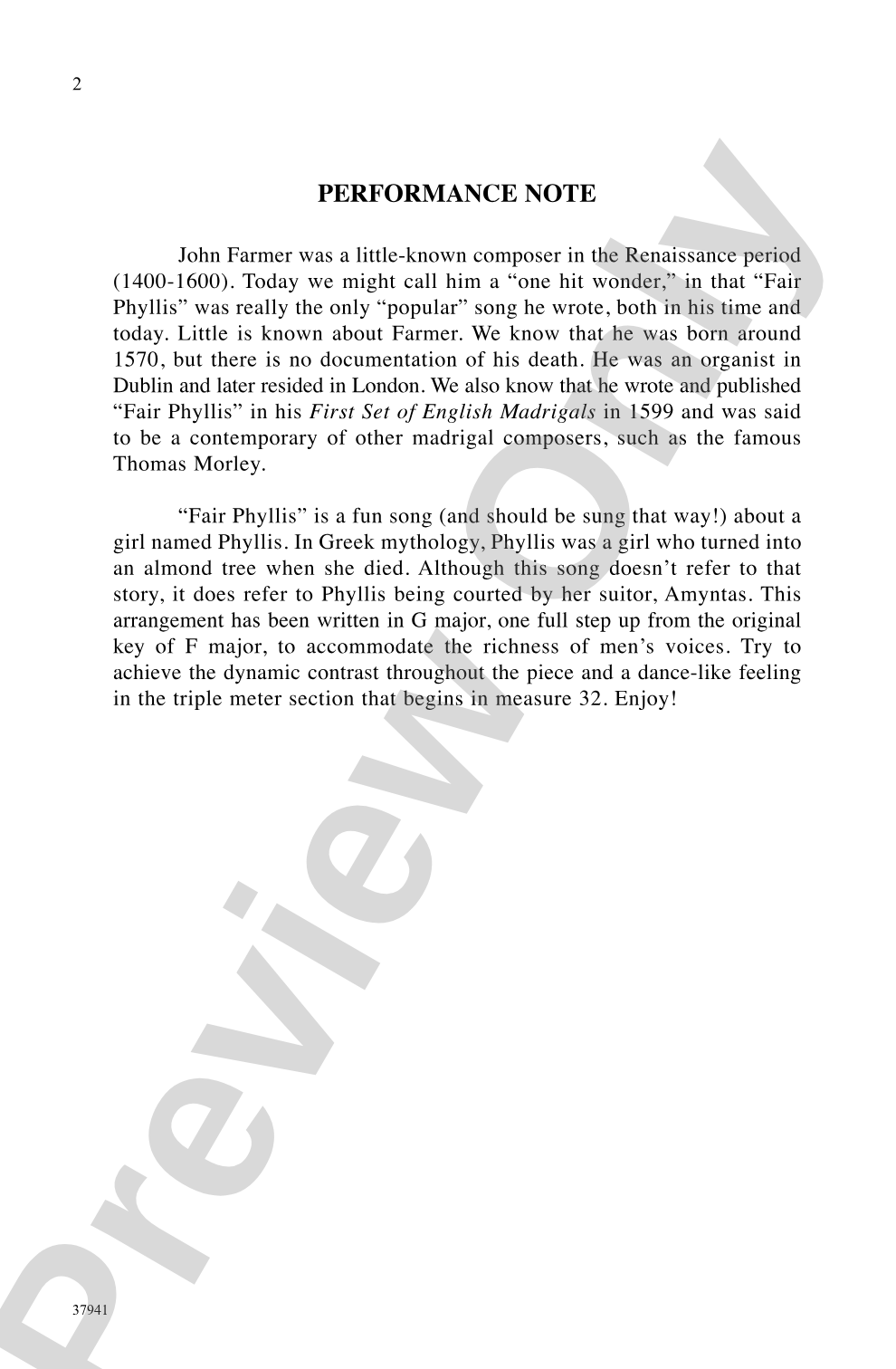
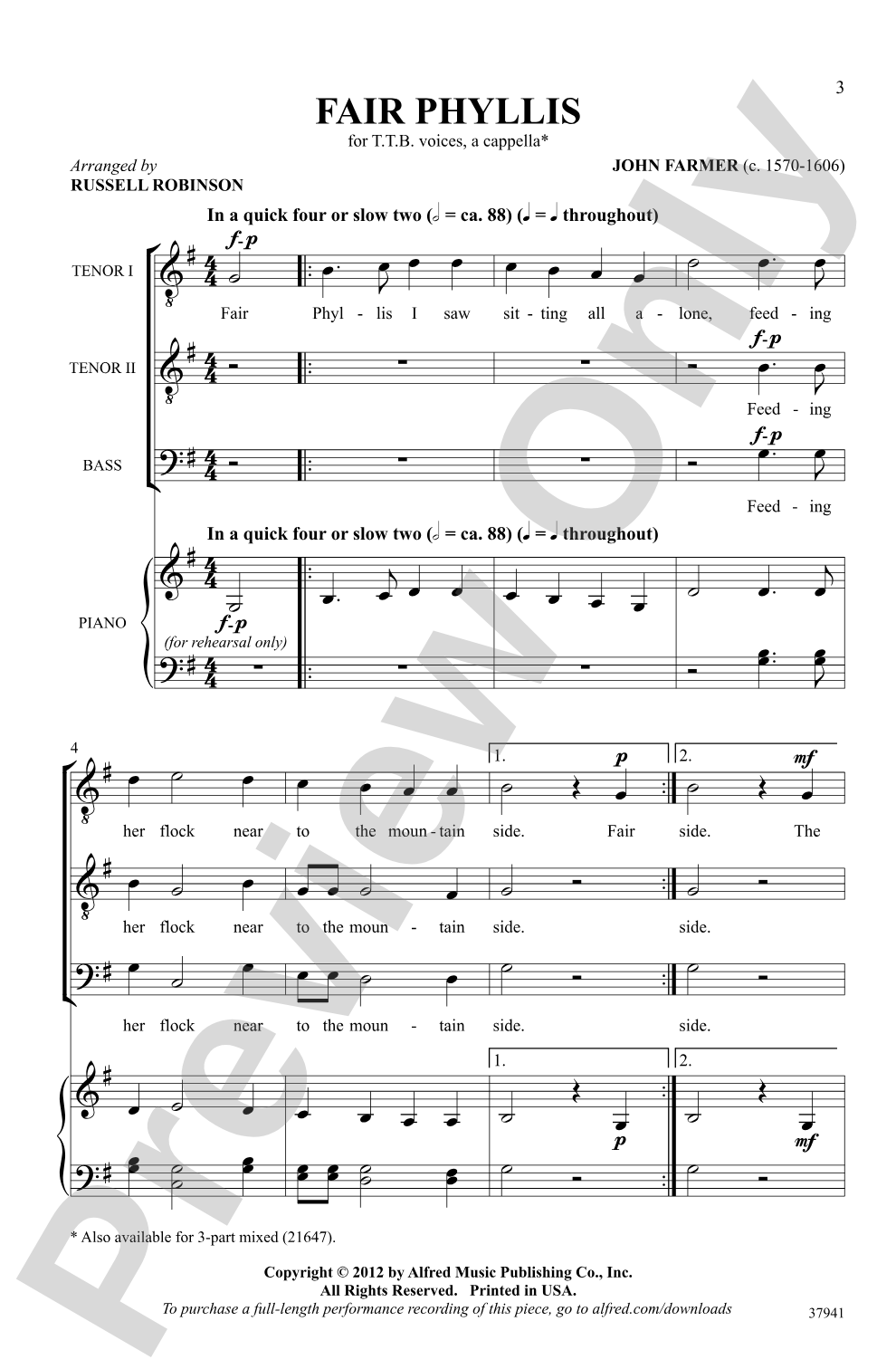
This well-edited arrangement includes a charming secular text, light polyphonic texture, changing meters, and contrasting dynamics. Perfect for men's or 3-part mixed choirs as a first madrigal or Renaissance feature.


Fair Phyllis: TTB, a cappella Choral Octavo isn't in MakeMusic Cloud just yet...but it could be. Let us know you'd like to see it, and you'll help shape what comes next. In the meantime, start a free trial and dive into thousands of interactive titles your students can play along with today.
Request This Title
Tell us you want it.
Start Your Free Trial
Explore everything that's ready to play right now.
Sample Audio
1
Audio File
--:--
0:00
0:00
Sample Video
No sample videos found.
Additional Details
Series:
Alfred Choral Designs
Publisher:
Alfred Music
Page Count:
8
SKU:
00-PO-0001286
More about this title
About the Composer: John Farmer
John Farmer was an English composer and musician active during the late Renaissance, flourishing in the latter half of the 16th century. He is remembered chiefly for his secular vocal works, particularly his madrigals, which exemplify the lighter, more playful side of English Renaissance music. His compositions show the harmonic sophistication and textural clarity that made the English madrigal school distinctive during this period.
Why we love this
Robinson's edition brings this Renaissance gem into sharp focus for contemporary choirs. The changing meters and dynamic contrast create genuine musical surprise within a piece that reads as genuinely fun to sing, not antiquated or pedagogically sterile. For directors seeking an accessible madrigal that sounds sophisticated without requiring advanced training, this arrangement hits the exact right balance.
What to expect
Charming and fleet, with moments of gentle surprise. The changing meters and dynamic shifts prevent the piece from settling into predictability, yet the overall effect remains light and conversational rather than complex. There's real delight in the harmonic movement and in the way the text drives the musical shape.
Who it's for
This arrangement serves choirs new to madrigals who need a piece with enough structural interest to engage singers while remaining achievable in a rehearsal or two. Men's choirs and three-part mixed ensembles benefit equally from the text's wit and the relatively short page count. It works well for singers who read music confidently but haven't tackled Renaissance polyphony before.
How to get the most out of it
- Shape each phrase through the text's natural punctuation rather than holding full value on final notes; the Renaissance preference for forward motion outweighs modern legit singing conventions.
- Attend carefully to the dynamic markings as written; they're essential to the piece's sectional architecture and what makes the meter changes feel intentional rather than awkward.
- Allow slight space between phrases to highlight the shifting harmonic areas and give each new section air to breathe.
How to use it
Feature this as a standalone madrigal on a concert of mixed repertoire, or pair it with another Renaissance piece to establish a thematic set. The eight-page length makes it ideal for a concert slot that needs substance without overwhelming an evening's pacing. It also works as a contest or festival piece where judges reward musicality and stylistic understanding over technical display.
Skills your students will build
- Reading and performing changing meters (3/4 and 4/4 within a single piece)
- Shaping phrases in a cappella music without harmonic support from instruments
- Understanding Renaissance text-painting and how secular poetry shapes musical line
- Balancing blend and independence in four-part polyphonic texture
- Responding to dynamic and articulation markings as compositional architecture