
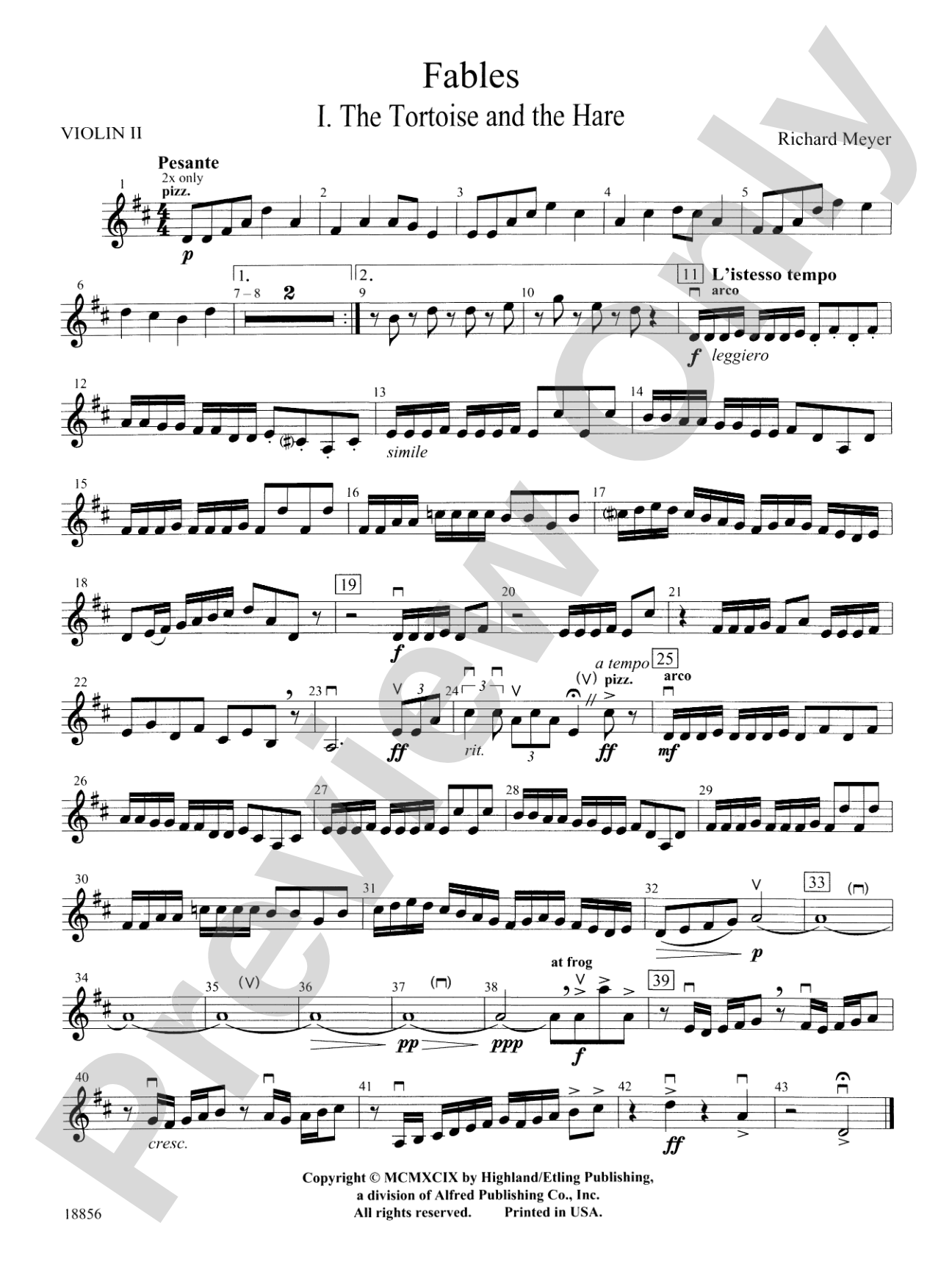

Fables: 2nd Violin
By Richard Meyer
Grade: 3
Item: 00-PC-0014787_VN2
$5.99
Pickup currently not available
Description
Based on Aesop's famous tales, this three movement piece is sure to delight your students and audience. "The Tortoise and the Hare," "The Boy Who Cried 'Wolf'," and "The Country Mouse and the City Mouse" all come alive in Richard Meyer's creative tone paintings which are full of surprises for every section of the orchestra. A wonderful way to introduce your students to the concept of program music.


Don't just read it, hear it, play along with it, and watch your students grow with it. In MakeMusic Cloud, Fables: 2nd Violin comes alive with professional accompaniment, adjustable tempo, and built-in practice tools that turn solo practice into real progress.
Open in the Player
Jump straight in and assign it today.
Start Your Free Trial
Open this title and explore the full library in minutes.
Sample Audio
1
Audio File
--:--
0:00
0:00
Sample Video
No sample videos found.
Additional Details
Series:
Highland/Etling String Orchestra
Publisher:
Alfred Music
Page Count:
124
SKU:
00-PC-0014787_VN2
More about this title
About the Composer: Richard Meyer
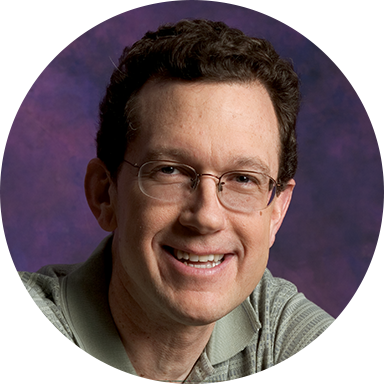
Richard Meyer spent 35 years in public school string education, teaching at elementary through high school levels and building the orchestra program at Oak Avenue Intermediate School in Temple City, California from 29 students to 200. For 16 years he led the Pasadena Youth Symphony Orchestra, taking them on international performance tours to Vienna, Australia, Canada, and major U.S. cities.
Meyer's work extends beyond the classroom. He founded the "Giving Bach" program in 2009, an initiative that uses interactive concerts to reach special needs and underserved students across Southern California and has earned national recognition. As a composer and arranger, he has over 190 published works and served as string editor for Alfred Publishing Company for 16 years. He has also guest-conducted All-State and Honor Orchestras across multiple states and been a featured clinician at major conferences including the A.S.T.A. National Conference and Ohio State University's String Teachers' Workshops.
Why we love this
Meyer writes with the string program builder in mind, creating pieces that feel substantial enough to excite students and audiences while remaining accessible at Grade 3. The three distinct movements here give each section of the orchestra time to shine, and the narrative structure of Aesop's tales keeps rehearsals focused and students engaged around a shared musical story.
What to expect
A journey through familiar tales that suddenly feel alive in musical form. Meyer's orchestration brings each fable's characters and conflicts into sharp relief, with moments of humor, drama, and warmth that make the storytelling playful rather than heavy-handed. Your students will hear themselves painting vivid pictures.
Who it's for
String orchestras at the intermediate to early high school level seeking repertoire that excites both performers and audiences. This works equally well for concert programs and festival competition where program music appeals to adjudicators.
How to get the most out of it
- Let each fable's character emerge through your ensemble's tone. The Tortoise requires patient, steady articulation; the Hare needs lighter, quicker responses. Encourage players to think dramatically about what they're portraying, not just the notes.
- Balance the narrative arc within each movement. When Meyer introduces surprises or textural shifts, highlight them in rehearsal so players understand the musical storytelling they're part of, rather than treating them as unexpected technical demands.
- Pay attention to section independence in passages where different instrumental groups carry contrasting material. The Country Mouse and City Mouse movement particularly benefits from clear sectional preparation so that each voice remains distinct.
How to use it
These three movements work as a standalone concert feature that immediately captures an audience's attention through narrative familiarity. You might pair them with a contrasting piece in a full program, or build an entire spring concert around program music by programming Fables alongside other descriptive works at a similar level.
Skills your students will build
- Following a musical narrative across an extended multi-movement work
- Characterization and expression through instrumental tone and articulation choices
- Balancing independent section parts to maintain textural clarity
- Responding to sudden stylistic and tempo shifts within a coherent program music framework