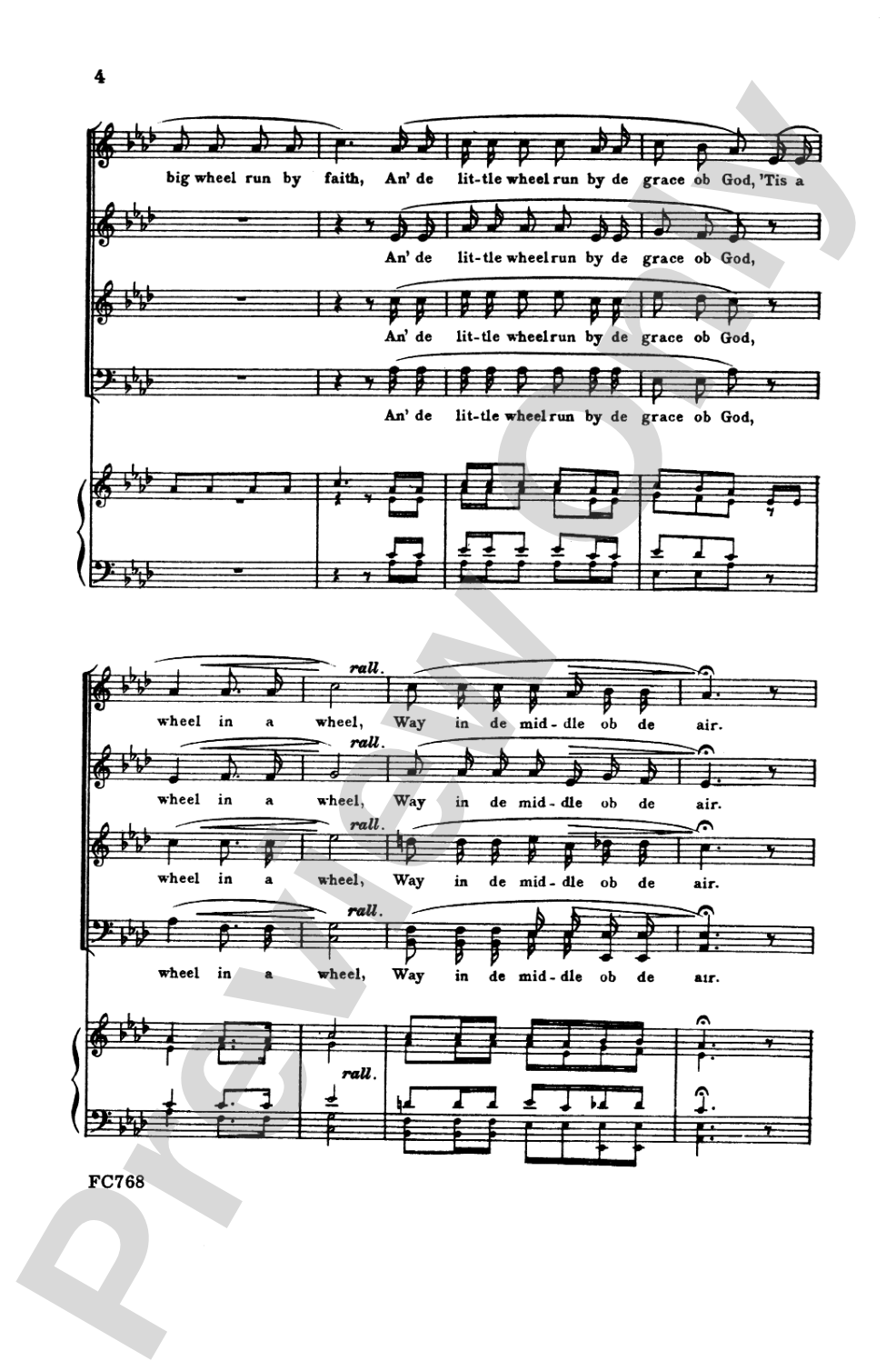
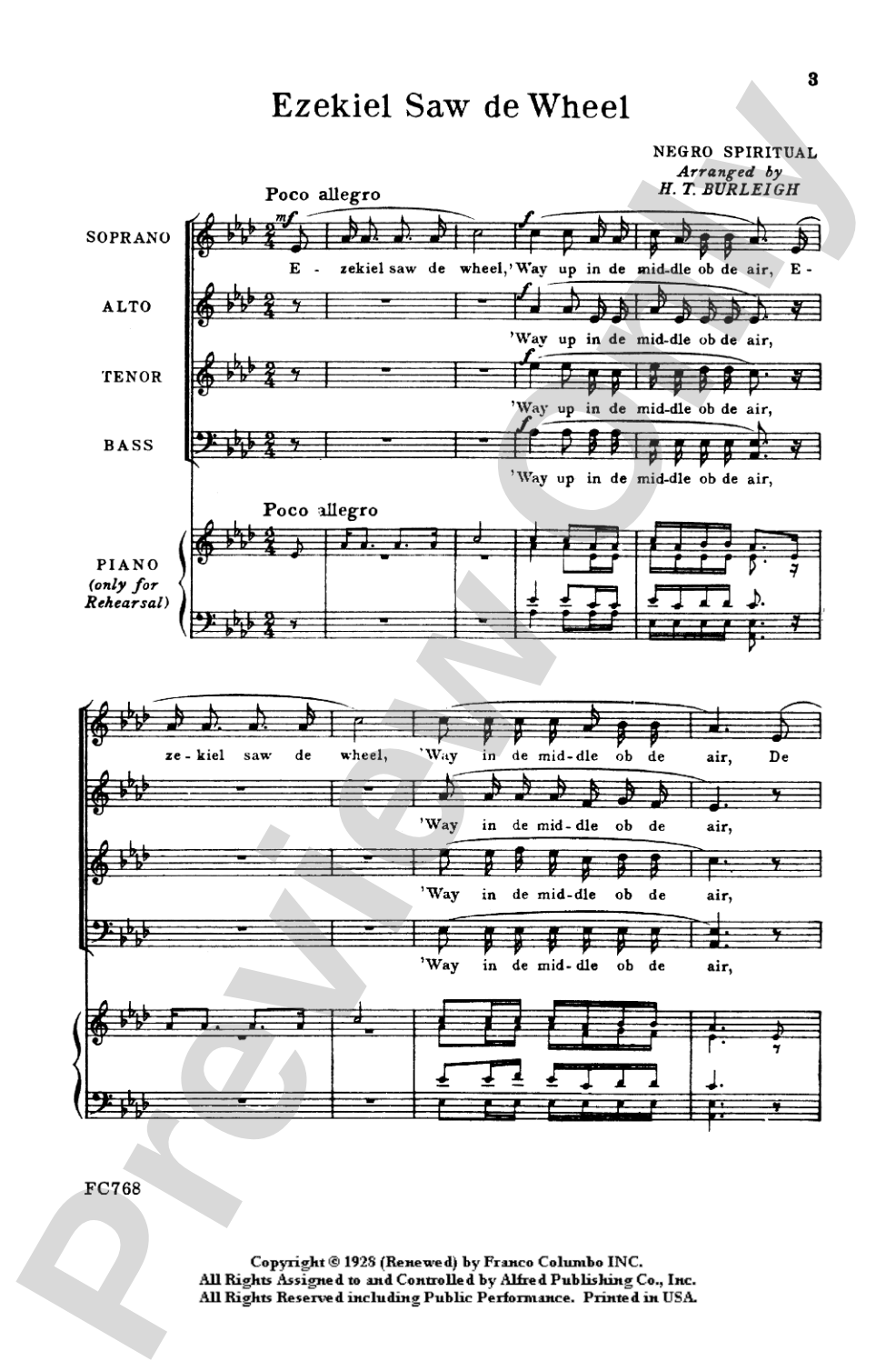
Ezekiel Saw de Wheel Sheet Music Preview

Ezekiel Saw de Wheel: SATB, a cappella Choral Octavo

Arr. Harry T. Burleigh

Item: 00-PO-0004865

Digital Download
$2.25

Minimum order quantity: 20 copies

Description

Ezekiel Saw de Wheel: SATB, a cappella Choral Octavo isn't in MakeMusic Cloud just yet...but it could be. Let us know you'd like to see it, and you'll help shape what comes next. In the meantime, start a free trial and dive into thousands of interactive titles your students can play along with today.

Sample Audio
No sample audio found.
Sample Video
Additional Details
Series: Alfred Archive Edition: Franco Colombo Catalog
Publisher: Alfred Music
Page Count: 12
SKU: 00-PO-0004865

More about this title

About the Arranger: Harry T. Burleigh

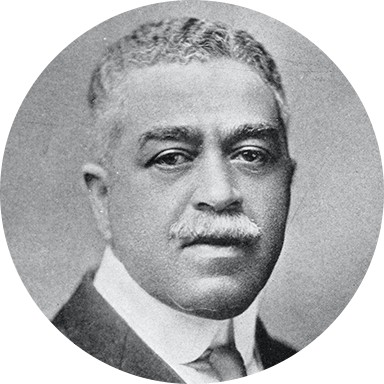
Harry T. Burleigh

Harry Thacker Burleigh (1866–1949) was a singer and composer whose arrangement work fundamentally shaped how African American spirituals entered the concert hall. A student of Antonín Dvořák at the National Conservatory of Music in New York, Burleigh introduced his mentor to the depth and beauty of traditional Black vocal music, an encounter that influenced Dvořák's own compositional thinking. For over five decades, Burleigh served as a soloist at St. George's Church in Manhattan (1894–1946) and at Temple Emanuel (1900–25), platforms from which he championed spirituals as serious art music deserving of trained singers and formal concert presentation.

Burleigh composed more than 200 songs and became the defining arranger of his generation for African American spirituals. His arrangements struck a careful balance between honoring the source material and crafting works suited to SATB choirs and art song contexts. His legacy secured the spiritual's place in the American choral canon and demonstrated the power of arrangement as a form of cultural advocacy.

Why we love this

Burleigh's arrangement of this spiritual captures the visionary quality of the text with elegant simplicity and genuine spiritual depth. The a cappella scoring puts the focus entirely on the voices, allowing the four-part harmony to do the interpretive work. This is the kind of arrangement that feels fresh and rewarding in concert while remaining firmly rooted in the tradition it honors.

What to expect

There is a hushed, visionary quality to this piece. The text draws from Ezekiel's biblical vision of the wheel, and Burleigh's harmonies seem to turn slowly around that central image, building in quiet power rather than volume. The a cappella texture brings voices into intimate conversation, creating a sense of shared witness.

Who it's for

This octavo is ideal for SATB choirs with solid blend and intonation skills, whether in church, school, or community settings. The spiritual's narrative accessibility and Burleigh's respected name in choral literature make it a natural choice for programs seeking authentic American repertoire. Singers benefit from prior experience with a cappella singing and ensemble accountability.

How to get the most out of it

  • Approach the piece as a hymn of testimony. The narrative voice matters: singers should convey wonder and certainty, not mere prettiness, in their tone.
  • Balance the inner voices carefully so that the harmonic movement (which carries much of the emotional weight) remains audible without drowning out melody.
  • Let silence breathe between phrases. A cappella requires singers to own the pacing; resist the urge to rush through because there is no instrumental pulse.
  • Prepare singers to sustain on vowel sounds with consistency and warmth. Without accompaniment, intonation depends entirely on their ear and breath control.

How to use it

Position this among other spirituals or American art songs to create thematic coherence; it pairs well with other Burleigh arrangements or with contemporary spiritual settings. A cappella pieces like this one benefit from placement where they can anchor a concert section rather than compete with accompanied works. Consider pairing it with instrumental music that follows, allowing a moment of silence to honor the piece's completion.

Skills your students will build

  • A cappella intonation and blend across four sustained voice parts
  • Reading and maintaining independent lines while balancing with ensemble harmony
  • Breath control and phrase management without instrumental support
  • Interpretation of American spiritual tradition and text-driven expression
  • Stylistic understanding of early-20th-century art song arrangements of spirituals

You May Also Like