Extremely Loud and Incredibly Close (Main Theme) Sheet Music Preview

Extremely Loud and Incredibly Close (Main Theme): Piano

By Alexandre Desplat

Item: 00-PS-0013462

Digital Download
$3.99
Description
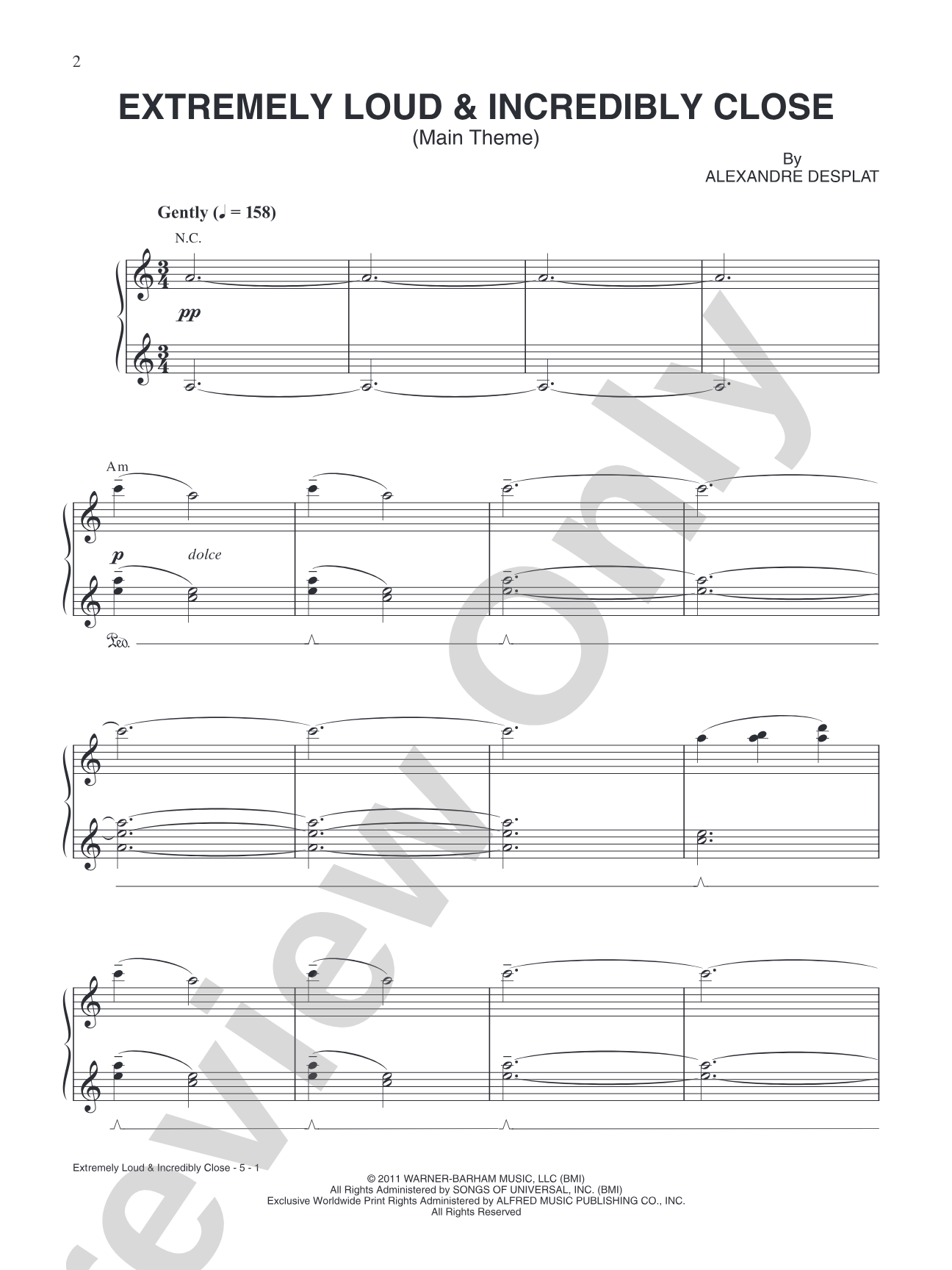
Alexandre Desplat's main theme to Extremely Loud & Incredibly Close is composed around a simple, memorable melody that works beautifully as a solo piano piece. This licensed, collectible sheet music edition allows pianists to apply their own talent to this melancholy masterpiece by one of Hollywood's most acclaimed composers.

Extremely Loud and Incredibly Close (Main Theme): Piano isn't in MakeMusic Cloud just yet...but it could be. Let us know you'd like to see it, and you'll help shape what comes next. In the meantime, start a free trial and dive into thousands of interactive titles your students can play along with today.

Sample Audio
No sample audio found.
Sample Video
Additional Details
Series: Original Sheet Music Edition
Publisher: Alfred Music
Page Count: 6
SKU: 00-PS-0013462

More about this title

About the Composer: Alexandre Desplat

Alexandre Desplat has become one of the most prolific and respected film composers of the past two decades, creating scores for projects ranging from the Harry Potter franchise to Wes Anderson's distinctive visual narratives. His gift for crafting themes that anchor emotional moments while remaining accessible to performers makes his work valuable for music education, where students encounter contemporary composition that balances sophistication with clarity.

Why we love this

This theme captures something essential about how film composers think: maximum emotional impact through harmonic restraint and melodic simplicity. Pianists at the intermediate level gain direct access to a score that professional orchestrators respect, learning how a few well-placed chords can carry genuine weight.

What to expect

The piece carries a quiet intensity, building its emotional resonance through restraint rather than volume. Melancholy threads through the harmonic language, evoking reflection and loss while maintaining a sense of searching or reaching forward.

Who it's for

Intermediate to advanced pianists drawn to contemporary film music will find this accessible yet genuinely moving. It works equally well for students exploring how modern composers write for cinema and for performers looking for recital pieces that connect with contemporary audiences.

How to get the most out of it

  • Let the melody breathe. Resist the urge to rush through the phrase shapes; Desplat's strength lies in allowing listeners time to absorb each musical gesture.
  • Pay attention to the balance between the main melody and its harmonic foundation. The emotional power depends on both working together, not the melody dominating.
  • Shape the dynamics with intention rather than convention. This piece rewards subtle shifts in volume that reflect the emotional arc of the film's narrative.
  • Consider the resonance and pedal work carefully. The texture benefits from sustain, but clarity matters equally; experiment with partial pedal changes to maintain harmonic color without muddying the line.

How to use it

This pairs naturally on recitals alongside other contemporary composers or as a bridge between classical tradition and modern film music contexts. It works especially well in programs exploring how composers approach narrative and emotion across different media.

Skills your students will build

  • Pedal control and sustain in extended harmonic passages
  • Phrasing and rubato in lyrical melody lines
  • Balancing melody prominence with harmonic accompaniment
  • Interpreting contemporary film music notation and expressive markings
  • Creating emotional coherence through subtle dynamic shaping

You May Also Like