Exsurge Domine Sheet Music Preview

Exsurge Domine: Choral Instrumental Pak

Edited by Martin Banner

Item: 35-PK01602843

Digital Download
$75.00

One moment…

Description
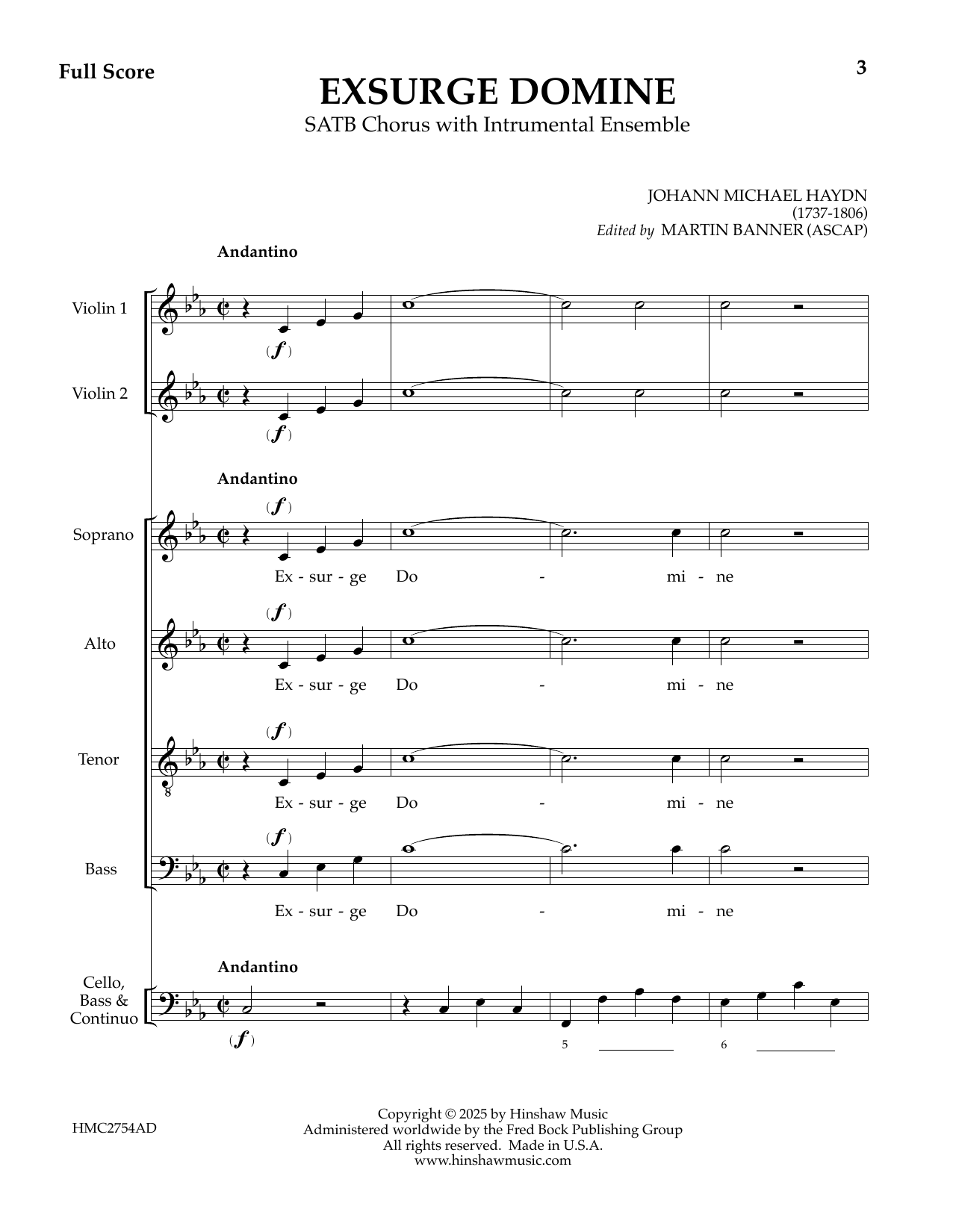
A great piece for anyone looking to introduce a high school, church or college choir to the energy of 18th Century sacred choral music, Johann Michael Haydn's EXSURGE DOMINE was composed in 1788 and written for SATB choir, strings and continuo. This modern performing edition, based on the original autograph score located in the music archive of the Bavarian State Library in Munich, Germany, was composed liturgically to be performed as a Gradual for the third Sunday of Lent, although it would be an excellent addition to any secular school or community concerts.

Exsurge Domine: Choral Instrumental Pak isn't in MakeMusic Cloud just yet...but it could be. Let us know you'd like to see it, and you'll help shape what comes next. In the meantime, start a free trial and dive into thousands of interactive titles your students can play along with today.

Sample Audio
No sample audio found.
Sample Video
Additional Details
Publisher: Hal Leonard
SKU: 35-PK01602843

More about this title

About the Creator: Johann Michael Haydn

Johann Michael Haydn (1737-1806) served as Kapellmeister at the Salzburg court for nearly four decades, a position that placed him at the heart of Austrian sacred music composition. While his brother Joseph dominated the symphonic world, Michael carved out a distinct legacy through his prolific output of masses, motets, and liturgical works that balanced learned counterpoint with elegant melodic writing.

Why we love this

This piece offers singers their first real encounter with the architectural sophistication of Classical sacred music without demanding the technical fireworks of later Romantic choral writing. The combination of string accompaniment and continuo creates an ensemble texture that feels substantial yet transparent, allowing each voice line to breathe while maintaining the propulsive energy that 18th century liturgical music demands.

What to expect

There is a muscular dignity here, a sense of formal purpose grounded in the liturgical calendar yet expressed through music that feels alive and conversational. The interplay between choir and strings creates a texture of elegant restraint punctuated by moments of genuine rhetorical power, drawing the listener forward through clarity of line and harmonic logic.

Who it's for

High school choirs ready to move beyond functional part singing will find this score both accessible and rewarding. College and church choirs seeking liturgical repertoire or concert programming that bridges the gap between Baroque and Romantic idioms will appreciate its authentic foundation in an original manuscript.

How to get the most out of it

  • Establish clarity in the continuo foundation early in rehearsal; the harpsichord or keyboard must lock firmly with the bass line so the choir's entries feel anchored rather than tentative.
  • Shape the SATB phrases with consistent energy throughout, resisting the modern impulse to diminish approaching cadences. The period style thrives on forward momentum.
  • Balance the string parts carefully during tuttis so the choral lines project above the instrumental texture without requiring the singers to force.
  • Articulate consonants crisply on text entries to match the rhythmic precision of the string writing and maintain the piece's architectural clarity.

How to use it

This works particularly well as an anchor for a concert focused on 18th century sacred music or as the centerpiece of a spring concert exploring liturgical traditions across denominations. Pair it with a lighter contemporary work to showcase how the piece's formal language represents a specific historical moment, or program it alongside other Haydn siblings' work to illustrate the brothers' divergent compositional paths.

Skills your students will build

  • Sustaining long vocal lines within the rhythmic framework of Classical harmonic phrasing
  • Balancing SATB texture while listening to string accompaniment
  • Understanding and responding to continuo-driven harmonic progression
  • Performing with period-appropriate articulation and stylistic inflection
  • Reading and interpreting ornaments and text underlay typical of 18th century sacred music

You May Also Like