
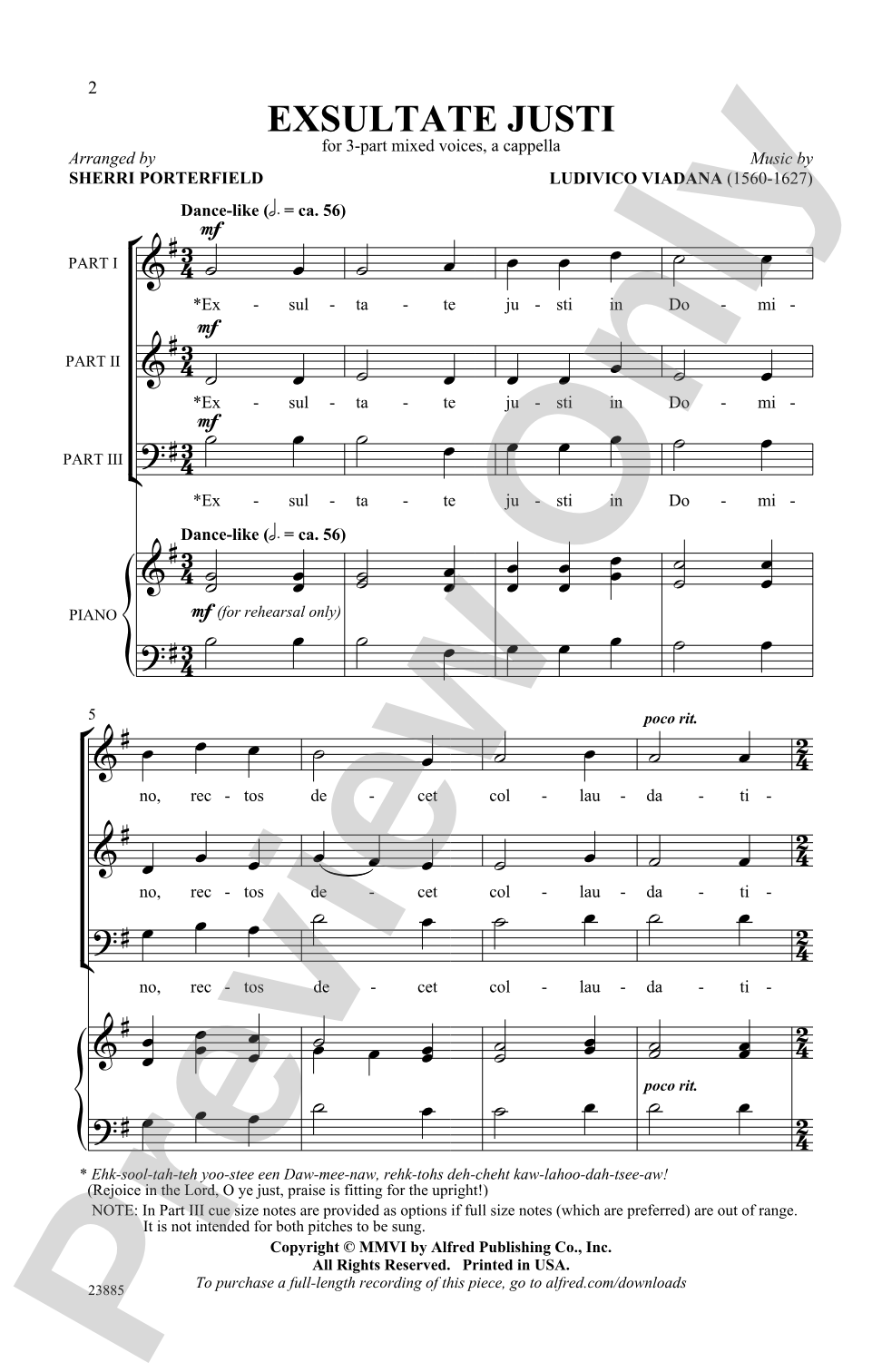
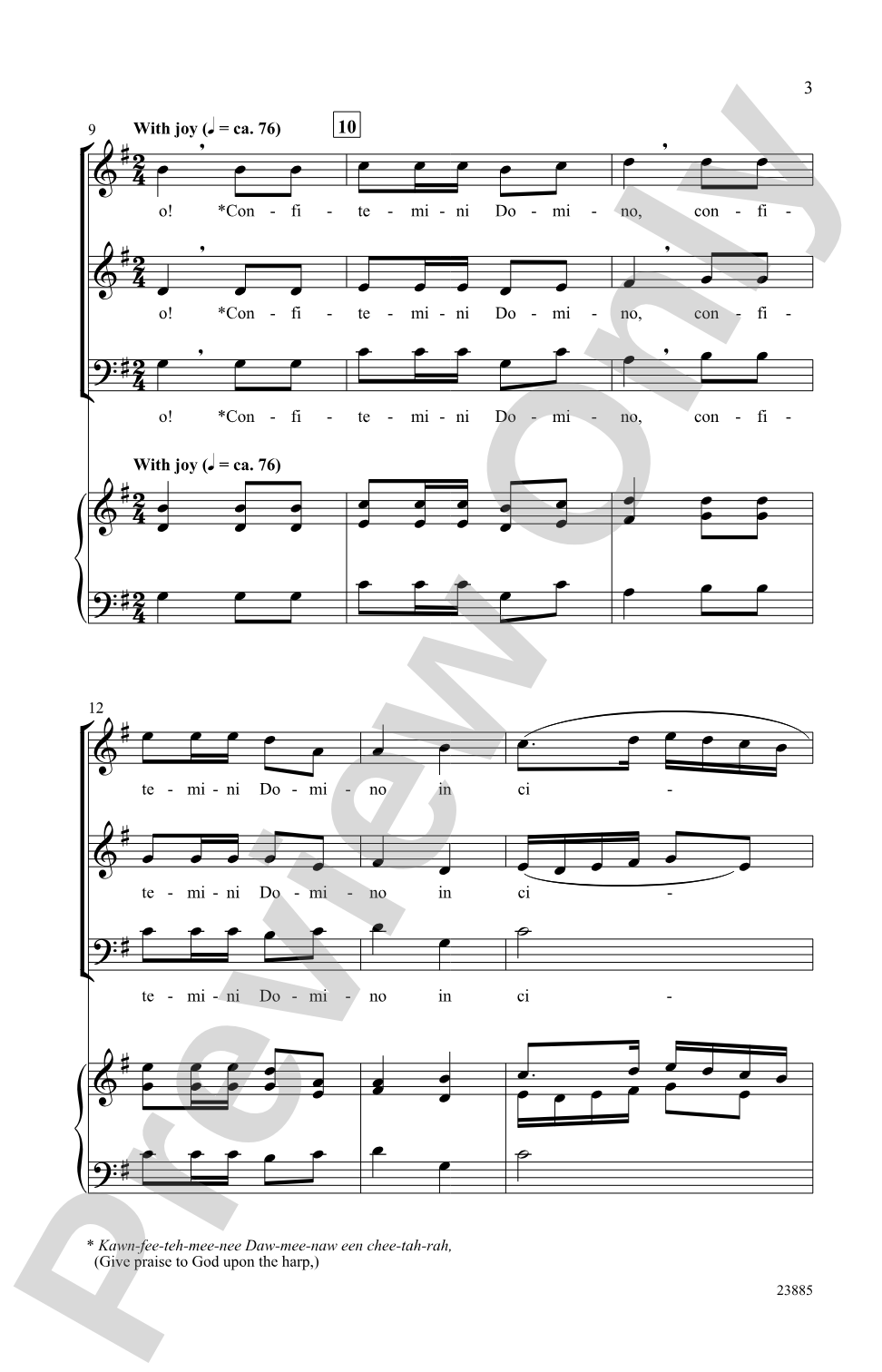
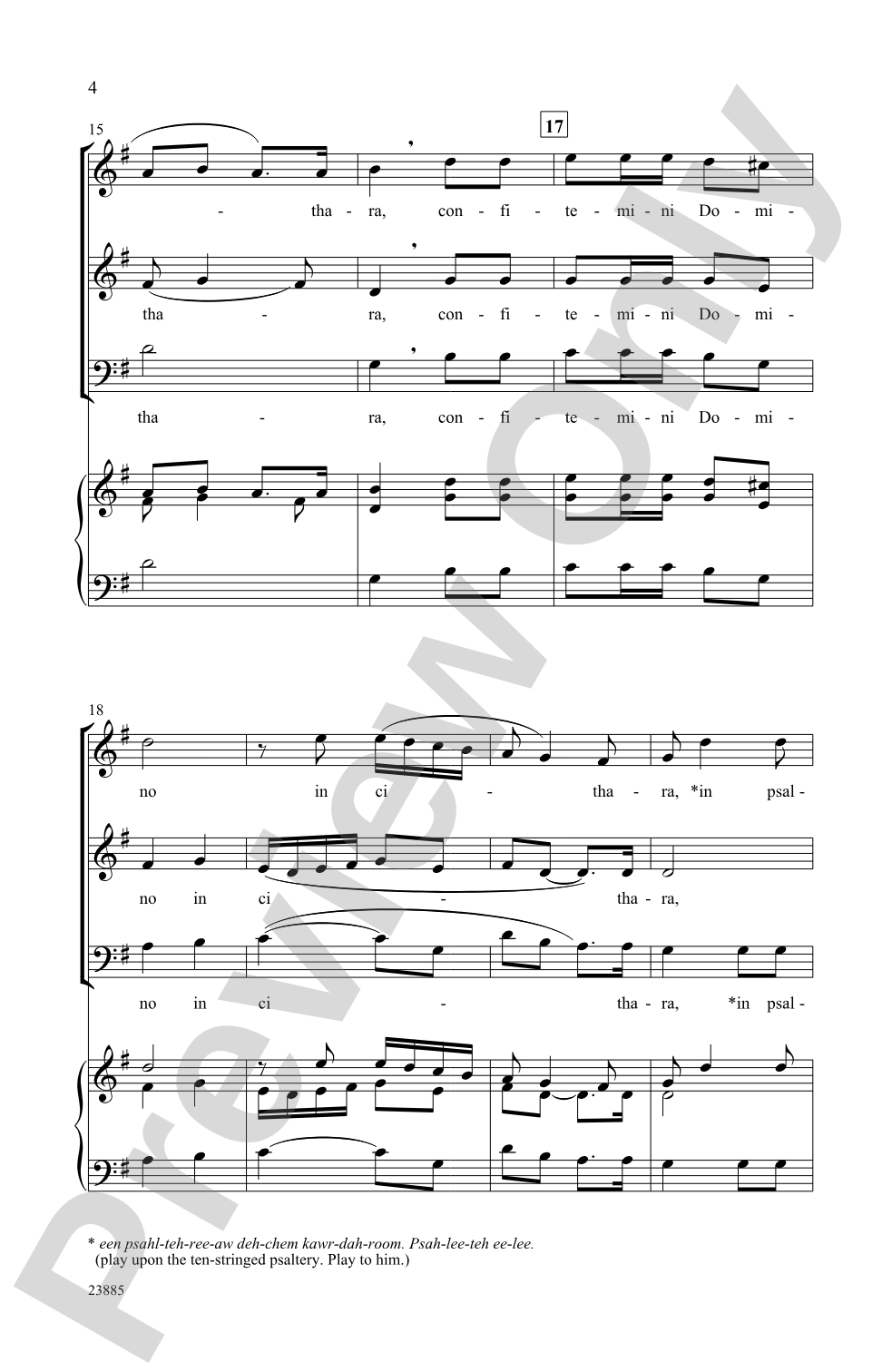

Exsultate Justi: 3-Part Mixed, a cappella Choral Octavo
Music Lodovico da Viadana / arr. Sherri Porterfield
Item: 00-PO-0000004
$2.25
Minimum order quantity: 20 copies
Pickup currently not available
Related Items
Exsultate Justi: 3-Part Mixed, a cappella Choral Octavo |
$2.25
|
View |
Description
There are several editions of this famous 16th century work, but none as well crafted as this one by Sherri Porterfield. The open score is easy to read and the editing is right on target for today's 3-part choirs. A classic a cappella choral complete with contrasting tempos, textures, and dynamics.


Exsultate Justi: 3-Part Mixed, a cappella Choral Octavo isn't in MakeMusic Cloud just yet...but it could be. Let us know you'd like to see it, and you'll help shape what comes next. In the meantime, start a free trial and dive into thousands of interactive titles your students can play along with today.
Request This Title
Tell us you want it.
Start Your Free Trial
Explore everything that's ready to play right now.
Sample Audio
1
Audio File
--:--
0:00
0:00
Sample Video
No sample videos found.
Additional Details
Series:
Alfred Archive Edition: Alfred Choral Designs
Publisher:
Alfred Music
Page Count:
12
SKU:
00-PO-0000004
More about this title
About the Composer: Lodovico da Viadana
Lodovico da Viadana (1560-1627) was an Italian composer and Franciscan friar whose sacred vocal music bridged the Renaissance and early Baroque. He published over 200 works across multiple collections, establishing himself as a prolific voice in 16th-century liturgical composition. His sacred motets and madrigals were widely distributed throughout Europe and remained in active performance for centuries.
Viadana's compositional clarity and attention to text expression made his work essential to choirs seeking music that sings naturally while maintaining structural integrity. His influence extended well beyond his lifetime, as his pieces became staples in both church services and secular performances. This particular work demonstrates the mastery that earned him recognition as a major figure in late Renaissance sacred music.
Why we love this
Porterfield's edition respects the original's elegant simplicity while presenting it in a format that speaks directly to today's mixed choirs. The open score layout removes guesswork from rehearsal, and her editorial choices for dynamics and phrasing bring out the piece's structural beauty without imposing unnecessary interpretive weight. This is Renaissance writing that feels fresh every time you conduct it.
What to expect
Exsultate Justi radiates quiet confidence. The counterpoint moves with clarity and purpose, inviting the listener into a space of contemplation without ever losing energy. Singers experience the satisfaction of clean Renaissance writing where every note belongs and the text breathes naturally with the music.
Who it's for
Directors working with 3-part mixed choirs who want an a cappella standard that commands respect without overwhelming developing singers. This arrangement is equally at home in a festival setting or a concert where you need something liturgically grounded yet musically substantive.
How to get the most out of it
- Pay attention to the contrasting sections: lean into the shifts between tempos and textures as architectural markers rather than abrupt changes. Let the transitions feel inevitable.
- Balance the three parts so no single voice dominates; Renaissance counterpoint asks each line to pull equal weight. Test this by having each section sing alone, then blend.
- Shape phrases through subtle dynamic changes rather than dramatic swells. Viadana's original voice leading suggests where breath and emphasis naturally land.
How to use it
Position this as a centerpiece in a sacred or liturgical program, or pair it with other Renaissance works to create a thematic concert block. Its manageable length and performance impact make it ideal for festivals where you need a serious competition piece that demonstrates musicianship without flashy arrangements.
Skills your students will build
- Reading and balancing three independent vocal lines in Renaissance counterpoint
- Responding to tempo and dynamic contrast within a single piece
- Maintaining pure vowels and clarity across sustained a cappella passages
- Understanding text expression in Latin sacred music
- Ensemble blend and part independence in mixed voicing (SAB)