

Excursions, Book 1: 12 Original Piano Solos for Early-Level Pianists: Piano
12 Original Piano Solos for Early-Level Pianists
By Elvina Pearce
Level: Elementary
Item: 00-PB-0000733
$6.99
Pickup currently not available
Related Items
Excursions, Book 1: Piano Book |
$6.99
|
View |
Description
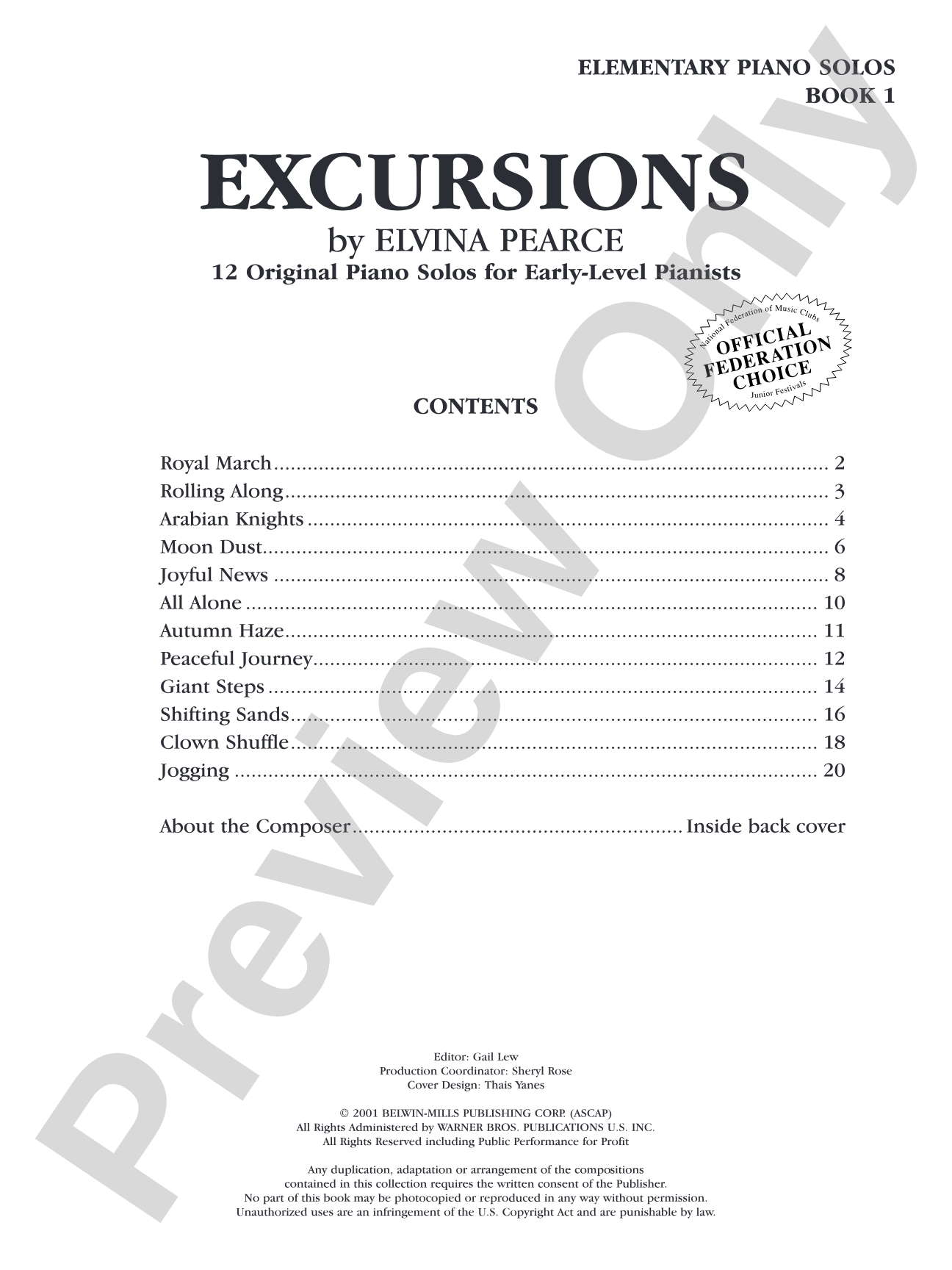
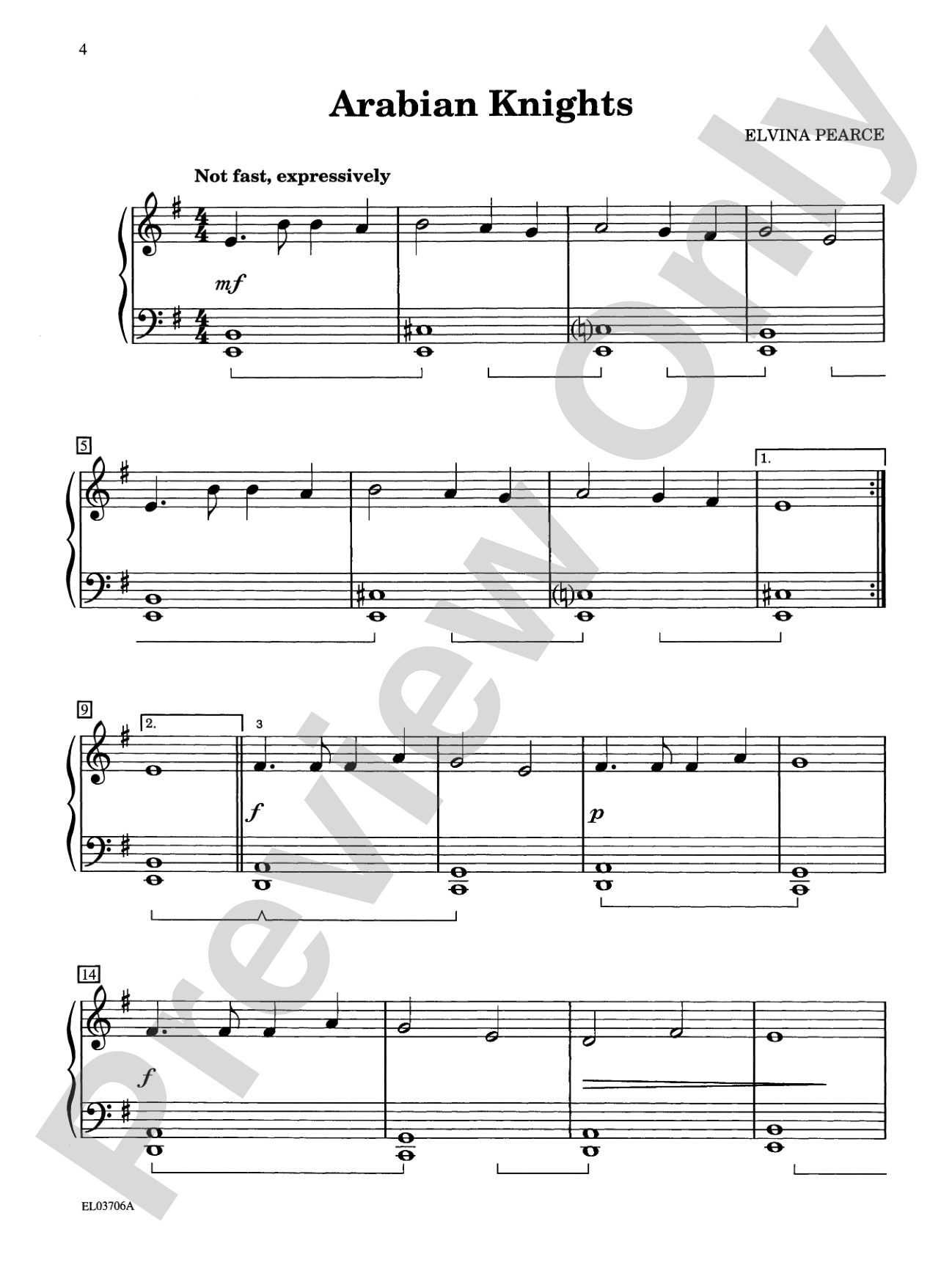
The rhythms and melodies are logical, the patterns are clearly defined, the sounds are exciting, and the student does indeed move around the keyboard. Titles: All Alone * Arabian Knights * Autumn Haze * Clown Shuffle * Giant Steps * Jogging * Joyful News * Moon Dust * Peaceful Journey * Rolling Along * Royal March * Shifting Sands. "All Alone," "Autumn Haze," "Joyful News," and "Royal March" are Federation Festivals 2016-2020 selections. A Federation Festivals 2020-2024 selection.


Excursions, Book 1: 12 Original Piano Solos for Early-Level Pianists: Piano isn't in MakeMusic Cloud just yet...but it could be. Let us know you'd like to see it, and you'll help shape what comes next. In the meantime, start a free trial and dive into thousands of interactive titles your students can play along with today.
Request This Title
Tell us you want it.
Start Your Free Trial
Explore everything that's ready to play right now.
Sample Audio
No sample audio found.
Sample Video
No sample videos found.
Additional Details
Publisher:
Alfred Music
Page Count:
24
SKU:
00-PB-0000733
More about this title
About the Composer: Elvina Pearce
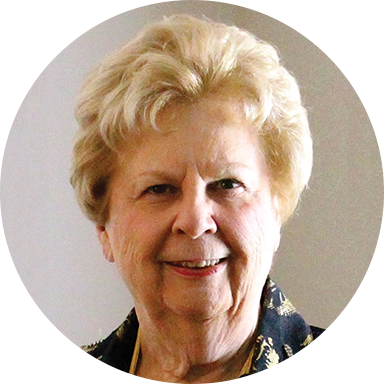
Elvina Pearce trained under Isabelle Vengerova in New York, studying alongside future giants like Samuel Barber and Leonard Bernstein. She also worked closely with pedagogy pioneer Frances Clark and co-founded both the New School for Music Study and the Frances Center for Keyboard Pedagogy in Princeton, New Jersey. Her teaching career spanned 14 years at Northwestern University, where she shaped emerging musicians and educators alike.
As a performer, Pearce appeared at Carnegie Recital Hall and the National Gallery of Art, and performed the Liszt Concerto in E-flat with the Chicago Symphony. Beyond the concert stage, she edited Keyboard Companion Magazine for six years and has become widely recognized for composing over 25 published piano collections. Her contributions to music education earned her a 2011 Lifetime Achievement Award from the National Conference on Keyboard Pedagogy and induction into the Illinois Fox Valley Arts Hall of Fame in 2014, recognizing more than five decades of service to music teaching and performance.
Why we love this
Pearce understands exactly what early elementary pianists need: pieces with logical progressions, clear patterns, and genuine excitement that justify the work required to learn them. The variety here is substantial—you move from the quietness of "All Alone" to the rhythmic propulsion of "Clown Shuffle" to the grandeur of "Royal March"—which means students encounter different moods and technical demands without leaving the early level. Four selections appear on Federation Festivals lists, giving students meaningful performance opportunities beyond the practice room.
What to expect
These solos span an emotional landscape from contemplative and wistful to playful and marching. You move between miniature character pieces and rhythmic studies, each one designed to sit comfortably under the early elementary pianist's hands while still offering the satisfaction of authentic musical expression. The writing feels spacious and purposeful, never cluttered or oversimplified.
Who it's for
This collection belongs in the hands of early elementary pianists navigating the transition from beginner foundations to more independent musical thinking. Students in their first year or two of lessons will find pieces that match their technical capability while offering genuine melodic and harmonic interest. Teachers building programs that balance technical skill-building with repertoire performance will return to these pieces again and again.
How to get the most out of it
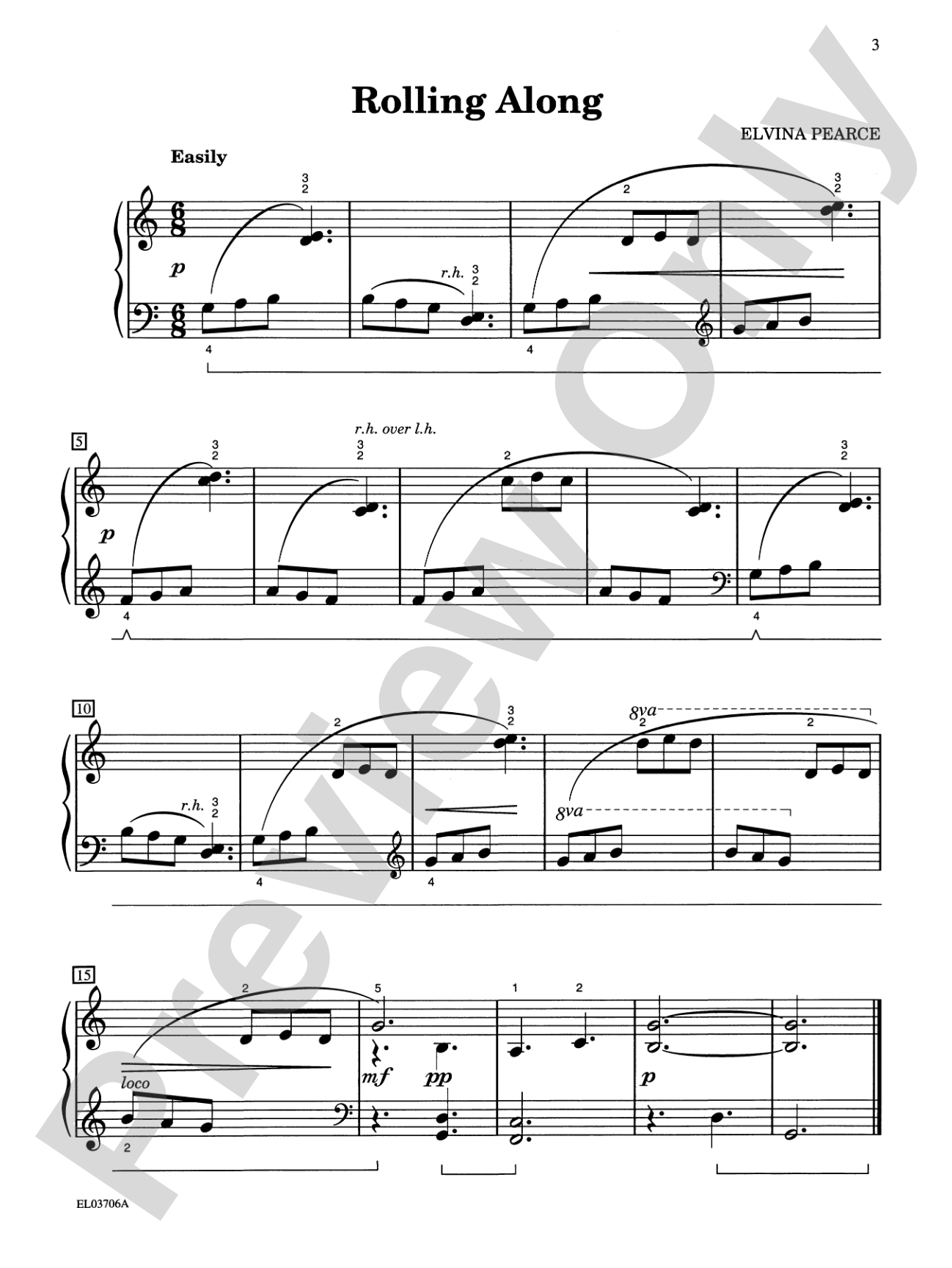
- Listen closely to how each piece uses keyboard geography. "Giant Steps" and "Shifting Sands" reward exploration of the full range; avoid playing timidly or in one register.
- Shape the melodies with intention even at slow tempos. "Peaceful Journey" and "Moon Dust" gain their character through phrasing, not speed.
- Treat rhythm as the foundation for pieces like "Clown Shuffle" and "Jogging." Lock in the pulse before adding any interpretive touches.
- Notice where Pearce uses repetition to build familiarity, then apply that structure to memorization work.
How to use it
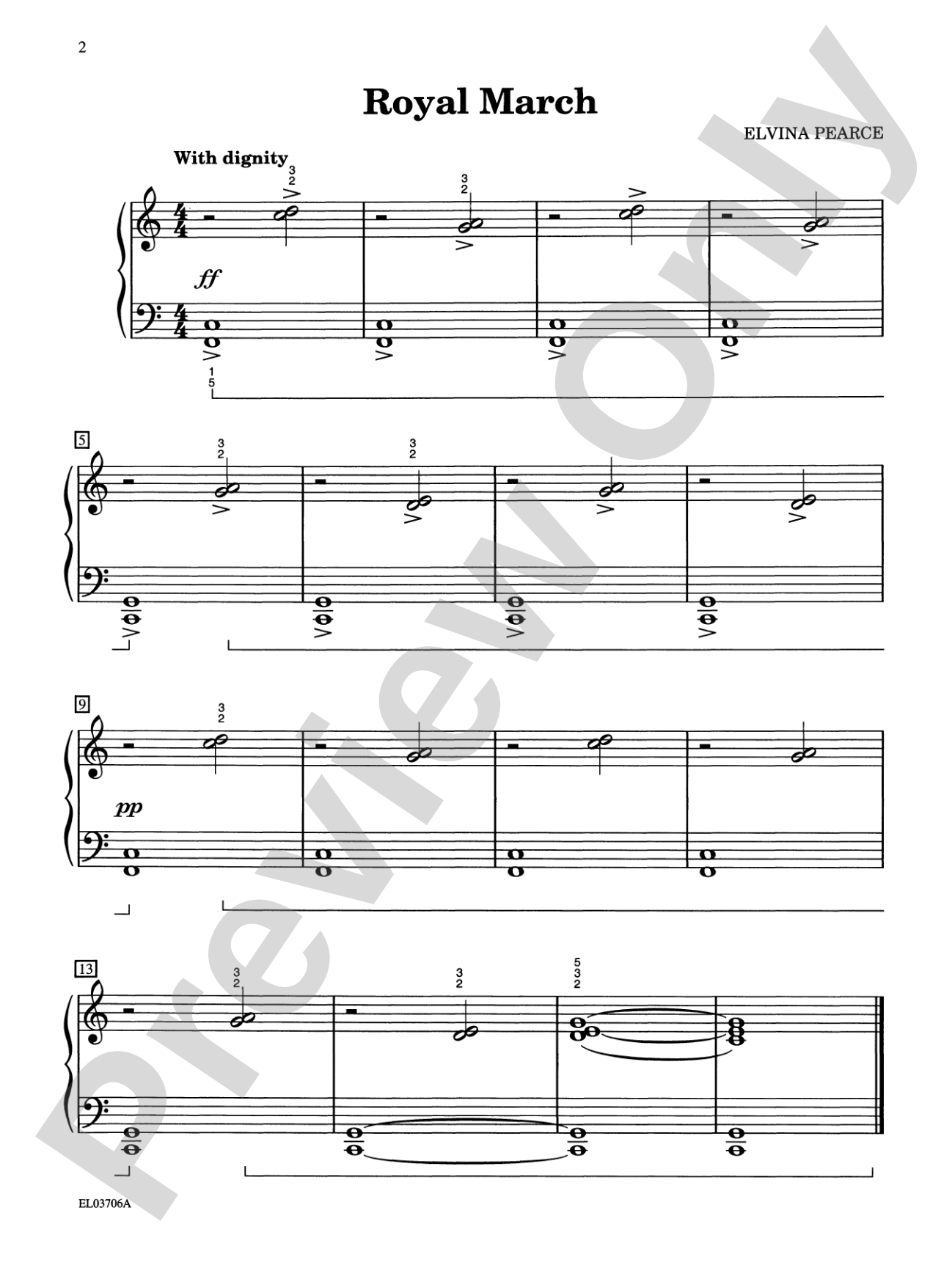
Scatter these pieces throughout the year as students develop different technical skills; use "Royal March" and "Joyful News" as end-of-semester recital pieces or festival entries. Pair complementary pieces in student recitals to show emotional range and stylistic variety. Teachers preparing students for Federation Festivals will especially value the four pieces on the recent selection lists, which gives them immediately relevant performance goals.
Skills your students will build
- Keyboard navigation across the staff and across different octaves
- Rhythmic accuracy in patterns that repeat and vary
- Melody shaping and phrasing within early-level hand positions
- Reading and interpreting simple character and tempo indications
- Coordination of melody and accompaniment patterns in both hands
- Memorization through pattern recognition and structural repetition