Excelcia: E-flat Baritone Saxophone Sheet Music Preview

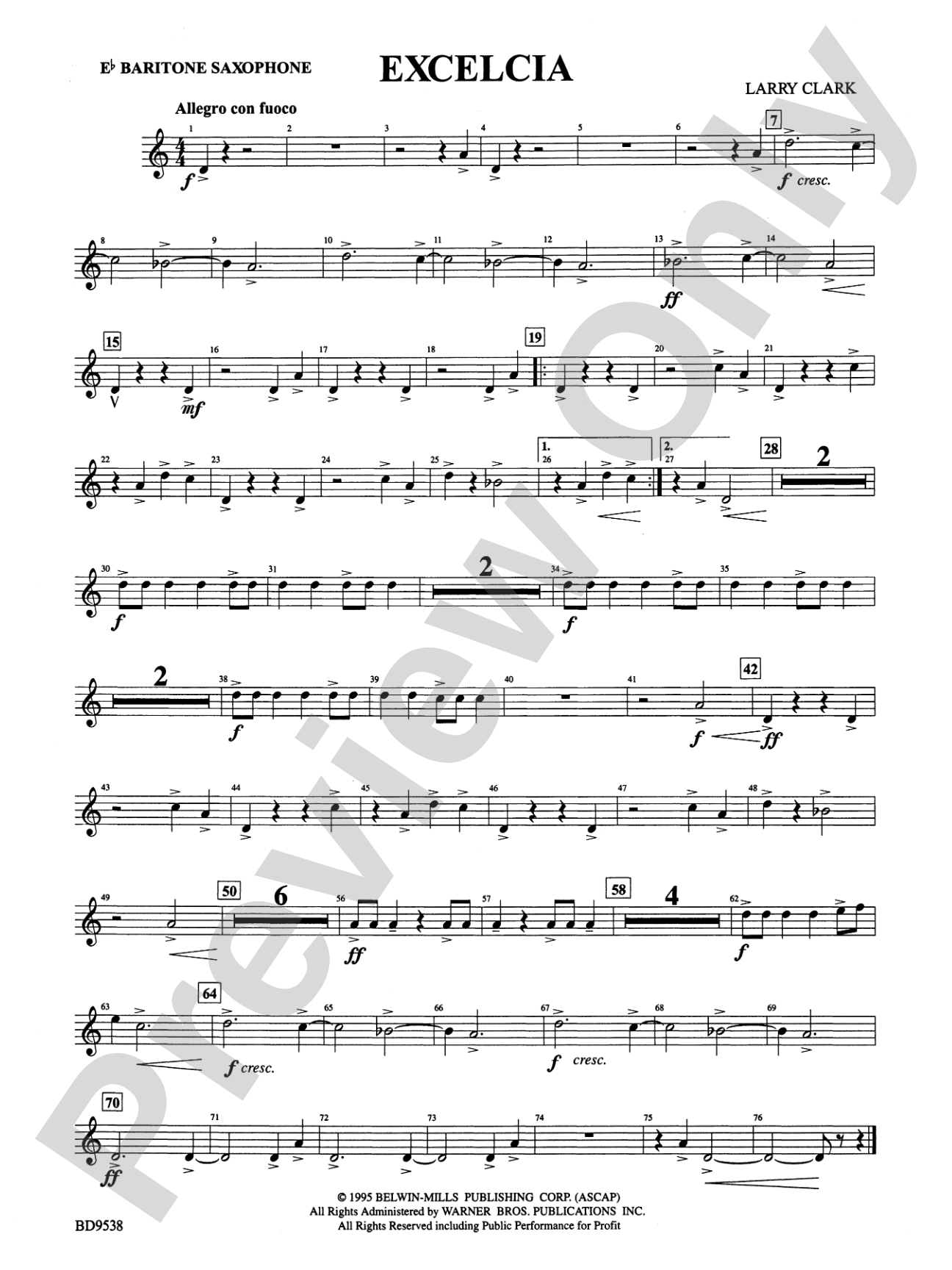
Excelcia: E-flat Baritone Saxophone

By Larry Clark

Grade: 1 (Very Easy)

Item: 00-PC-0002015_BTX

Digital Download
$3.00
Description
It's best called "real music" for even the youngest band. Here is a fascinating study in contemporary harmonic structuring and rhythmic illusion. Although the piece is written throughout in 4/4 time, the listener's ear may perceive otherwise. Tempo may be adjusted to the skill level of the ensemble as your players plunge headlong into this dynamic work. Consider Excelcia for contest! (1:58)

Don't just read it, hear it, play along with it, and watch your students grow with it. In MakeMusic Cloud, Excelcia: E-flat Baritone Saxophone comes alive with professional accompaniment, adjustable tempo, and built-in practice tools that turn solo practice into real progress.

Sample Audio
No sample audio found.
Sample Video
Additional Details
Series: Belwin Beginning Band
Publisher: Alfred Music
Page Count: 124
SKU: 00-PC-0002015_BTX

More about this title

About the Composer: Larry Clark

Larry Clark is a prolific composer and arranger whose work spans educational wind band literature, jazz, and commercial music. His compositions for beginning and intermediate bands have become standard repertoire in school music programs, known for their musicality, accessibility, and pedagogical clarity. Clark's gift lies in crafting pieces that engage young players while never talking down to them, treating even Grade 1 ensembles as capable musicians worthy of substantive musical ideas.

Why we love this

Excelcia demonstrates what Grade 1 music can accomplish when a composer respects young musicians' ears and abilities. The interplay between strict 4/4 time signature and the illusion of shifting meters creates a sophisticated listening experience that engages both players and audience, making this genuinely memorable rather than merely serviceable. At under two minutes, it fits seamlessly into contest programs while packing real harmonic and rhythmic substance.

What to expect

Excelcia pulses with forward momentum despite its modest grade level. The contemporary harmonic language creates moments of intrigue and color, while the rhythmic interplay between what's written and what the ear perceives gives the piece a subtle sophistication. It feels energetic and substantial, never condescending.

Who it's for

Beginning band programs looking for first-year repertoire that doesn't compromise on musicality or artistic ambition. Directors preparing for contest or concert programs who want pieces that impress adjudicators and audiences while remaining achievable for developing ensembles.

How to get the most out of it

  • Establish the tempo as your ensemble's anchor. Since rhythmic illusion depends on steady time, have the band lock onto a metronome in early rehearsals to prevent the perceived meter shifts from becoming actual rhythmic instability.
  • Adjust tempo during preparation to match your ensemble's technical facility, but once locked in for performance, maintain consistency. The effect of metric illusion only works when the underlying pulse is rock-solid.
  • Balance the harmonic colors carefully, particularly when voices shift roles across the measure. Conductors often need to highlight inner parts that carry the harmonic progression to reveal the contemporary sonorities.
  • Avoid overinterpreting the rhythmic illusion through conducting gesture. Let the music speak through the parts; overly expressive conducting can muddy the effect you've worked so hard to achieve.

How to use it

Program Excelcia early in a concert when attention is fresh, pairing it with contrasting traditional repertoire to highlight its contemporary voice. It also serves as an ideal contest selection for beginning bands, offering judges evidence of thoughtful musicianship while the short duration keeps the ensemble focused during preparation.

Skills your students will build

  • Maintaining steady pulse in 4/4 time despite metric illusion
  • Reading and performing contemporary harmonic structures
  • Balancing part independence and ensemble blend
  • Responding to dynamic shaping and color changes
  • Interpreting contemporary musical notation and stylistic demands

You May Also Like