
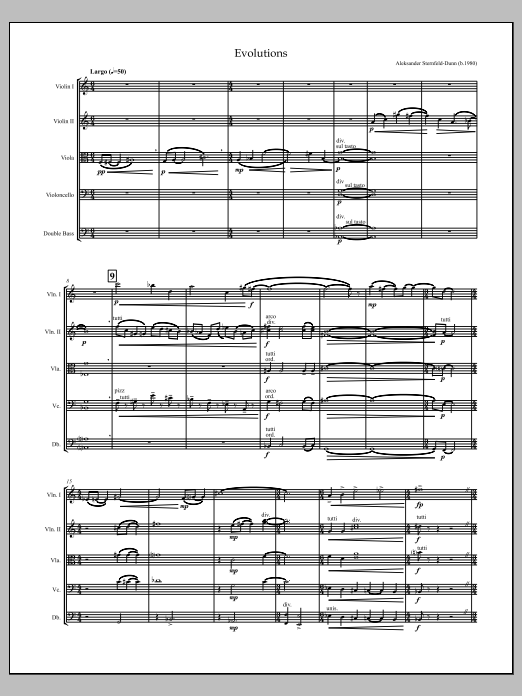

Evolutions: String Orchestra Conductor Score & Parts
Arranged by Aleksander Sternfeld-Dunn
Item: 35-PK00267945
$3.20
Pickup currently not available
Buy Extra Parts (Digital PDF Download)
| Product | Price | Quantity |
|---|---|---|
| Evolutions - Full Score | $2.45 | |
| Evolutions - Violin | $2.15 | |
| Evolutions - Violin | $2.15 | |
| Evolutions - Viola | $2.15 | |
| Evolutions - Violoncello | $2.15 | |
| Evolutions - Contrabass | $2.15 |
Parts Added to Cart!
Description
A slow somber work for string orchestra. Features a short cadenza for principal Violin and cello Duration: 05:00


Evolutions: String Orchestra Conductor Score & Parts isn't in MakeMusic Cloud just yet...but it could be. Let us know you'd like to see it, and you'll help shape what comes next. In the meantime, start a free trial and dive into thousands of interactive titles your students can play along with today.
Request This Title
Tell us you want it.
Start Your Free Trial
Explore everything that's ready to play right now.
Sample Audio
No sample audio found.
Sample Video
No sample videos found.
Additional Details
Publisher:
Hal Leonard
SKU:
35-PK00267945
More about this title
Why we love this
Evolutions captures something rare in the string orchestra repertoire: genuine emotional weight without requiring advanced technical facility. The solo cadenza passages give your principal players a moment to shine while the ensemble supports with restrained, purposeful writing that rewards careful listening.
What to expect
Evolutions unfolds like a meditation on change and acceptance, its somber character rooted in sustained harmonies and sparse gesture rather than dramatic orchestration. The work invites listeners into quiet introspection, with the violin and cello cadenzas providing moments of personal testimony within the collective sound.
Who it's for
String orchestras seeking repertoire with emotional substance but reasonable technical demands will find this piece manageable at the intermediate to early advanced level. It works equally well for ensembles building their concert programming or for directors wanting a reflective counterpoint to lighter works.
How to get the most out of it
- Balance the principal violin and cello cadenzas by rehearsing them separately first, then in context with the ensemble so soloists understand how their lines sit within the overall texture.
- Shape the slow harmonic movement with long-term breath planning rather than phrase-by-phrase interpretive choices; this prevents the work from feeling static.
- Pay attention to dynamic control in the lower strings, as they often carry the foundational material while upper voices sustain or move more sparingly.
- Use the score to identify moments where the strings divide; clarity here prevents the texture from becoming muddy despite the work's somber mood.
How to use it
Consider this piece as an anchor for a concert that explores contrasts in mood and intensity. Its five-minute span makes it ideal for building a first half that moves from another contrasting work into a finale, or for creating a poignant moment before intermission.
Skills your students will build
- sustaining pitch and tone quality over long phrases without vibrato fluctuation
- responding to subtle dynamic shifts and shape in ensemble writing
- balancing individual voice in divisi passages while maintaining overall blend
- accompanying solo passages with supportive but unobtrusive harmonic texture
- interpreting sparse notation with intentionality rather than literal exactness