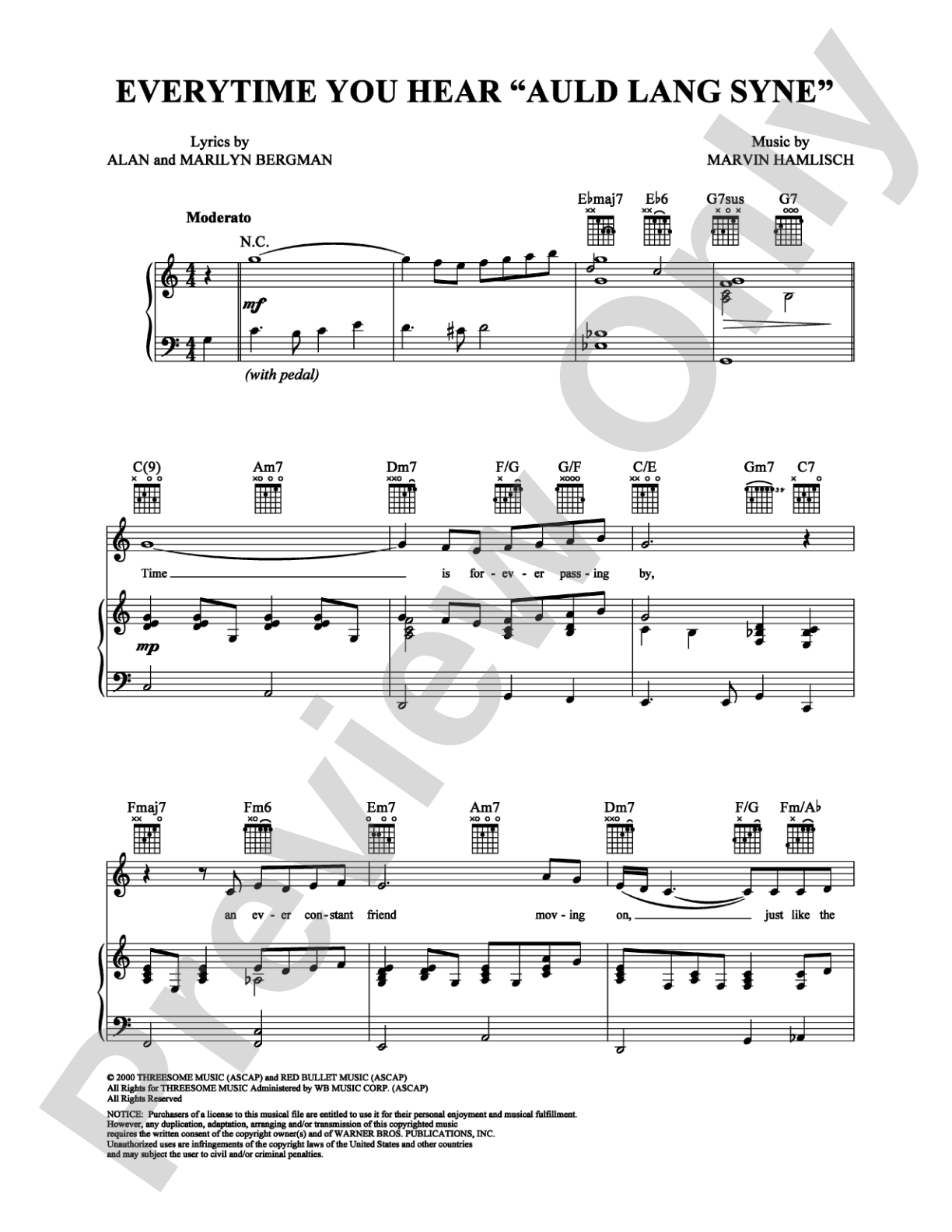
Everytime You Hear "Auld Lang Syne": Piano/Vocal/Chords Digital Sheet Music

Everytime You Hear "Auld Lang Syne": Piano/Vocal/Chords Digital Sheet Music

Marvin Hamlisch, Barbra Streisand

Item: 00-PS-0005146

Digital Download
$2.95
Description

Everytime You Hear "Auld Lang Syne": Piano/Vocal/Chords Digital Sheet Music isn't in MakeMusic Cloud just yet...but it could be. Let us know you'd like to see it, and you'll help shape what comes next. In the meantime, start a free trial and dive into thousands of interactive titles your students can play along with today.

Sample Audio
No sample audio found.
Sample Video
Additional Details
SKU: 00-PS-0005146

More about this title

About the Artist: Barbra Streisand

Barbra Streisand's career spans six decades as a recording artist, performer, and interpreter of American song. Her distinctive contralto voice and meticulous approach to phrasing have made her one of the most influential vocalists in popular music, with particular mastery over standards and contemporary material alike.

For music education, Streisand's recordings serve as masterclasses in lyrical phrasing, dynamic control, and emotional storytelling. Her interpretations demonstrate how technical vocal skill and interpretive depth work together to transform familiar material into deeply personal performances.

Why we love this

Streisand's take on this New Year's Eve standard brings sophisticated vocal phrasing and emotional restraint to a song often performed with sentimentality. The arrangement respects the tune's timeless quality while creating space for a singer to explore rubato and dynamic subtlety, making it an excellent study in how to honor tradition without simply recreating it.

What to expect

There's a quiet dignity here, a moment of genuine reflection rather than nostalgic sentimentality. The song settles into contemplative space, inviting the singer to find intimacy with both the lyric and the listener.

Who it's for

Singers preparing audition material, recital selections, or special performance contexts need interpretations of standard songs that go beyond obvious choices. This arrangement works well for vocalists comfortable with contemporary interpretations of traditional material and looking to understand how an acclaimed artist approaches familiar territory.

How to get the most out of it

  • Study how Streisand shapes the melody by listening to her recording; note where she sits behind the beat and where she pushes ahead, then decide which choices fit your own voice.
  • Pay close attention to the chord changes in the accompaniment. This arrangement likely offers richer harmonic movement than you'd expect, so let the piano work inform your phrasing.
  • Balance restraint with warmth in your tone. The song calls for reflection, not overstatement; a smaller, more intimate sound often serves the lyric better than projection.

How to use it

Save this for contexts where a single, carefully chosen song carries weight: a recital closing, a special concert moment, or a holiday program where you want one strong interpretation rather than a medley. It pairs naturally with other introspective American songs and works best when given its own space on the program.

Skills your students will build

  • Interpreting rubato and flexibility within a traditional melody
  • Using harmonic understanding to inform vocal phrasing
  • Balancing vocal projection with emotional intimacy
  • Exploring dynamic subtlety and restraint in performance

You May Also Like