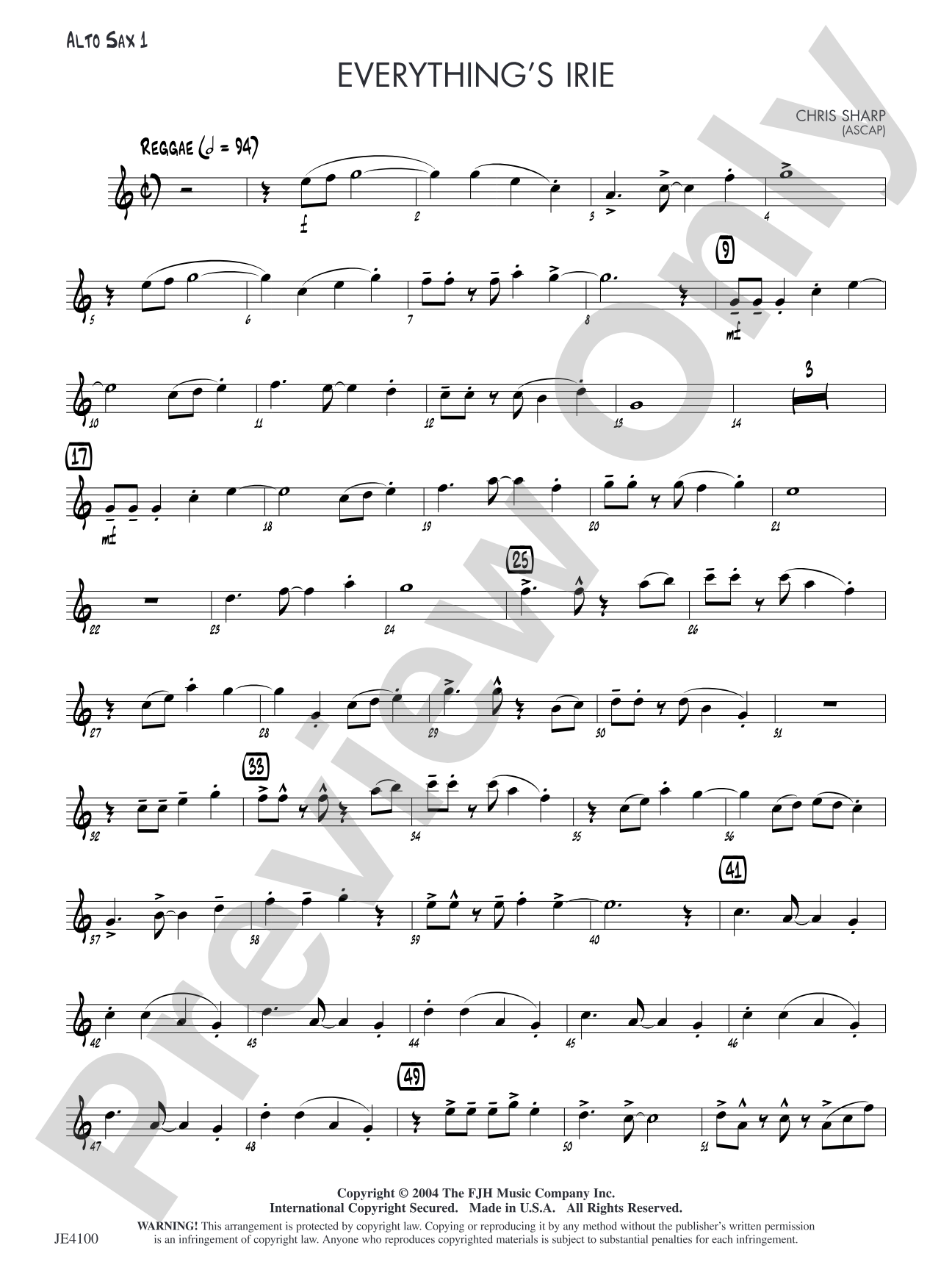
Take a trip to Jamaica with this authentic sounding Reggae chart by Chris Sharp. Here is a great tool for expanding your rhythm section's ability to master different styles, while providing a lot of audience appeal at the same time. A wonderful way to add some variety to your next program!
Discover MakeMusic Cloud: thousands of interactive titles your students can play along with today.
Chris Sharp earned his doctorate while studying at the University of Florida and University of Miami, building a foundation that would shape his career across education, performance, and composition. His eleven years as a trombonist and bandleader at Walt Disney World, combined with his role as arranger and orchestrator for Disney parks globally since 1984, gave him insider knowledge of how music functions in live performance contexts. Beyond the theme parks, he has composed and arranged for the Boston Pops, the Dallas Brass, Universal Studios, and the USAF Airmen of Note, earning multiple ASCAPlus awards for his work.
Today, Sharp directs the bands program at Polk State College while teaching theory, technology, and arranging. He regularly clinics and adjudicates for organizations like Bands of America and Drum Corps International, and his pieces appear consistently at the Midwest Clinic. His arrangements reflect a deep understanding of what works in the rehearsal room and on stage.
Why we love this
Sharp writes for the rhythm section with real purpose here. A Grade 2 reggae chart sounds simple on paper, but his voicings and comping patterns force your drummers, bassists, and keyboard players to listen across styles rather than defaulting to what they know. Your ensemble gets the infectious energy of Jamaica's music while your section leaders develop genuine stylistic flexibility.
What to expect
Warm, sun-drenched, and relaxed. The chart carries authentic reggae character while staying accessible for players still building their jazz vocabulary. There's joy here without demanding technical heroics.
Who it's for
Jazz ensembles at the developing level who are ready to step outside swing and blues. Your rhythm section especially benefits from learning how different grooves sit, and your audience will feel the immediate stylistic shift.
How to get the most out of it
Lock the kick drum and bass line tight from day one. The pocket defines reggae, so spend early rehearsals on just the rhythm foundation before layering horns.
Push the band away from swung eighth notes. This style sits differently than swing, with a straighter, more linear pulse underneath the offbeat guitar.
Have your soloists listen to authentic reggae recordings beyond the rehearsal. The phrasing and space in this music are as important as the notes on the page.
Keep the energy bright and conversational rather than driving hard. Reggae breathes; it doesn't muscle its way forward.
How to use it
Program this mid-concert to break up a set of standards and swing. The style change refreshes listener attention, and it gives your ensemble a chance to show range beyond the typical jazz repertoire. It also makes for strong recruiting material when younger students hear the band tackle something beyond chord changes.
Skills your students will build
Recognizing and executing reggae's characteristic rhythm patterns and offbeat emphasis
Adapting comping and accompaniment techniques across genre styles
Building pocket awareness beyond straight-ahead swing
Listening to and balancing a groove-based ensemble sound
Responding to different cultural and regional musical contexts
You May Also Like
Scan to Complete Your Purchase
Use your phone's camera to scan the code below
You'll log in on your phone and the order will be added to your account