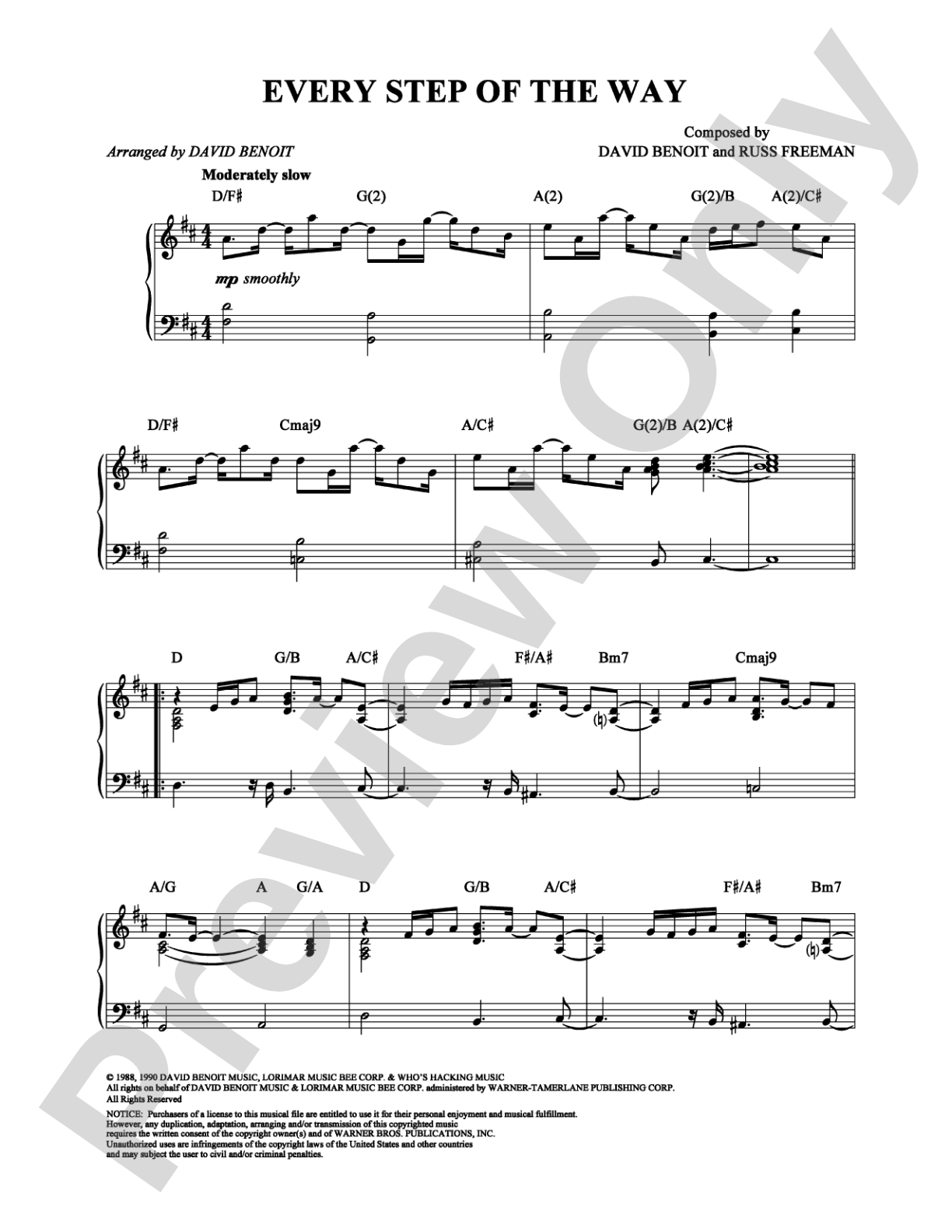
Every Step of the Way: Piano Digital Sheet Music

Every Step of the Way: Piano Digital Sheet Music

David Benoit, Russ Freeman

Item: 00-PS-0002782

Digital Download
$3.99
Description

Every Step of the Way: Piano Digital Sheet Music isn't in MakeMusic Cloud just yet...but it could be. Let us know you'd like to see it, and you'll help shape what comes next. In the meantime, start a free trial and dive into thousands of interactive titles your students can play along with today.

Sample Audio
No sample audio found.
Sample Video
Additional Details
SKU: 00-PS-0002782

More about this title

About the Artist: David Benoit

David Benoit is a Grammy-winning pianist and composer known for his work in jazz and adult contemporary music. His compositions blend accessible melodic writing with sophisticated harmonic language, making his work appealing to both professional performers and advancing students.

Why we love this

Benoit's writing sits at the intersection of jazz accessibility and genuine harmonic depth. The piece rewards careful listening and intentional voicing choices without demanding virtuosic technique, making it engaging for mature pianists who want to explore contemporary jazz idioms.

What to expect

The piece conveys a sense of steady forward motion paired with emotional reflection. There's an unhurried quality to the harmonic movement that invites the listener into intimate musical space while maintaining optimistic momentum throughout.

Who it's for

This piece works well for advancing high school pianists or adult students who have moved beyond classical foundations and are ready to explore contemporary jazz repertoire. It's equally suited to performers preparing recital material or teachers looking for substantive jazz literature to teach.

How to get the most out of it

  • Pay attention to the harmonic movement underneath the melody; Benoit's progressions often contain unexpected voice leading that becomes clear only when you voice it intentionally rather than playing chords mechanically.
  • Balance transparency with warmth in your touch. These pieces work best when the listener can hear the architecture of the harmony without the sound becoming thin or brittle.
  • Let the rubato breathe naturally from the harmonic rhythm rather than imposing external tempo shifts. The phrasing should feel inevitable, not arbitrary.

How to use it

Include this in a recital program showcasing contemporary jazz composers, or pair it with classical and traditional jazz standards to demonstrate the full range of your student's repertoire. It works especially well as a closing piece that leaves the audience with a sense of peaceful resolution.

Skills your students will build

  • Voice leading in contemporary jazz harmony
  • Lyrical melody playing over complex chord changes
  • Pedal technique for sustaining harmonic color without muddying texture
  • Rhythmic flexibility and rubato in non-classical contexts
  • Listening for and realizing the emotional arc of a composition

You May Also Like