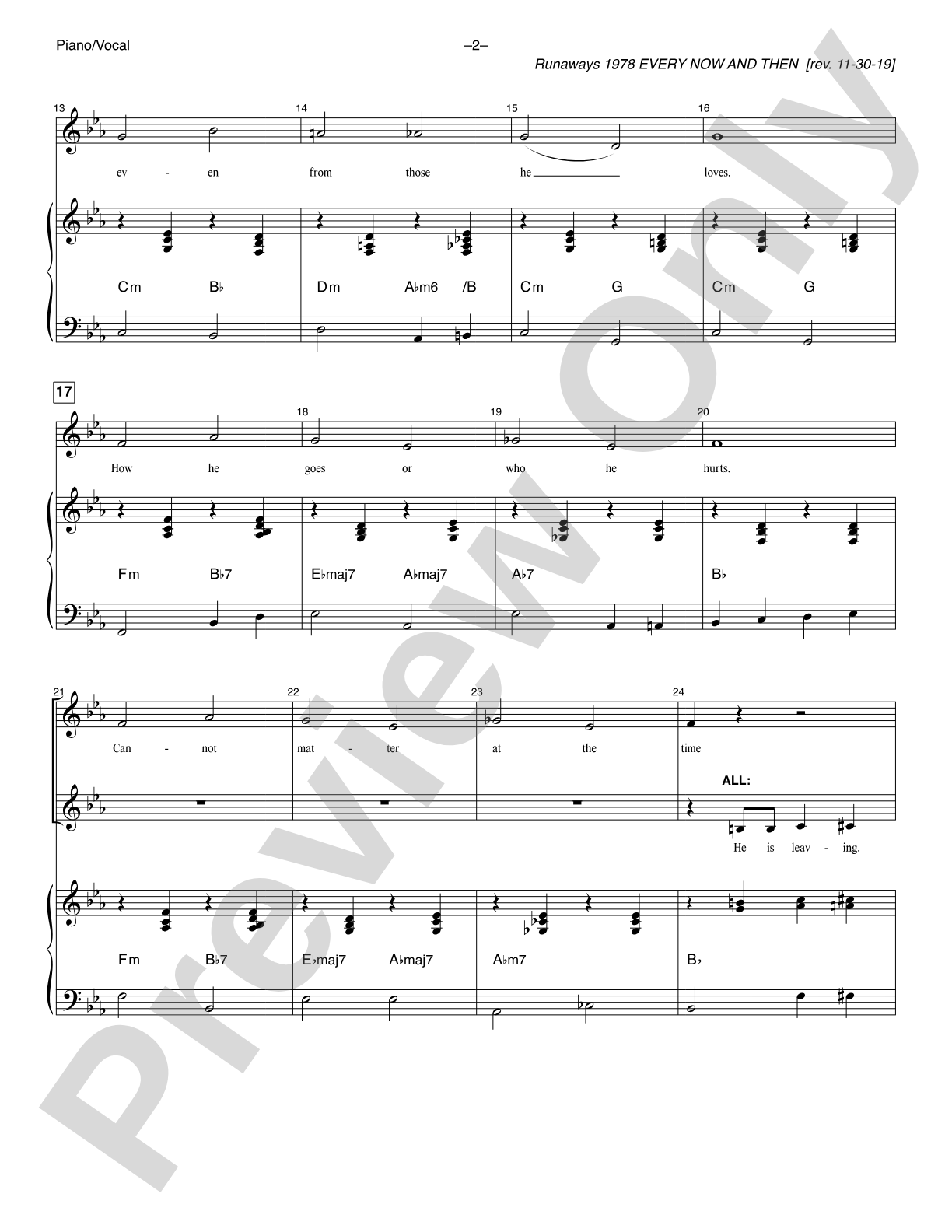
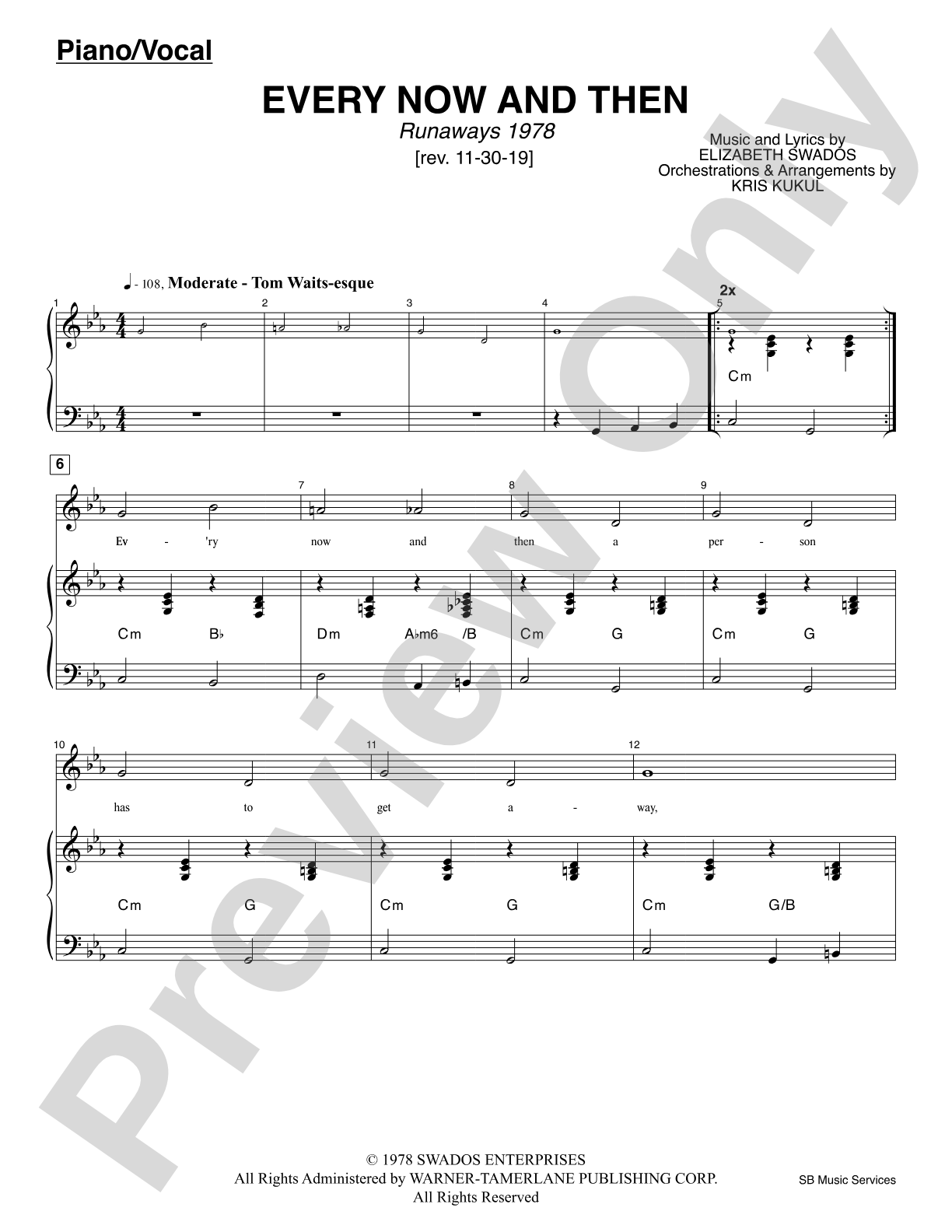
Every Now And Then (<i>Runaways 1978</i>) Sheet Music Preview

Every Now And Then (Runaways 1978): Piano/Vocal

Music and lyrics by Elizabeth Swados / Orchestrations and arrangements by Kris Kukul

Item: 00-PS-0016356

Digital Download
$3.99

One moment…

Description
From The Liz Swados Project---a tribute album to the Tony-nominated artist Elizabeth Swados.

Every Now And Then (Runaways 1978): Piano/Vocal isn't in MakeMusic Cloud just yet...but it could be. Let us know you'd like to see it, and you'll help shape what comes next. In the meantime, start a free trial and dive into thousands of interactive titles your students can play along with today.

Sample Audio
No sample audio found.
Sample Video
Additional Details
SKU: 00-PS-0016356

More about this title

About the Composer: Elizabeth Swados

Elizabeth Swados was a Tony-nominated director, composer, and lyricist whose work bridged experimental theater, social justice, and popular music. She created groundbreaking productions including Runaways (1978), a musical centered on the lives of homeless youth, which earned her a Tony nomination for Best Original Score. Her compositions combined accessible melodies with theatrical depth, addressing urgent social themes through music that felt both urgent and intimate.

Swados's legacy in music education extends beyond Broadway. Her work demonstrated how song could amplify untold stories and give voice to marginalized communities. She remained a prolific creator across theater, film, and concert music until her death in 2016, leaving behind a catalog that continues to inspire performers and directors seeking material with conscience and craft.

Why we love this

This song carries the theatrical authenticity of Swados's original Runaways score into a contemporary recording context. The arrangement by Kris Kukul honors the song's emotional directness while making it accessible for recital and performance settings. It's the kind of material that reminds singers why songs matter: it has something real to say and doesn't apologize for it.

What to expect

The song has an intimate, almost conversational quality, as if the singer is sharing a private reflection. Swados's melody moves naturally through the lyric, grounded in the piano's steady harmonic support, creating space for genuine emotional expression. There's a theatrical simplicity here that carries surprising weight.

Who it's for

Singers preparing audition material, recital selections, or contemporary theater repertoire will find this piece rewarding. It suits advanced high school singers and college-level performers seeking music with theatrical depth and social resonance. Pianists accompanying vocalists in musical theater or art song contexts will appreciate the clear, supportive accompaniment.

How to get the most out of it

  • Prioritize lyrical clarity over technical display. The melody sits naturally in the voice part, so focus on storytelling and emotional connection rather than demonstrating range.
  • Balance the vocal line with the piano accompaniment. Listen carefully to the harmonic foundation Kukul provides; it should support rather than compete with your phrasing.
  • Honor the conversational rhythm of the lyrics. "Every Now and Then" has a spoken quality underneath the melody; let that authenticity shape your tempo and phrasing choices.
  • Explore dynamic contrast within phrases rather than in big dramatic sweeps. The song's power comes from specificity, not volume.

How to use it

Include this in recital programs alongside other contemporary musical theater material or art songs addressing social themes. It works well paired with other selections from The Liz Swados Project tribute, or alongside contemporary singer-songwriters. Consider programming it in a concert celebrating women composers or music rooted in theater and activism.

Skills your students will build

  • Connecting lyrical meaning to melodic phrasing in popular/theatrical contexts
  • Balancing vocal expression with piano accompaniment
  • Interpreting contemporary art song idioms
  • Building musical communication between vocalist and pianist

You May Also Like