Every Little Thing She Does Is Magic (arr. Roel Griffioen) Sheet Music Preview

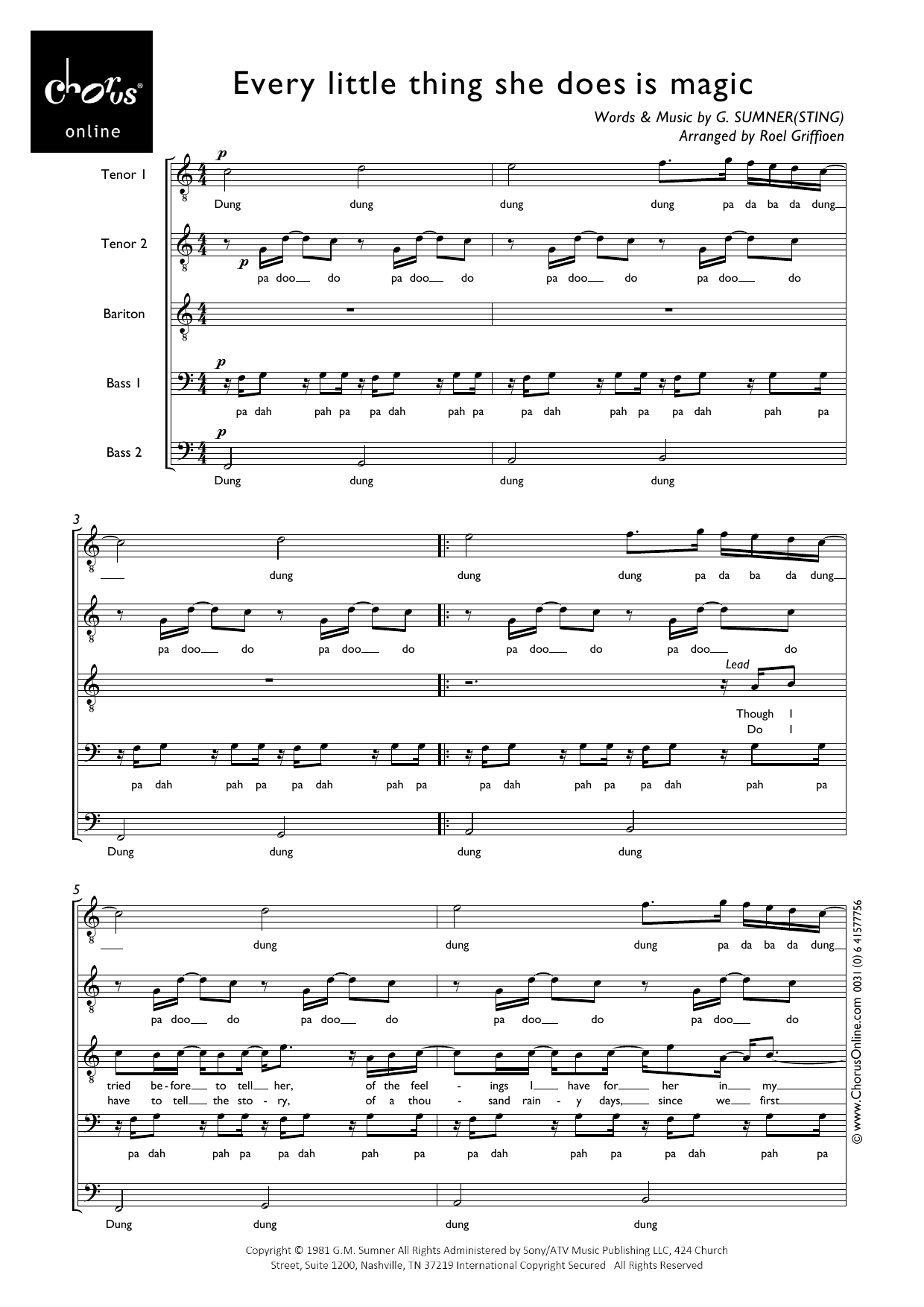
Every Little Thing She Does Is Magic (arr. Roel Griffioen): TTBBB Choral Octavo

As performed by The Police / Arranged by Roel Griffioen

Item: 35-DS00481374

Digital Download
$2.99
Description

Every Little Thing She Does Is Magic (arr. Roel Griffioen): TTBBB Choral Octavo isn't in MakeMusic Cloud just yet...but it could be. Let us know you'd like to see it, and you'll help shape what comes next. In the meantime, start a free trial and dive into thousands of interactive titles your students can play along with today.

Sample Audio
No sample audio found.
Sample Video
Additional Details
Publisher: Hal Leonard
Page Count: 10
SKU: 35-DS00481374

More about this title

About the Artist: The Police

The Police emerged from the late 1970s punk and new wave scene to become one of the most innovative rock bands of the 1980s. Sting, Andy Summers, and Stewart Copeland blended reggae, funk, and pop sensibilities with sophisticated songwriting and studio craftsmanship, creating a catalog that has aged remarkably well. Their influence on contemporary music education extends beyond rock history; their harmonic sensibility and rhythmic complexity offer students genuine compositional lessons wrapped in accessible, recognizable songs.

Why we love this

Roel Griffioen's arrangement captures the melodic charm and harmonic sophistication of this 1981 earworm while making it genuinely singable for five-part male voices. The TTBBB voicing keeps the piece within comfortable ranges while preserving the song's irresistible pop appeal, giving your singers something they'll actually enjoy rehearsing. It's the kind of arrangement that makes pop music feel substantial without losing what made the original unforgettable.

What to expect

Light, breezy, and deceptively sophisticated. The arrangement maintains the original's effortless charm while unfolding harmonic sophistication that reveals itself through repeated listenings. There's a warmth to male voices singing this melody that transforms the song from pop radio staple into something genuinely intimate.

Who it's for

Choirs seeking contemporary repertoire that bridges the gap between pop enjoyment and vocal ensemble substance will find real value here. The five-part texture and ten-page length suggest singers with some ensemble experience, though the vocal writing itself remains accessible. This works especially well for groups looking to expand beyond standard classical or traditional sacred fare without sacrificing musicianship.

How to get the most out of it

  • Balance the upper two tenors against the three basses; this voicing can easily tip bottom-heavy if the bass section oversings. The melody lives in the first tenor line for much of the arrangement, so ensure those singers project without strain.
  • Lock the rhythmic feel early in rehearsal. The Police's records have a distinctive pocket rooted in reggae and new wave sensibilities; nail the groove and the harmonic movement will sit naturally.
  • Shape the phrase endings carefully. Pop music doesn't have the natural breathing room of classical music, so deliberate cutoffs and sustained resolutions will keep energy high and prevent the piece from feeling limp.
  • Layer in your arrangements gradually. Start with the melody and bass foundation, then add the inner voices once the harmonic color stabilizes. This builds confidence and prevents singers from getting lost in chromatic movement.

How to use it

Place this alongside other 1980s pop arrangements or contemporary secular pieces in a concert celebrating rock history and its evolution. It also works beautifully as a closer to a more serious program, offering audiences a familiar, singable moment of recognition. Spring or early summer concerts benefit from its uplifted, positive energy.

Skills your students will build

  • Five-part harmonic balance and blend across different voice types
  • Pop and new wave rhythmic pocket and phrasing
  • Reading and singing above and below the melody line in contemporary contexts
  • Stylistic interpretation of 1980s pop production and arrangement aesthetics

You May Also Like