Every Day I Have The Blues (arr. Kirby Shaw) Sheet Music Preview

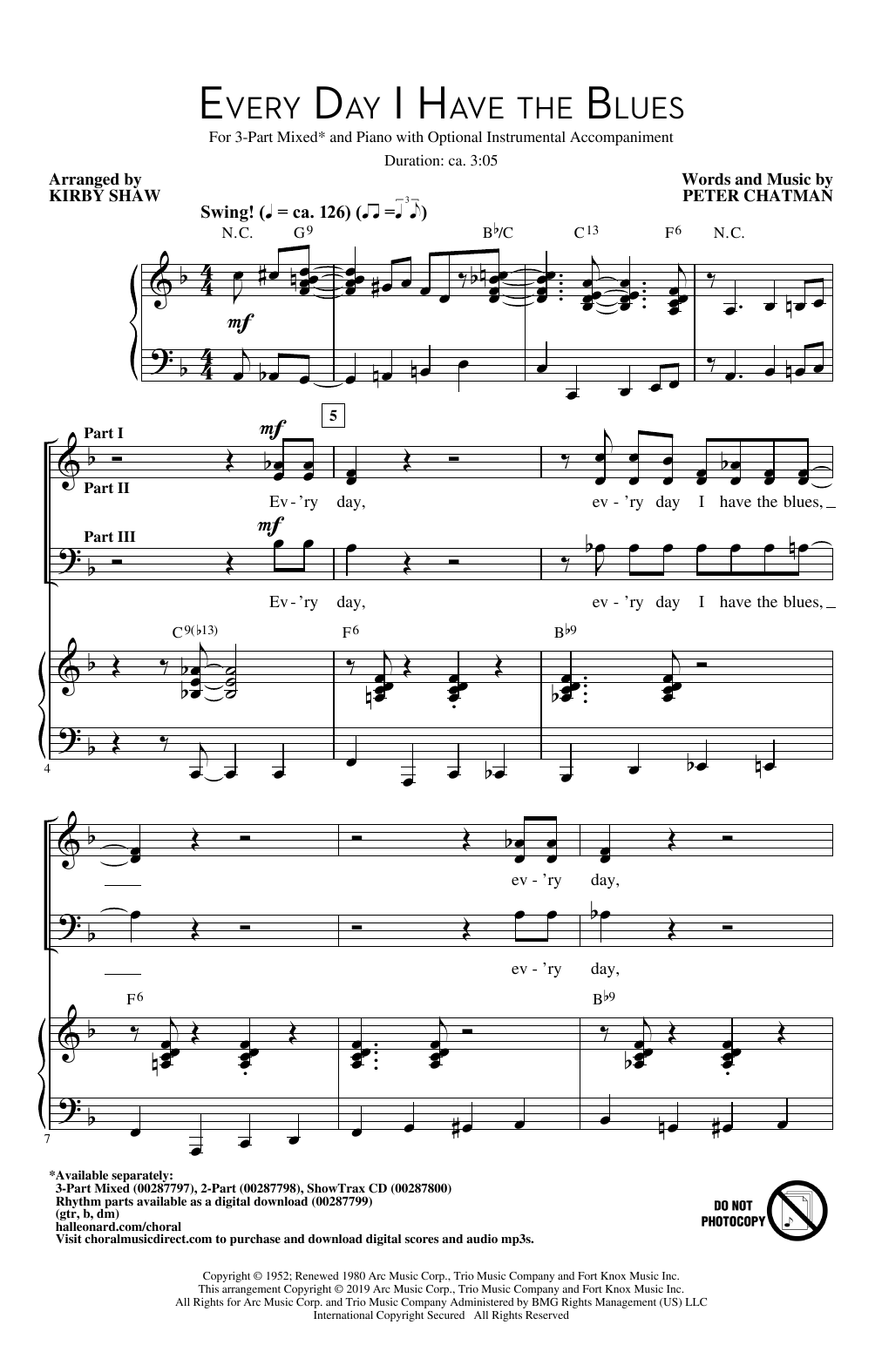
Every Day I Have The Blues (arr. Kirby Shaw): 3-Part Mixed Choral Octavo

Arranged by Kirby Shaw

Item: 35-DS00436268

Digital Download
$2.99
Description

Every Day I Have The Blues (arr. Kirby Shaw): 3-Part Mixed Choral Octavo isn't in MakeMusic Cloud just yet...but it could be. Let us know you'd like to see it, and you'll help shape what comes next. In the meantime, start a free trial and dive into thousands of interactive titles your students can play along with today.

Sample Audio
No sample audio found.
Sample Video
Additional Details
Publisher: Hal Leonard
Page Count: 13
SKU: 35-DS00436268

More about this title

About the Arranger: Kirby Shaw

Kirby Shaw

Kirby Shaw's influence on choral music extends across six continents, where he has led clinics and residencies in over 45 states and countries including Canada, Australia, Sweden, Italy, and Germany. His formal training spans Music Education and Choral Composition from San Jose State University, followed by a DMA in Choral Conducting from the University of Washington. Shaw's teaching style blends sharp humor with encyclopedic musical knowledge, a combination that has made him a sought-after clinician and educator.

As a composer and arranger with more than 2500 works in print, Shaw has shaped the sound of contemporary choral music; his arrangements have sold nearly 20 million copies worldwide. His career includes founding and directing innovative vocal jazz ensembles at the College of the Siskiyous, Colorado State University, and the University of Missouri at Kansas City. A prolific recording producer, multiple ASCAP award winner, and member of the a cappella group Just 4 Kicks, Shaw continues to compose and arrange from his home in Southern Oregon, where he and his wife Markita recently completed an original musical adaptation of Charles Dickens' A Christmas Carol.

Why we love this

Shaw captures the conversational ease of blues in this arrangement without sacrificing the harmonic sophistication that keeps singers engaged across thirteen pages. The 3-part mixed voicing sits naturally for groups with developing sight readers while offering enough jazz vocabulary and voice independence to challenge more experienced ensembles. This is the kind of standard that works equally well as a concert closer or a clinician's teaching example.

What to expect

The blues unfold with an unhurried conversational warmth, the kind of easy confidence that comes from singers who know their way around the changes. There is space for voices to breathe individually while the harmonies create a gentle sway that invites audiences in rather than overwhelming them.

Who it's for

Choirs working to expand their jazz and contemporary repertoire without overwhelming singers still building confidence in jazz idioms. This arrangement works for both high school and college ensembles seeking a standard that feels authentic rather than simplified.

How to get the most out of it

  • Establish the blues groove early in rehearsals by having the group snap or clap the backbeat before attempting to sing; this anchors the pocket and prevents rushing through swing figures.
  • Encourage singers to listen horizontally across their own line rather than locking onto the melody; jazz harmony lives in the dialogue between parts, not in unison moments.
  • Balance the soloistic quality many jazz standards demand with the ensemble cohesion your group needs; Shaw's writing offers both, so resist the urge to feature one voice at the expense of blend.

How to use it

Pair this with other blues or swing standards to create a short jazz set within a larger concert, or use it as an accessible entry point into jazz for singers encountering the idiom for the first time. The length and moderate difficulty make it suitable for late-season programming when groups have developed rehearsal stamina.

Skills your students will build

  • Recognizing and singing jazz harmony (seventh chords, chromatic alterations, and voice leading specific to blues progressions)
  • Interpreting swing rhythms and triplet subdivisions
  • Maintaining independence between vocal lines in a jazz context
  • Listening actively within an ensemble while maintaining individual intonation in complex harmonies
  • Understanding blues form and its conversational, call-and-response qualities

You May Also Like