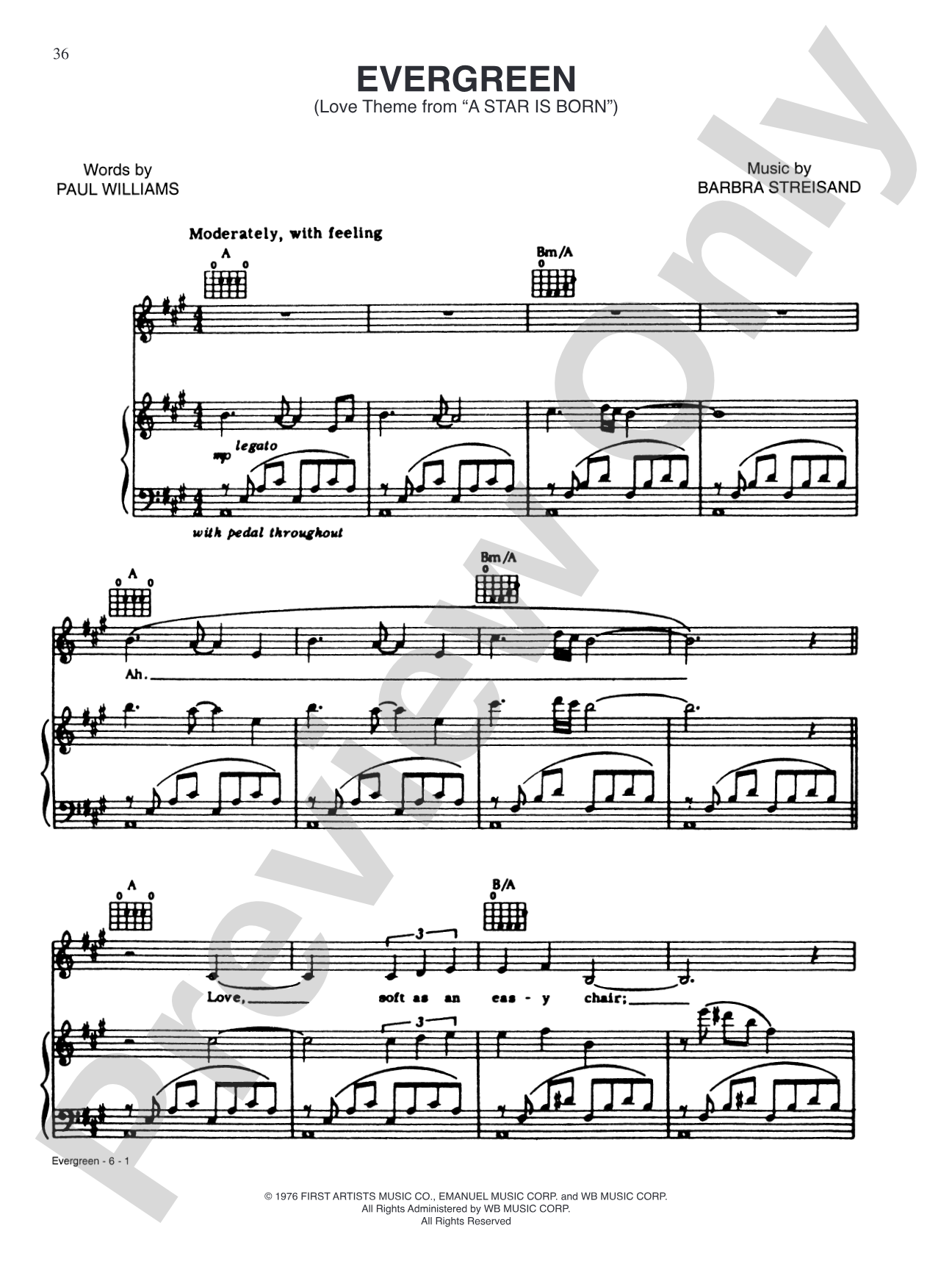
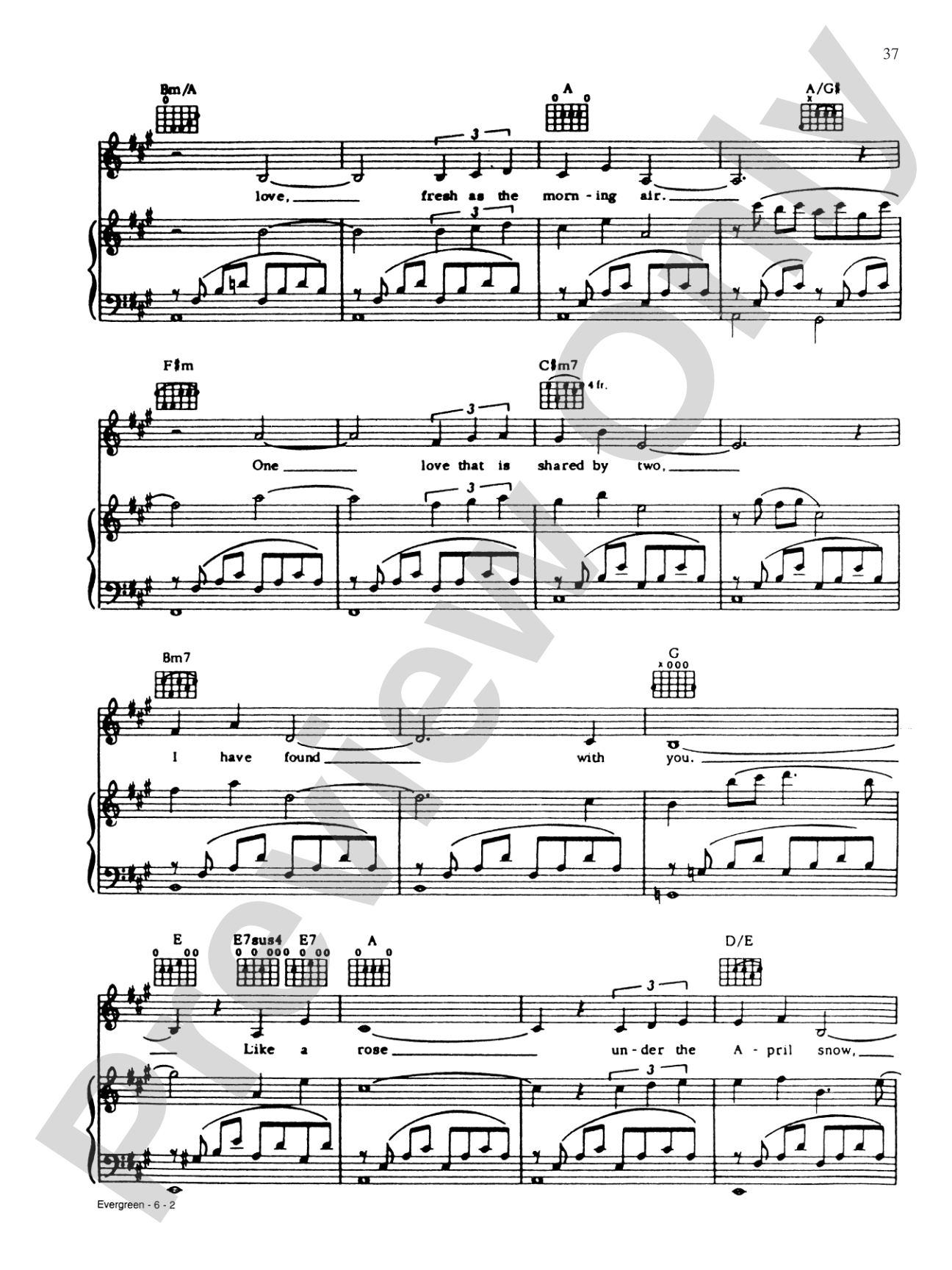
Evergreen (Love Theme from A Star Is Born) Sheet Music Preview

Evergreen (Love Theme from A Star Is Born): Piano/Vocal/Chords

Recorded by Barbra Streisand

Item: 00-PIP-000098

Digital Download
$3.99
Description
Academy Award®-winner.

Evergreen (Love Theme from A Star Is Born): Piano/Vocal/Chords isn't in MakeMusic Cloud just yet...but it could be. Let us know you'd like to see it, and you'll help shape what comes next. In the meantime, start a free trial and dive into thousands of interactive titles your students can play along with today.

Sample Audio
No sample audio found.
Sample Video
Additional Details
Publisher: Alfred Music
Page Count: 8
SKU: 00-PIP-000098

More about this title

About the Artist: Barbra Streisand

Barbra Streisand's voice defined multiple generations of popular music, from Broadway to film to pop recording. Her interpretive depth and technical command made her one of the most recorded artists in history, with a career spanning over six decades of performances, recordings, and film roles.

Why we love this

Streisand's original recording won the Academy Award, and this arrangement captures the emotional restraint and vocal vulnerability that made the performance iconic. The piano/vocal score lets singers access a genuinely sophisticated pop ballad without oversimplifying the harmonic language or melodic contour that made this piece endure.

What to expect

The song breathes with the intimacy of a single person confessing something tender. Streisand's phrasing on the original hangs above the piano accompaniment like a prayer, creating space for listeners to feel their own vulnerability rather than being told how to feel.

Who it's for

This arrangement suits singers and pianists preparing contemporary pop-song literature for recitals or vocal study. Advanced high school vocalists and college students benefit from the harmonic sophistication and interpretive demands of the piece.

How to get the most out of it

  • Honor the space in the melody. The accompaniment isn't dense; silence and breath points matter as much as the sung phrases do.
  • Listen to Streisand's recorded version to internalize the rubato and phrasing before deciding your own interpretation. Her timing choices inform how the chord changes land emotionally.
  • Balance your dynamic range across the full range of the song. The verse sits differently than the chorus; don't bring the same volume to both sections.
  • Shape the piano part as a conversation partner, not a background texture. The accompaniment has its own voice here.

How to use it

Program this in a recital that pairs classic film songs with contemporary vocal literature, or use it as a study piece for singers learning how to carry emotional weight through dynamic restraint. It works equally well as a solo in a cabaret-style concert or as part of a themed program exploring songs from 1970s cinema.

Skills your students will build

  • Legit phrasing and sustained vocal line over jazz-inflected harmonies
  • Accompanying from the keyboard using chord symbols and bass line suggestions
  • Interpreting rubato and tempo flexibility in a contemporary ballad
  • Reading and responding to dynamic markings that signal emotional shape
  • Coordinating vocal line and keyboard part across harmonic complexity (extended and altered chords)

You May Also Like