
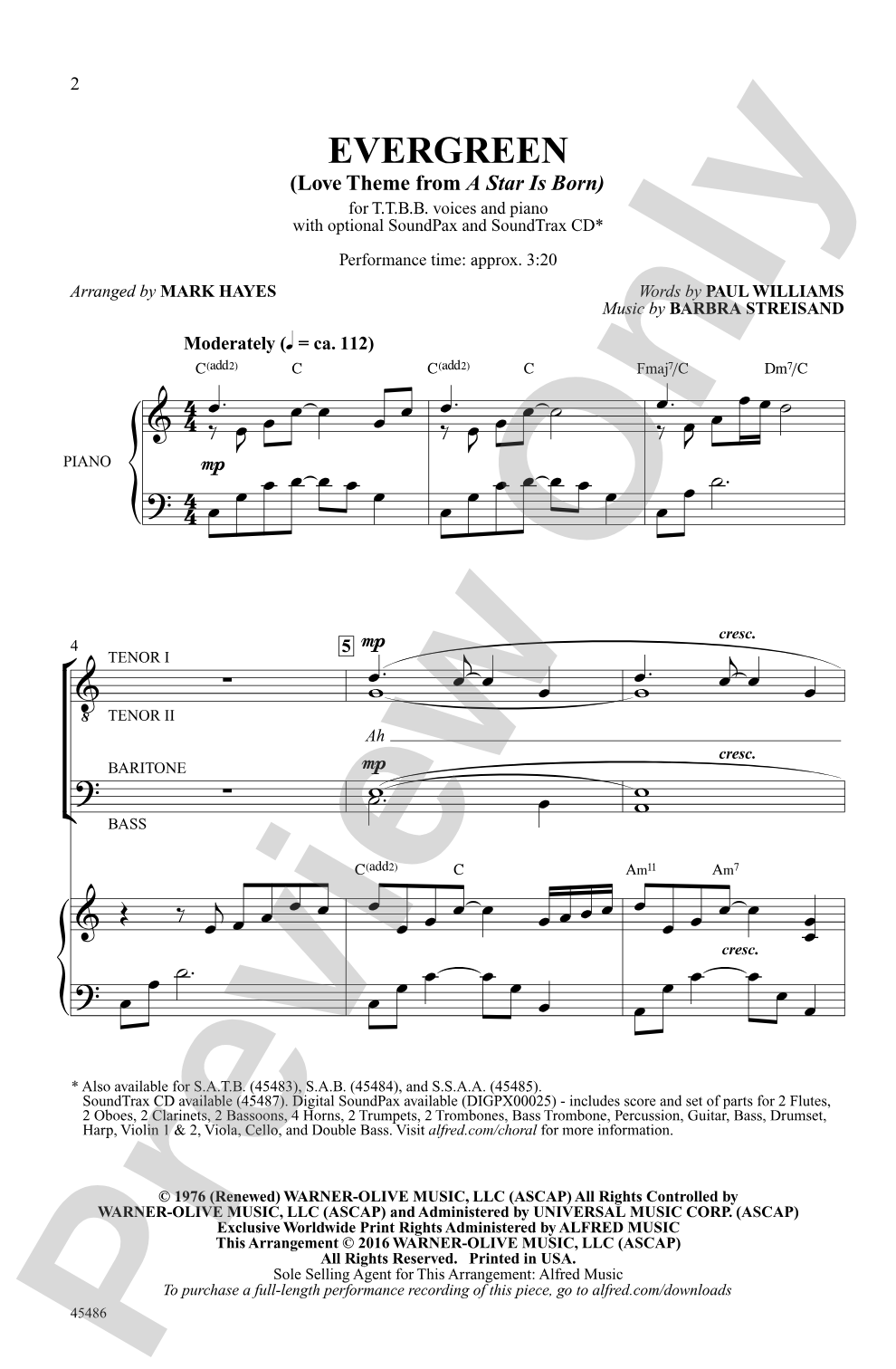
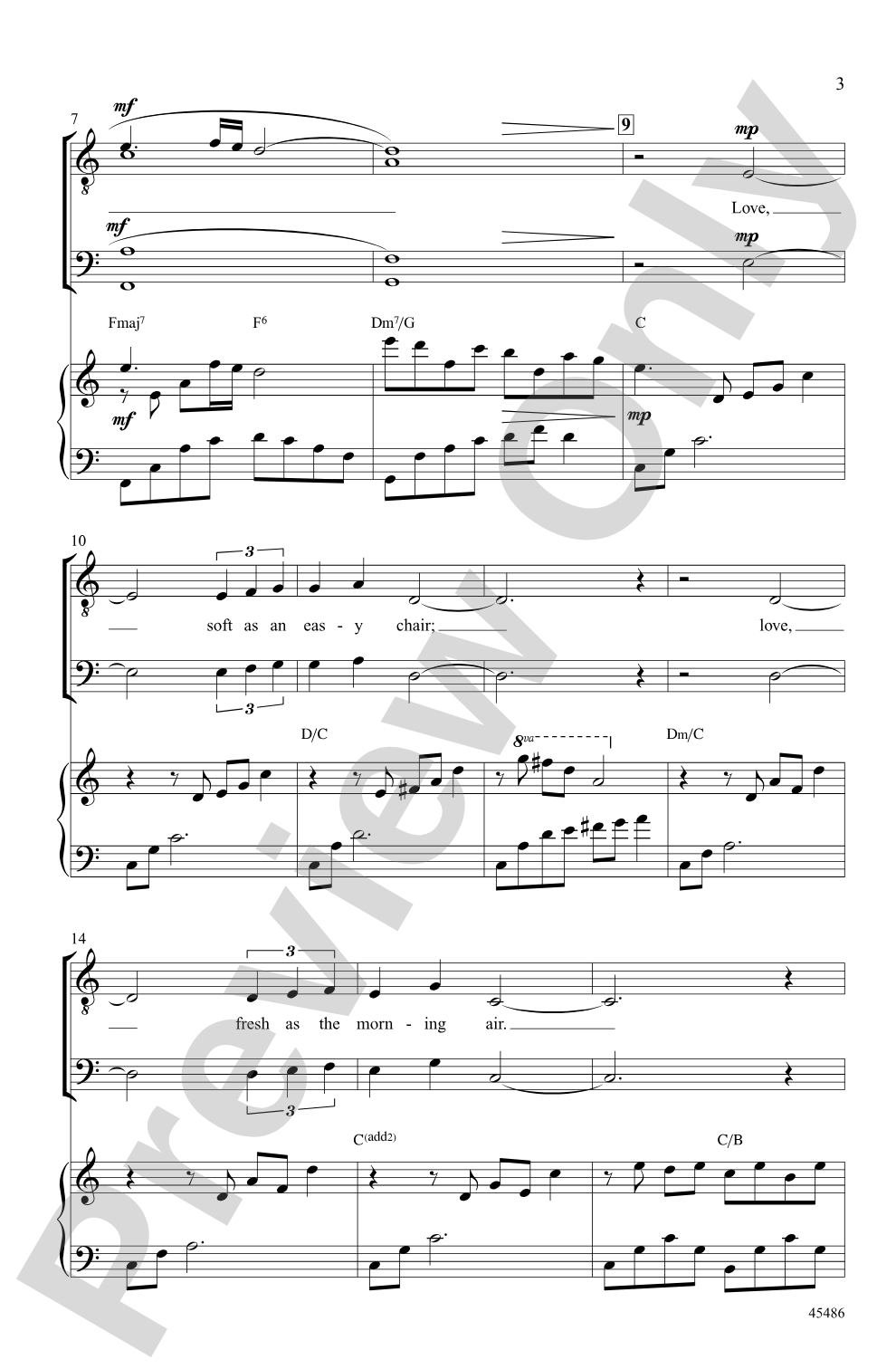
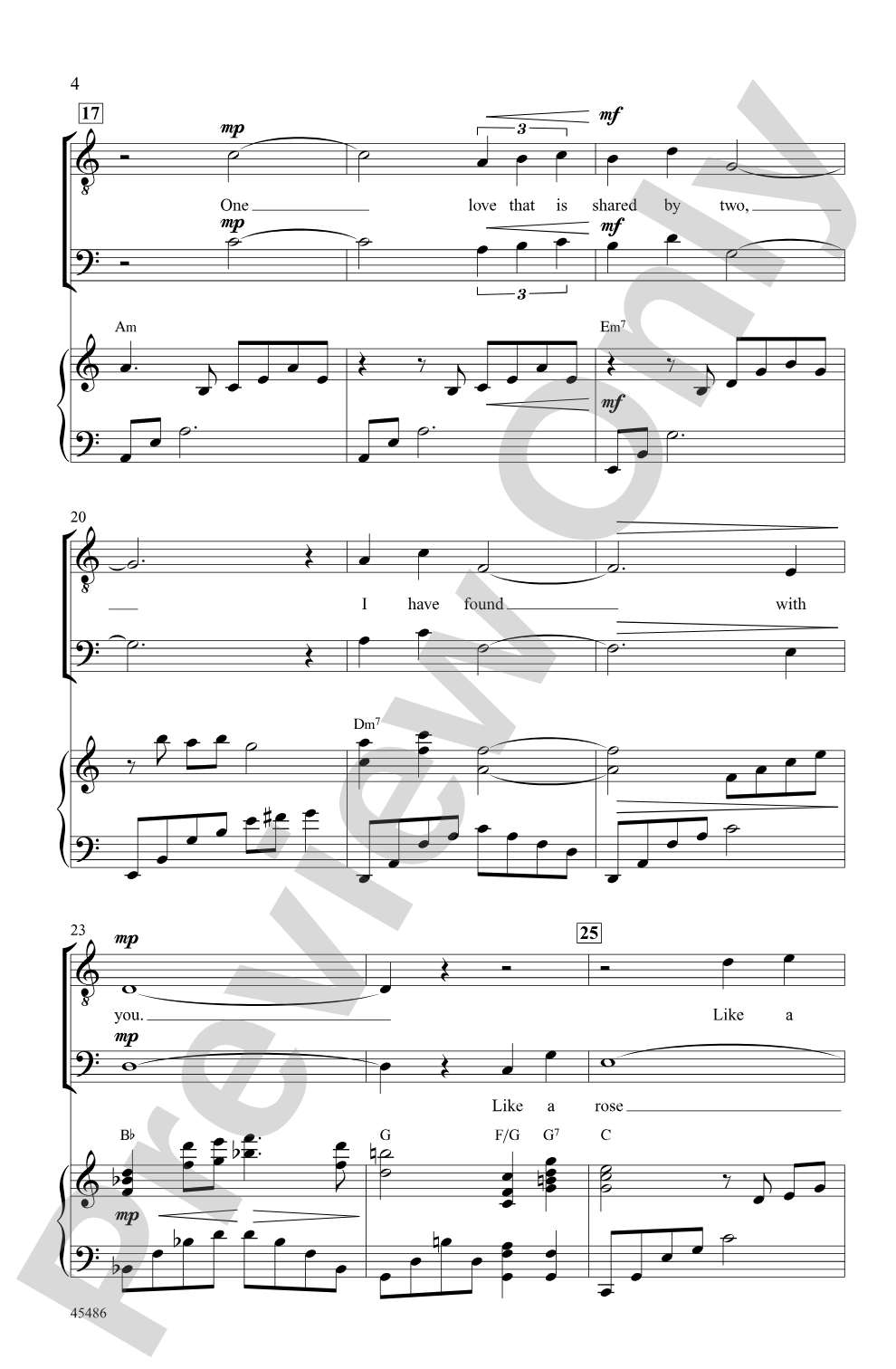

Evergreen: TTBB Choral Octavo
(Love Theme from A Star Is Born)
Words by Paul Williams, music by Barbra Streisand / arr. Mark Hayes
Item: 00-PO-0003723
$2.00
Minimum order quantity: 20 copies
Pickup currently not available
Related Items
Evergreen: SoundTrax Digital Audio Download |
$29.99
|
View | |
Evergreen: SATB Choral Octavo |
$2.00
|
View | |
Evergreen: SAB Choral Octavo |
$2.00
|
View | |
Evergreen: SSAA Choral Octavo |
$2.00
|
View | |
Evergreen (Love Theme from A Star Is Born): Choral SoundPax |
$60.00
|
View | |
Evergreen: SATB Choral Octavo |
$2.00
|
View | |
Evergreen: SAB Choral Octavo |
$2.00
|
View | |
Evergreen: SSAA Choral Octavo |
$2.00
|
View | |
Evergreen: TTBB Choral Octavo |
$2.00
|
View | |
Evergreen: Choral Octavo SoundTrax CD |
$29.99
|
View | |
Evergreen: Choral SoundPax |
$60.00
|
View |
Description
Barbra Streisand's smash hit from her 1976 film A Star Is Born is now available for your choir! Lush harmonies and long flowing melodic lines give plenty of opportunities to develop musical expression, and all voice parts get an opportunity to sing the melody.


Evergreen: TTBB Choral Octavo isn't in MakeMusic Cloud just yet...but it could be. Let us know you'd like to see it, and you'll help shape what comes next. In the meantime, start a free trial and dive into thousands of interactive titles your students can play along with today.
Request This Title
Tell us you want it.
Start Your Free Trial
Explore everything that's ready to play right now.
Sample Audio
1
Audio File
--:--
0:00
0:00
Sample Video
No sample videos found.
Additional Details
Series:
Alfred Pop Choral Series
Publisher:
Alfred Music
Page Count:
12
SKU:
00-PO-0003723
More about this title
About the Composer: Barbra Streisand
Barbra Streisand is a legendary vocalist and entertainer whose career has spanned decades across recording, film, and stage. Beyond her iconic performances, she composed "Evergreen" as the love theme for the 1976 film A Star Is Born, earning an Academy Award for Best Original Song and establishing herself as a songwriter of remarkable melodic gifts.
For choral directors, Streisand's compositional voice offers accessible yet sophisticated material. "Evergreen" demonstrates how a memorable, singable melody can support rich harmonic development, making it an excellent model for teaching students how to phrase long lines and balance expression across ensemble voicing.
Why we love this
Mark Hayes's arrangement unlocks what makes this song so enduring: instead of anchoring everything to the melody, he distributes the tune across all four voice parts so every singer gets a moment in the spotlight. The lush, extended harmonies reward careful attention to blend and intonation without demanding extreme ranges, and the flowing melodic writing naturally teaches singers how to sustain expression over longer phrases.
What to expect
There's an intimacy to this arrangement that feels less like a pop hit and more like a ballad written for close harmony. The movement between voices creates warmth and depth without ever feeling cluttered, and the emphasis on flowing lines gives the entire piece a lyrical, almost art-song quality.
Who it's for
This octavo works well for intermediate to advanced choral ensembles with secure four-part balance and the ability to sustain long phrases. The flexible voicing (TB/TTB/TBB/TTBB) makes it adaptable for groups of varying size, and the evergreen popularity of the song ensures strong audience connection.
How to get the most out of it
- Shape the longer lines by identifying the emotional peaks in each phrase rather than treating them as static blocks of sound. Let the melody breathe, and the harmony will follow naturally.
- Balance the bass and baritone parts carefully when they're supporting the melody elsewhere. These voices carry the harmonic foundation and need clarity without overwhelming the upper voices.
- Use the recorded accompaniment to lock the overall shape and pacing, but allow rehearsal time for the choir to sing together a cappella so they develop ownership of the harmony.
- Pay attention to vowel consistency across all four parts, especially in the sustained chords. Unified vowels make the blend immediate and allow the harmonic richness to project.
How to use it
This pairs beautifully with other contemporary ballads in a pop or movie music-themed concert, or as a contrasting warm moment in a mixed program featuring classical or spiritual repertoire. The accessible melody and familiar tune make it an excellent choice for community performances or gala concerts where you want something that connects emotionally with a broad audience.
Skills your students will build
- Sustaining long melodic phrases with consistent breath support and tonal quality
- Balancing four-part harmony across multiple voice parts, including moments when the melody shifts
- Blending vowels in sustained chords to create unified harmonic color
- Following a secondary melody or countermelody while maintaining the primary line
- Responding to the recorded accompaniment while maintaining ensemble independence