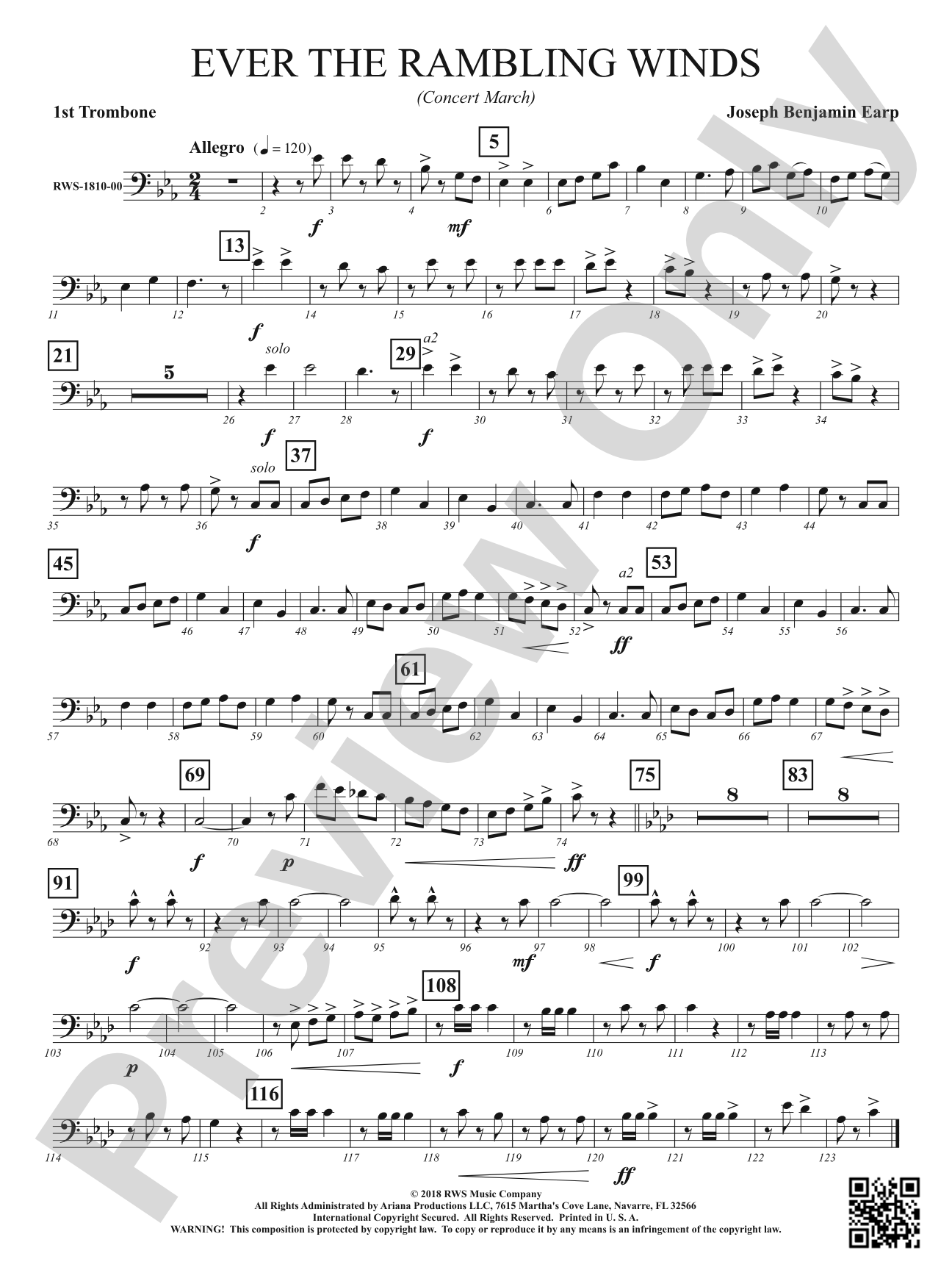
Ever the Rambling Winds - Concert March: 1st Trombone Sheet Music Preview

Ever the Rambling Winds - Concert March: 1st Trombone

Concert March

By Joseph Benjamin Earp

Grade: 4

Item: 98-PC-RWS1810_TN1

Digital Download
$3.99
Description
A classic style march with a contemporary sound, Joseph Earp creates thoughts of the many effects of wind. From mighty nor'easters to a gentle breeze, "Ever The Rambling Winds" will stimulate a range of emotions for performers and listeners alike.

Original Item#: RWS-1810-00

Ever the Rambling Winds - Concert March: 1st Trombone isn't in MakeMusic Cloud just yet...but it could be. Let us know you'd like to see it, and you'll help shape what comes next. In the meantime, start a free trial and dive into thousands of interactive titles your students can play along with today.

Sample Audio
0:00
0:00
Sample Video
Additional Details
Series: RWS - Symphony Band
Publisher: RWS Music Company
SKU: 98-PC-RWS1810_TN1

More about this title

About the Composer: Joseph Benjamin Earp

Joseph Benjamin Earp writes with a gift for bridging traditional forms with contemporary harmonic language. His work in concert band literature demonstrates a clear understanding of how to engage both performers and audiences through accessible yet sophisticated writing.

Why we love this

Earp writes a march that respects the genre's architectural traditions while refusing to sound nostalgic. The contemporary harmonic language and orchestration choices keep this from feeling like a recreation of a Sousa pastiche. Grade 4 bands get real musical substance here, not simplification.

What to expect

The piece moves between two contrasting emotional landscapes. You hear the raw energy and drama of coastal storms, then transition into moments of quieter contemplation where wind becomes something gentle and reflective. The march's framework keeps everything anchored, but Earp uses orchestration and harmonic color to paint shifting atmospheres.

Who it's for

Conductors programming a Grade 4 concert band who want a march that sounds fresh without abandoning the form's essential character. This works equally well for spring concerts, contest reading sessions, or any program needing a piece that engages audiences and challenges young musicians to think beyond standard repertoire.

How to get the most out of it

  • Shape each section's dynamics around the wind imagery Earp evokes. The nor'easter passages demand full commitment to dynamic contrast, while the gentler breeze moments require disciplined restraint from the ensemble.
  • Balance the melodic content across your sections. The piece's effectiveness depends on clarity of line; use rehearsal time to ensure no single voice dominates when the texture calls for integration.
  • Pay attention to the march's contemporary harmonic language. These chord choices won't land with the familiar footfall of traditional marches, so articulation and rhythmic precision become your allies in projecting the intended character.

How to use it

Program this as the centerpiece of a concert's lighter section or as a confident closer that leaves audiences with something contemporary and substantial. It pairs well alongside traditional marches if you're building a thematic program around wind or nature, but it stands alone just as effectively.

Skills your students will build

  • Dynamic contrast and phrasing within a structured march form
  • Reading contemporary harmonic language and chord progressions
  • Ensemble blend across sustained and moving passages
  • Maintaining rhythmic integrity while executing expressive conducting gestures
  • Listening for orchestration and sectional balance in non-traditional march textures

You May Also Like