Evening Promenade Sheet Music Preview

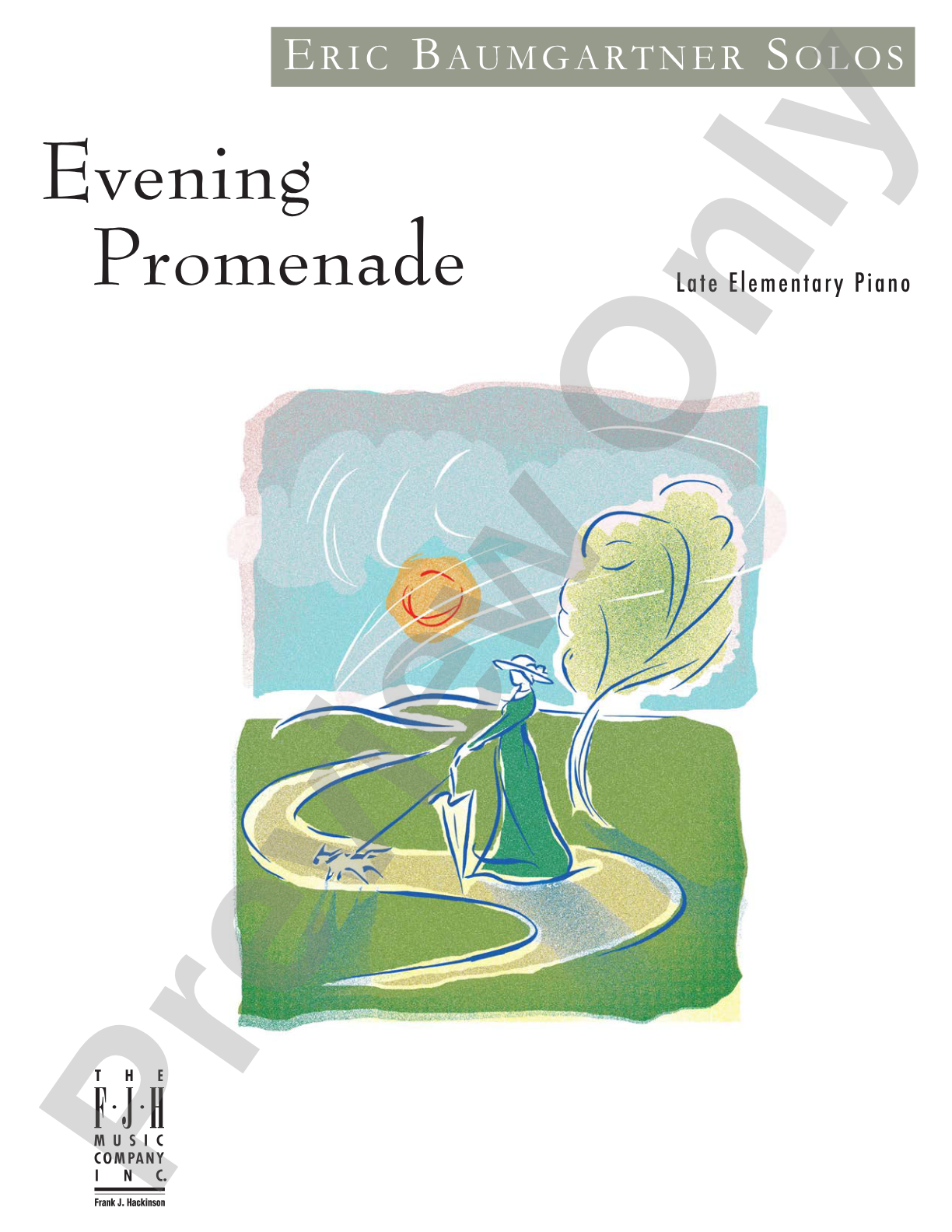
Evening Promenade: Piano

By Eric Baumgartner

Item: 98-DW9094

Digital Download
$2.50
Description
This classically-styled piece features a graceful melody that passes fluidly between the hands. Includes two- and three-note slur gestures, along with legato and staccato accompaniments.

Evening Promenade: Piano isn't in MakeMusic Cloud just yet...but it could be. Let us know you'd like to see it, and you'll help shape what comes next. In the meantime, start a free trial and dive into thousands of interactive titles your students can play along with today.

Sample Audio
No sample audio found.
Sample Video
Additional Details
Series: Written For You
Publisher: The FJH Music Company, Inc.
SKU: 98-DW9094

More about this title

Why we love this

Baumgartner writes with real attention to hand independence and voice leading, which means students develop control without feeling like they're practicing technique exercises. The interplay between melody and accompaniment textures gives pianists room to shape the music expressively while maintaining clarity.

What to expect

A leisurely walk through a garden at dusk. The melody drifts conversationally between left and right hands while the accompaniment shifts between warmth and lightness, creating an intimate, reflective mood that never feels rushed. The classical styling keeps everything elegant without being austere.

Who it's for

Early intermediate pianists who have solid hand independence and can manage two- and three-note slurs comfortably. Students ready to explore Romantic-era style and character without the technical demands of full-length concert repertoire will find this piece approachable and musically satisfying.

How to get the most out of it

  • Shape the melody phrase by phrase rather than playing it mechanically. Let the legato passages breathe, and use the slur gestures to signal where one musical idea ends and another begins.
  • Differentiate the accompaniment textures by ear. The legato sections need a connected, singing quality in the supporting hand, while staccato passages should sparkle without losing the overall legato of the piece.
  • Maintain even tempo through hand position shifts. When the melody moves between hands, avoid rushing or dragging; let the transfer happen as smoothly as the melodic line itself.
  • Pedal conservatively in the legato accompaniment sections to enhance resonance without muddying the texture. Lift completely before staccato passages.

How to use it

Program this as a recital opener to establish a lyrical tone, or pair it with works of contrasting character to showcase a student's interpretive range. It also works well as a standalone piece for student studio recitals, competitions at the early intermediate level, or spring concert programming when a graceful, shorter work is needed.

Skills your students will build

  • Two- and three-note slur execution with proper shaping
  • Hand independence when melody passes between hands
  • Tone control in legato versus staccato accompaniments
  • Pedal technique and resonance management
  • Phrase shaping and rubato in Romantic-era style

You May Also Like