

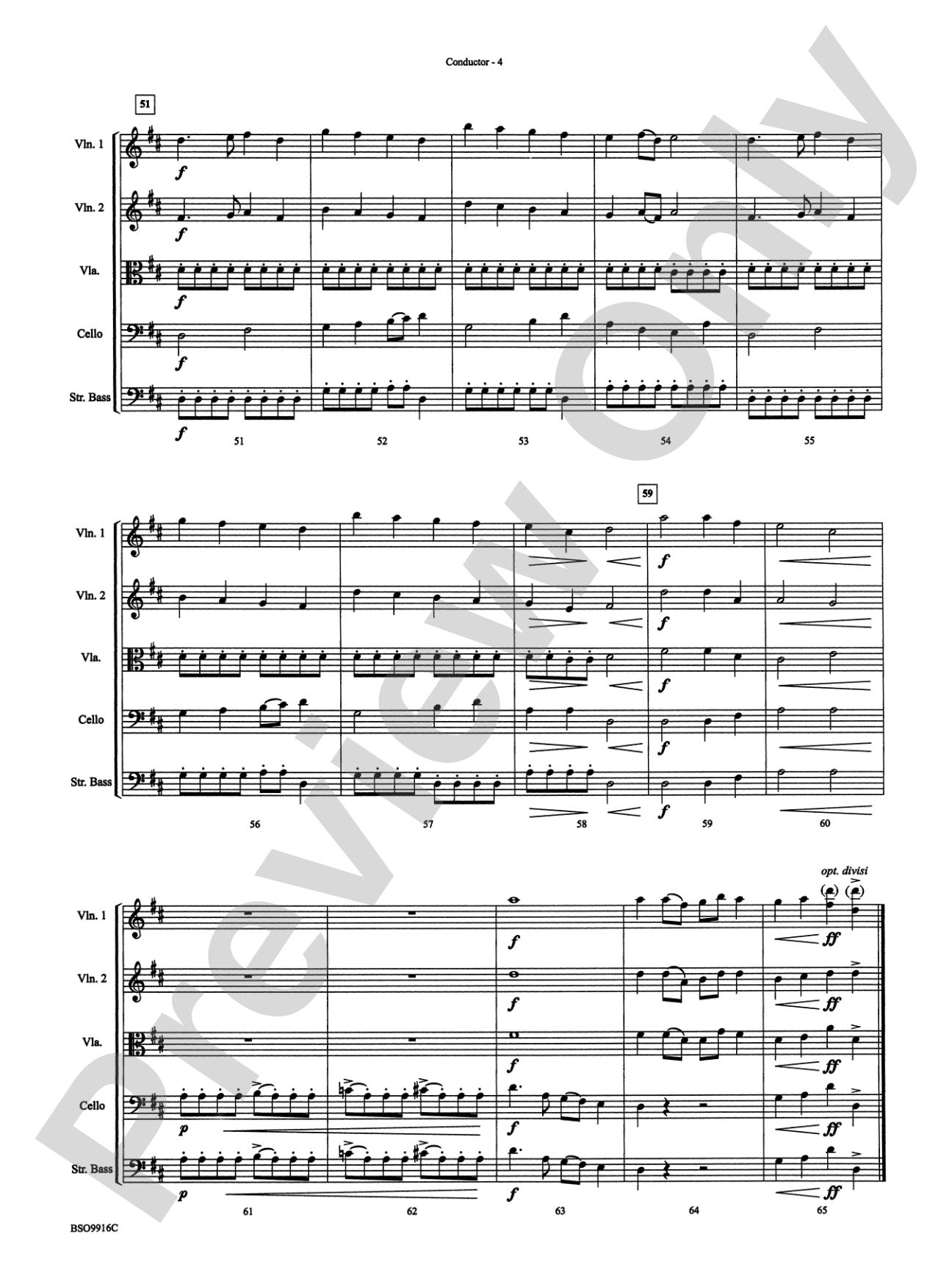



Evening Alleluias: String Orchestra Conductor Score & Parts
By Robert W. Smith
Grade: 2.5
Item: 00-PK-0002294

$48.00
Pickup currently not available
Buy Extra Parts (Digital PDF Download)
| Product | Price | Quantity |
|---|---|---|
| Evening Alleluias: Score | $8.00 | |
| Evening Alleluias: 1st Violin | $5.99 | |
| Evening Alleluias: 2nd Violin | $5.99 | |
| Evening Alleluias: 3rd Violin (Viola [TC]) | $5.99 | |
| Evening Alleluias: Viola | $5.99 | |
| Evening Alleluias: Cello | $5.99 | |
| Evening Alleluias: String Bass | $5.99 |
Parts Added to Cart!
Description
The simple melody is written as a liturgical chant signaling the end of the work day, inspired by the composer having observed such on a recent European journey. Following the statement of this theme, the "celebration" of this happening sees the theme carried on harmonic and rhythmic content of high energy. This high level of intensity, a Robert W. Smith trademark, makes it the perfect work to open or close your next concert program. (1:58) This title is available in MakeMusic Cloud.


Don't just read it, hear it, play along with it, and watch your students grow with it. In MakeMusic Cloud, Evening Alleluias: String Orchestra Conductor Score & Parts comes alive with professional accompaniment, adjustable tempo, and built-in practice tools that turn solo practice into real progress.
Open in the Player
Jump straight in and assign it today.
Start Your Free Trial
Open this title and explore the full library in minutes.
Sample Audio
1
Audio File
--:--
0:00
0:00
Sample Video
No sample videos found.
Additional Details
Series:
Belwin Intermediate String Orchestra
Publisher:
Alfred Music
Page Count:
132
SKU:
00-PK-0002294
More about this title
About the Composer: Robert W. Smith

Robert W. Smith stands among America's most performed composers of orchestral and concert band music, with over 400 published works across his catalog. His education at Troy State University and the University of Miami equipped him to write with both technical sophistication and immediate accessibility, a balance that has made his pieces standard repertoire in school and professional ensembles worldwide. His symphonic works, The Divine Comedy and The Odyssey among them, have been heard on multiple continents, while The Tempest and similar scores for developing musicians have become foundational texts in music education.
Smith's work extends beyond the concert hall. His compositions and arrangements have supported everything from state ceremonies and Olympic broadcasts to television network programming, including the Macy's Thanksgiving Day Parade and Opening Day at Dodger Stadium. As a conductor and clinician, he has led ensembles and mentored musicians across North America, Japan, Australia, and Europe, bringing his compositional philosophy directly to the educators and students who perform his music.
Why we love this
Smith captures something rare here: a piece that genuinely straddles two worlds without compromise. The opening chant grounds students in reverent simplicity, then the energy erupts into the kind of driving, confident orchestration that reminds young players why they love making music together. It's concert-ready material that doesn't talk down to Grade 2.5 players, and at under two minutes, it fits perfectly into programs where impact matters more than duration.
What to expect
The opening unfolds like entering a quiet cathedral at dusk, a single voice marking the end of something. Then the doors open and light floods in, transforming stillness into exuberance. It's contemplative followed by celebratory, all within a compact, memorable arc.
Who it's for
Intermediate string orchestras looking for concert openers with genuine dramatic structure. This works equally well for groups building confidence as for those ready to tackle energetic, rhythmically complex writing.
How to get the most out of it
- Shape the opening chant with phrase breathing rather than metronomic precision; the liturgical character asks for singers' phrasing, not clockwork.
- Let the rhythm section anchor the accelerating intensity in the second section so the string melody can push forward without rushing.
- Bring out the harmonic colors beneath the theme during the celebration section; Smith writes supporting voices that deserve to be heard, not buried.
How to use it
Open with this to establish tone and capture attention immediately, or close with it to leave an audience energized and satisfied. It's equally effective as a concert opener and as a finale, and its brevity makes it ideal for festival programs where timing is tight and first impressions count.
Skills your students will build
- Phrasing and breath control in lyrical contexts
- Rhythmic precision in syncopated, driving sections
- Dynamic contrast between sparse textures and full orchestration
- Sustaining tone quality while navigating varied harmonic movement