Evening Air (for left hand alone) - Piano Solo Sheet Music Preview

Evening Air (for left hand alone) - Piano Solo: Piano

By Ethel Tench Rogers

Level: Early Intermediate

Item: 00-PB-0000767

Digital Download
$3.50
Description
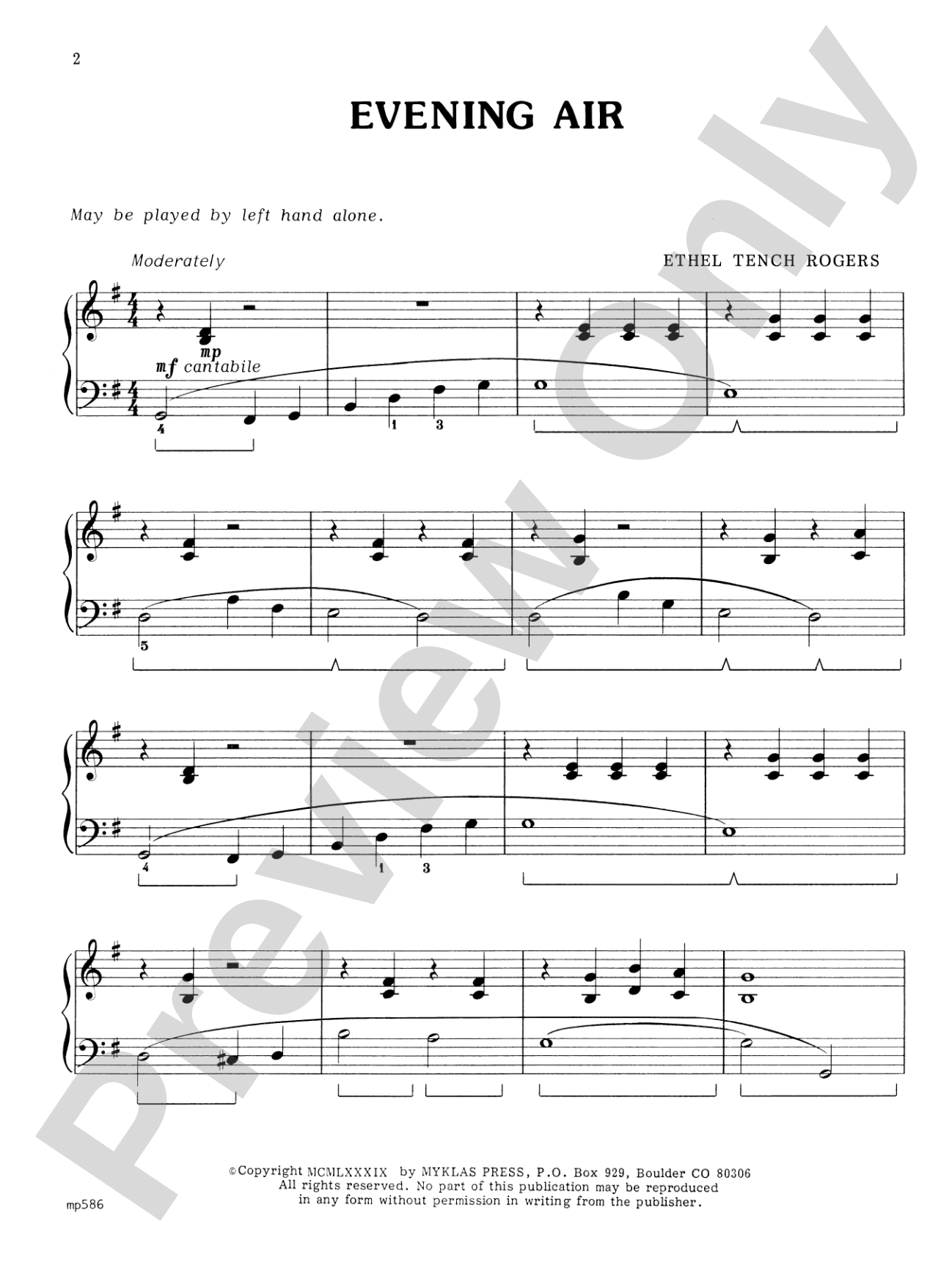
An appealing, "cantabile" G-Major nocturne-like piece, playable with both hands, or with left hand alone. The beautiful, lyrical melody line remains in the bass clef throughout the song, in basic quarter- and half-note rhythms. A Federation Festivals 2016-2020 selection. A Federation Festivals 2020-2024 selection.

Evening Air (for left hand alone) - Piano Solo: Piano isn't in MakeMusic Cloud just yet...but it could be. Let us know you'd like to see it, and you'll help shape what comes next. In the meantime, start a free trial and dive into thousands of interactive titles your students can play along with today.

Sample Audio
No sample audio found.
Sample Video
Additional Details
Publisher: Alfred Music
Page Count: 4
SKU: 00-PB-0000767

More about this title

About the Composer: Ethel Tench Rogers

Ethel Tench Rogers was an American composer and pianist whose work bridged classical tradition and accessible pedagogy. Her compositions earned recognition from the National Federation of Music Clubs, reflecting her commitment to writing pieces that were both musically substantial and within reach of developing musicians.

Why we love this

Rogers writes with genuine lyricism in the left hand, which means students hear themselves making music from day one instead of playing accompaniment patterns. The nocturne character gives this piece real emotional weight without demanding technical fireworks, making it a standout choice for festival preparation at the early intermediate level.

What to expect

A quiet, reflective walk at dusk. The melody drifts gently in the lower register with the unhurried grace of a nocturne, supported by understated harmonies that create warmth without urgency. There's an intimacy here that invites the listener close.

Who it's for

Early intermediate pianists who have moved beyond strictly technical studies and are ready to explore song-like pieces with actual musical narrative. This works equally well for students preparing for festivals, building recital repertoire, or simply discovering that the left hand can sing.

How to get the most out of it

  • Imagine the left-hand melody as a vocalist would sing it. Shape each phrase with a natural swell and release rather than treating quarter and half notes as metronomic units.
  • Experiment with both the two-hand and left-hand-alone versions in practice. The two-hand version adds textural richness, but mastering the left-hand version builds independence and confidence in a single hand.
  • Keep the tempo unhurried and allow space between phrases. Nocturnes thrive on restraint, so resist the urge to rush during simpler passages.
  • Use the pedal thoughtfully to bloom the bass-register melody without muddying harmonic changes. Listen carefully at each chord shift.

How to use it

Program this as a graceful interlude between more energetic works, or pair it with other lyrical early intermediate pieces to create a recital section built on song-like writing. Its festival pedigree makes it reliable for competition play, and its contemplative mood offers a refreshing contrast in programs that might otherwise lean toward brighter character pieces.

Skills your students will build

  • Melodic phrasing and voicing in the left hand
  • Sustaining tone and legato across hand position shifts in bass clef
  • Musical independence between hands (two-hand version) or hand autonomy (left-hand-alone version)
  • Pedal control and listening for harmonic clarity
  • Reading and performing in G major with confidence

You May Also Like