Eve Of Destruction Sheet Music Preview

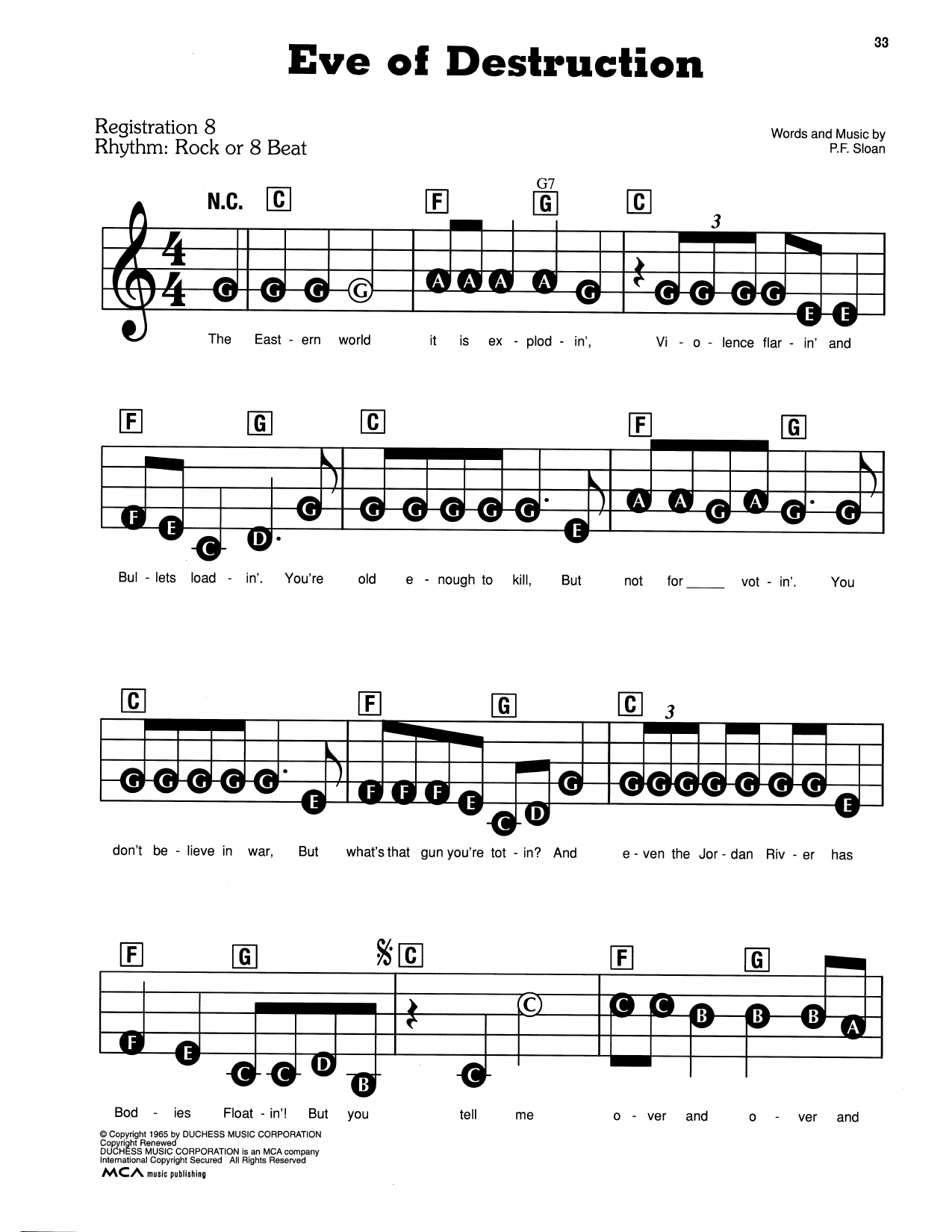
Eve Of Destruction: E-Z Play Today

As performed by Barry McGuire

Item: 35-DS01909201

Digital Download
$4.99
Description

Eve Of Destruction: E-Z Play Today isn't in MakeMusic Cloud just yet...but it could be. Let us know you'd like to see it, and you'll help shape what comes next. In the meantime, start a free trial and dive into thousands of interactive titles your students can play along with today.

Sample Audio
No sample audio found.
Sample Video
Additional Details
Publisher: Hal Leonard
Page Count: 3
SKU: 35-DS01909201

More about this title

About the Artist: Barry McGuire

Barry McGuire rose to prominence in the mid-1960s as both a solo artist and member of the New Christy Minstrels, a folk group known for socially conscious material. His 1965 recording of "Eve of Destruction" became an anthem of the era, reaching number one on the charts and sparking considerable radio debate for its unflinching commentary on contemporary issues. The song's success established McGuire as a significant voice in protest folk-rock, influencing how popular music could address political and social concerns.

Beyond his recording career, McGuire's work demonstrates how accessible melodies can carry substantive messages. His approach to folk-based popular music shows students that commercial success and artistic integrity need not be mutually exclusive, and that songs rooted in genuine conviction often resonate across generations.

Why we love this

This arrangement captures the urgency and directness of an iconic protest song while remaining playable for intermediate pianists. The three-page format makes it approachable without sacrificing the piece's emotional weight, and students immediately grasp why this music mattered historically. Programming it opens conversations about how popular music reflects its era and what makes certain songs endure.

What to expect

The arrangement carries an intense, propulsive energy that reflects the song's original urgency. Beneath the folk-inflected melody sits an insistent rhythmic foundation that drives the narrative forward, creating the sense of a warning being delivered rather than simply sung.

Who it's for

Intermediate pianists interested in 1960s popular music, singers looking for piano-based accompaniment to a culturally significant song, and teachers seeking repertoire that connects music history to social studies curriculum.

How to get the most out of it

  • Maintain steady forward motion throughout; the song's power comes from relentless momentum rather than dramatic tempo shifts
  • Balance the vocal melody clearly against the accompaniment so the lyrics remain the focal point
  • Notice the rhythmic drive in the left hand and lock into it early in rehearsal to avoid the piece feeling rushed or dragging

How to use it

Pair this with other 1960s protest songs to create a thematic concert exploring how musicians responded to social upheaval. It works equally well as a solo feature or as part of a broader retrospective on popular music's capacity for advocacy. The three-page length makes it suitable for a full program or as part of a medley.

Skills your students will build

  • Playing rhythmic ostinatos consistently in the left hand while maintaining melodic independence in the right
  • Interpreting historical context and intent through musical choices
  • Balancing accompaniment texture to support vocal delivery
  • Reading and executing the specific rhythmic language of 1960s folk-rock idiom

You May Also Like