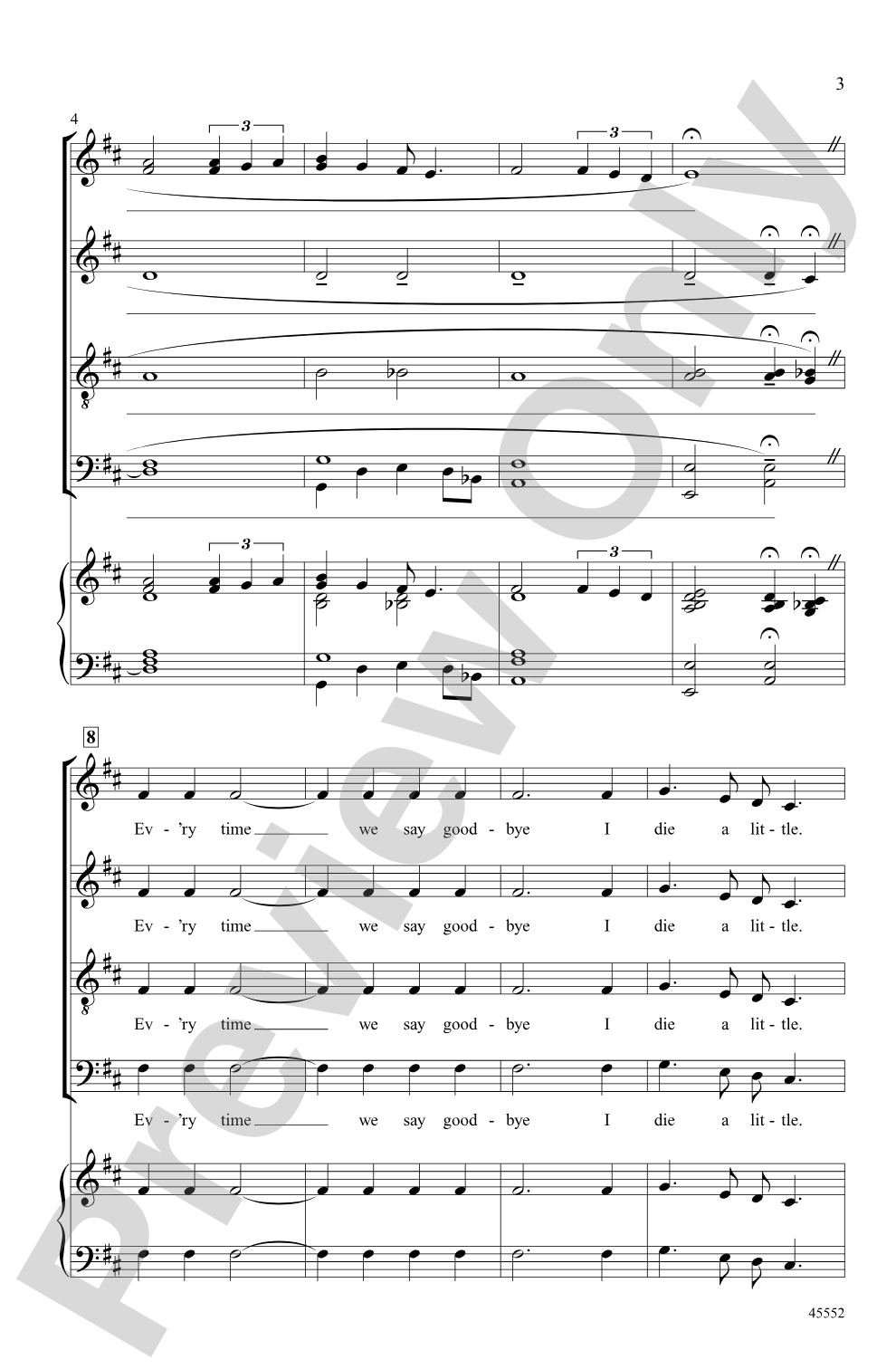
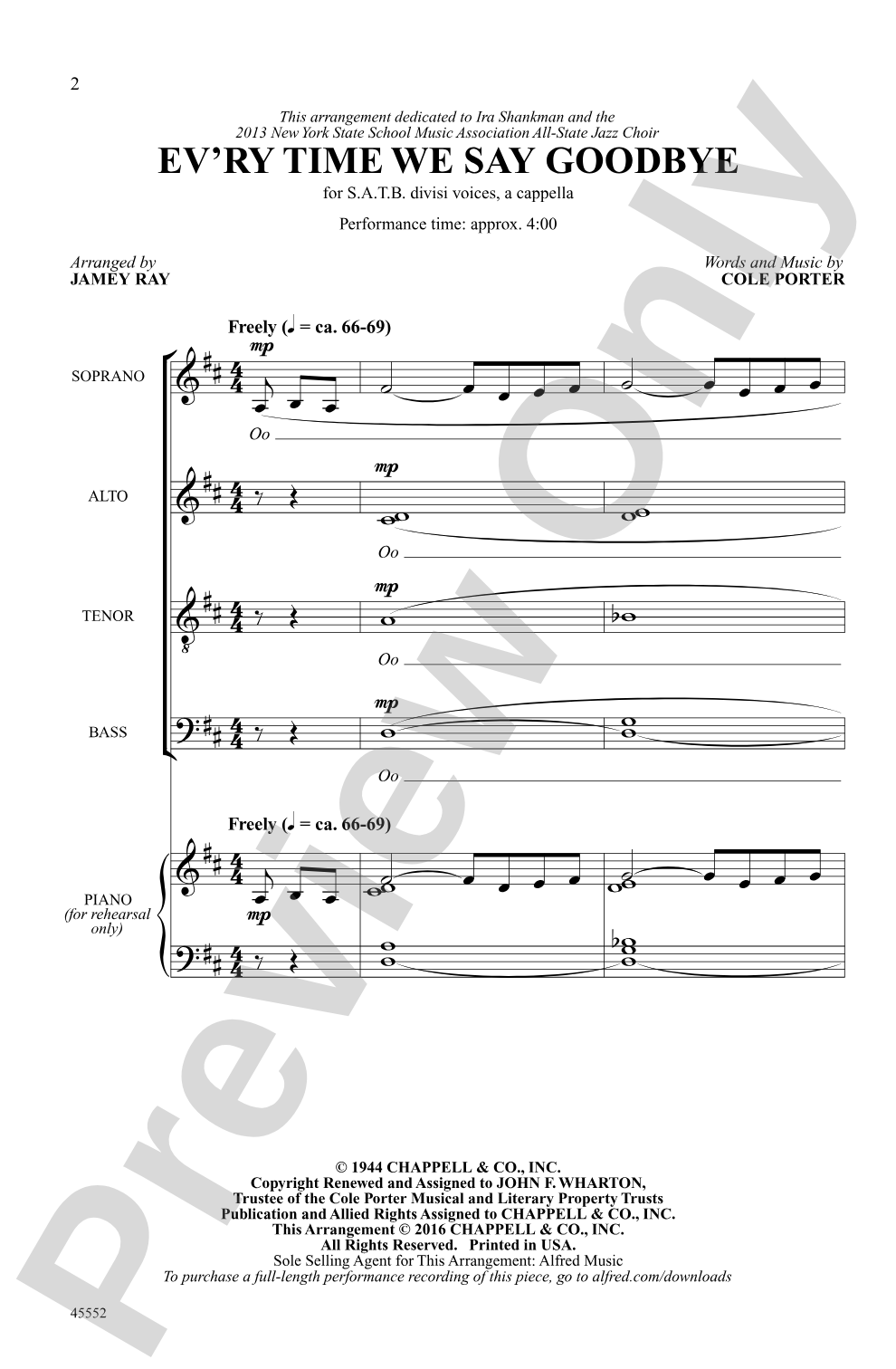
Ev'ry Time We Say Goodbye Sheet Music Preview

Ev'ry Time We Say Goodbye: SATB, a cappella Choral Octavo

Words and music by Cole Porter / arr. Jamey Ray

Item: 00-PO-0003758

Digital Download
$2.10

Minimum order quantity: 20 copies

One moment…

Description
Smooth chromatic jazz sonorities are the star of this delicious arrangement of the classic standard. A delicate opening "oo" section gives way to a unison statement of the melody before melting into rich choral harmony. Striking!

Ev'ry Time We Say Goodbye: SATB, a cappella Choral Octavo isn't in MakeMusic Cloud just yet...but it could be. Let us know you'd like to see it, and you'll help shape what comes next. In the meantime, start a free trial and dive into thousands of interactive titles your students can play along with today.

Sample Audio
0:00
0:00
Sample Video
Additional Details
Series: Alfred Pop Choral Series
Publisher: Alfred Music
Page Count: 12
SKU: 00-PO-0003758

More about this title

About the Composer: Cole Porter

Cole Porter (1891–1964) was an American composer and lyricist whose sophisticated harmonies and witty lyrics defined the Golden Age of musical theater. His command of chromatic harmony and jazz inflection influenced generations of songwriters and arrangers. Porter's standards remain central to vocal jazz and popular music curricula because they reward careful harmonic listening and demand expressive maturity from singers.

Why we love this

Jamey Ray's arrangement captures the chromatic richness of Porter's harmony while making it accessible to choral singers. The structure—quiet opening, unison clarity, then lush four-part writing—gives singers a roadmap through sophisticated sonorities, and the a cappella format puts full responsibility on the ensemble to shape those jazz voicings with intention. This is the kind of standard that sounds effortless when it's done well, and rewarding to work toward.

What to expect

The arrangement opens with quiet yearning, almost like an overheard conversation. When the melody arrives in unison, it settles into familiarity before the harmony deepens and complicates the emotion. The chromatic movement creates a sense of tension and release that mirrors the bittersweet text; nothing feels accidental or decorative.

Who it's for

Choirs with secure intonation and harmonic awareness. Singers need to hear jazz voicings as living, breathing colors rather than as random notes. This works for upper-level high school groups, college ensembles, and community choirs comfortable with modal and chromatic harmony.

How to get the most out of it

  • Tune the chromatic voice leading carefully. These jazzy sonorities live or die by intonation; even slight compromise muddles the harmonic color. Have singers listen internally to the whole chord while singing their individual line.
  • Shape the opening "oo" section with dynamic subtlety and consistent vowel color. This is your chance to establish the intimate mood before the melody enters.
  • Balance the unison melody statement so it lands clearly. This is the song's emotional anchor; let it sing through without swallowing it in surrounding harmony.
  • Release chords together on rhythmic intent, not on the beat. Jazz harmony often wants space to breathe; a synchronized cutoff lifts the line into the next phrase.

How to use it

Pair this with other jazz standards to build a full set, or feature it as a standalone moment in a mixed concert when you want to showcase your ensemble's harmonic sophistication. It works beautifully as an encore or as a bridge between classical and popular repertoire in a program that spans genres.

Skills your students will build

  • Singing chromatic harmony with accurate intonation
  • Listening for and balancing jazz voicings in four-part texture
  • Sustaining a cappella tuning across longer phrases
  • Shaping unison melody with stylistic awareness
  • Hearing countermelody and inner voice movement without instrumental support

You May Also Like