
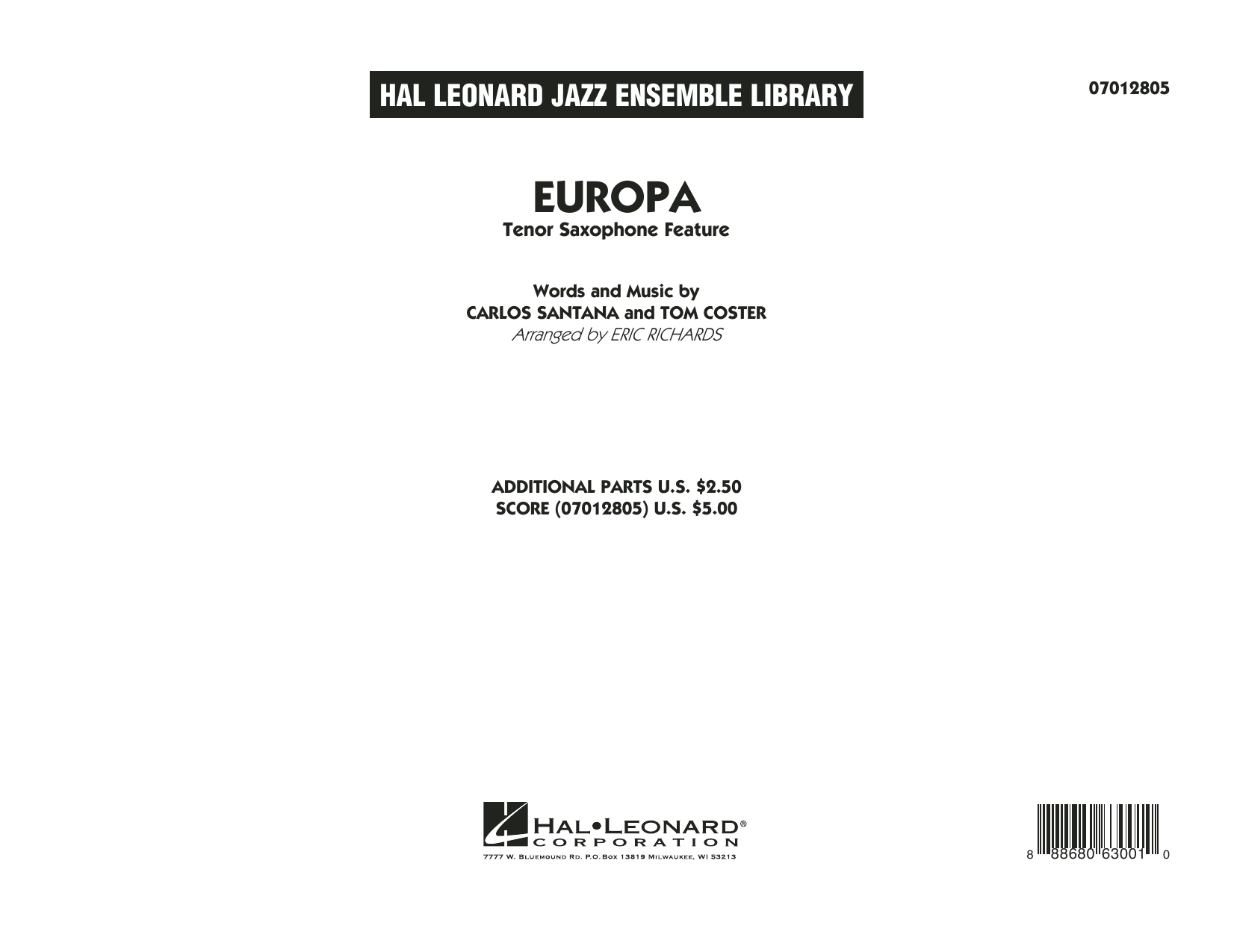

Europa: Jazz Ensemble Conductor Score & Parts
As performed by Santana / As performed by Carlos Santana / As performed by Tom Coster / Arranged by Eric Richards
Grade: 4
Item: 35-PK00342860
$55.00
Pickup currently not available
Buy Extra Parts (Digital PDF Download)
| Product | Price | Quantity |
|---|---|---|
| Europa - Conductor Score (Full Score) | $7.50 | |
| Europa - Alto Sax 1 | $6.00 | |
| Europa - Alto Sax 2 | $6.00 | |
| Europa - Tenor Sax 1 | $6.00 | |
| Europa - Tenor Sax 2 | $6.00 | |
| Europa - Baritone Sax | $6.00 | |
| Europa - Trumpet 1 | $6.00 | |
| Europa - Trumpet 2 | $6.00 | |
| Europa - Trumpet 3 | $6.00 | |
| Europa - Trumpet 4 | $6.00 | |
| Europa - Trombone 1 | $6.00 | |
| Europa - Trombone 2 | $6.00 | |
| Europa - Trombone 3 | $6.00 | |
| Europa - Trombone 4 | $6.00 | |
| Europa - Guitar | $6.00 | |
| Europa - Piano | $6.00 | |
| Europa - Bass | $6.00 | |
| Europa - Drums | $6.00 | |
| Europa - Alternate Guitar (Solo) | $6.00 |
Parts Added to Cart!
Description
One of Carlos Santana's more memorable compositions is this instrumental hit from 1976. Along with Santana's own recording, the version by saxophonist Gato Barbieri also became a hit that same year. The haunting melody and sensual style of the original is authentically recreated in this version for full jazz ensemble that features a tenor sax soloist.


Europa: Jazz Ensemble Conductor Score & Parts isn't in MakeMusic Cloud just yet...but it could be. Let us know you'd like to see it, and you'll help shape what comes next. In the meantime, start a free trial and dive into thousands of interactive titles your students can play along with today.
Request This Title
Tell us you want it.
Start Your Free Trial
Explore everything that's ready to play right now.
Sample Audio
No sample audio found.
Sample Video
No sample videos found.
Additional Details
Publisher:
Hal Leonard
SKU:
35-PK00342860
More about this title
About the Artist: Santana
Santana emerged from San Francisco's Latin rock scene in the late 1960s with a revolutionary blend of Afro-Cuban rhythms, blues guitar, and rock energy. By the mid-1970s, the band had become one of the defining forces in popular music, and "Europa" stands as a testament to their ability to craft instrumental compositions with genuine melodic depth and emotional resonance.
Why we love this
This arrangement captures what made the original such a radio staple: a melody that lingers long after the final note and a groove that feels both sophisticated and deeply accessible. Grade 4 ensembles get to inhabit professional-level production values without drowning in complexity, and the tenor sax feature gives your soloists a chance to play something the audience actually knows.
What to expect
Sensual and hypnotic, with a melody that floats effortlessly over a propulsive Latin foundation. The arrangement balances intimate, introspective moments with the warmth of full ensemble harmony, creating a sound that feels both intimate and celebratory.
Who it's for
Intermediate to advanced jazz ensembles ready to tackle a recognizable standard with genuine stylistic demands. This works especially well for programs that want to bridge jazz and popular music, or for ensembles looking to program something soloists will feel proud to perform.
How to get the most out of it
- Lock the Latin percussion figures with your drummer early in rehearsal. The clave pattern underneath the melody is what gives this tune its identity, so establish it firmly before layering the horns.
- Shape the tenor sax solo with space and patience. This isn't a bebop burner; Gato Barbieri's original phrasing was sensual and deliberate, so encourage your soloist to breathe and let silence work for them.
- Balance the ensemble voicings so the melody stays audible. The rich harmonic textures Eric Richards created can easily obscure the tune if the upper voices push too hard.
- Let the bridge section breathe differently from the head. A slight tempo ease or dynamic shift here can highlight how Richards voices the harmonic movement and give the solo section time to reset.
How to use it
Program this alongside other Latin-influenced jazz standards to showcase how thoroughly that idiom has woven itself into the jazz repertoire. It also pairs naturally with contemporary pop covers or works well as a concert closer that leaves audiences humming as they leave.
Skills your students will build
- Interpreting swing and Latin feels within the same composition
- Balancing individual soloist voice with ensemble texture
- Phrasing idiomatic to 1970s funk-fusion vocabulary
- Reading and performing syncopated ensemble parts with melodic responsibility