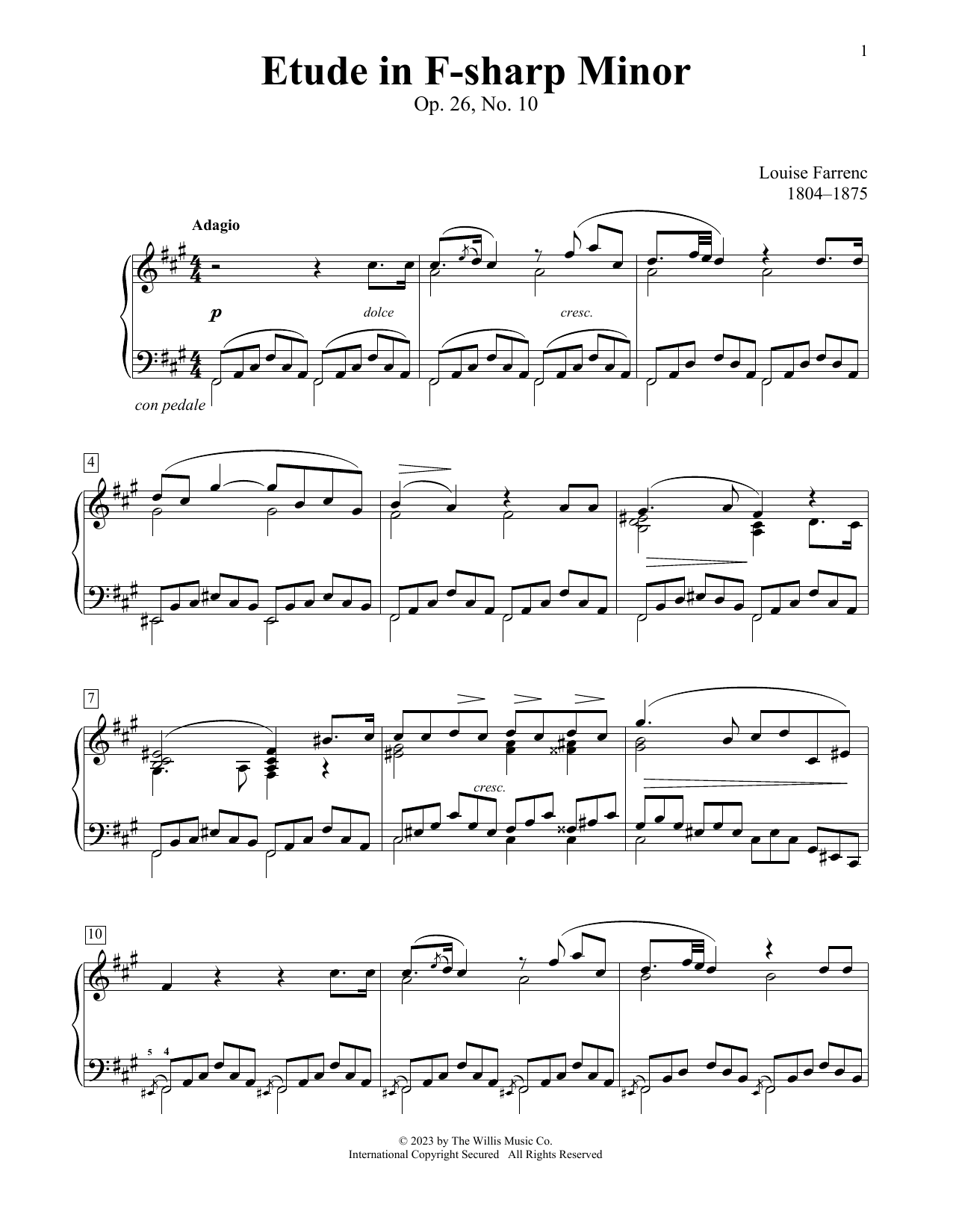
Etude In F-Sharp Minor, Op. 26, No. 10 Sheet Music Preview

Etude In F-Sharp Minor, Op. 26, No. 10: Educational Piano

Edited by Charmaine Siagian / Edited by Sonya Schumann

Item: 35-DS01339665

Digital Download
$4.99
One moment…
Description

Discover MakeMusic Cloud: thousands of interactive titles your students can play along with today.

Sample Audio
No sample audio found.
Sample Video
Additional Details
Publisher: Hal Leonard
Page Count: 6
SKU: 35-DS01339665

More about this title

About the Creator

Alexander Scriabin (1872–1915) was a Russian composer and pianist whose technical demands on the instrument were matched only by his visionary harmonic language. Working at the turn of the twentieth century, he expanded piano literature beyond Romantic conventions, creating pieces that required both formidable finger work and imaginative musicianship from performers.

Scriabin's études occupy a unique place in the pedagogical canon. Rather than isolating a single technical problem, they integrate multiple challenges into musically coherent works that reward careful study with genuine artistic satisfaction.

Why we love this

Scriabin's Op. 26 études bridge the gap between pure technical study and the contemporary concert hall. This particular work in F-sharp minor combines angular figuration with harmonic color that keeps advanced students engaged intellectually while their fingers navigate the passagework.

What to expect

The piece unfolds with a kind of searching quality, its F-sharp minor tonality lending contemplative depth even as the figuration demands precision and clarity. There's a restless energy beneath the surface, a sense that something is being worked through rather than simply displayed.

Who it's for

Intermediate to advanced pianists ready to tackle twentieth century modernism will find this étude both accessible and enriching. Teachers seeking repertoire that develops finger independence and harmonic awareness while introducing students to early twentieth century idiom will appreciate the musical payoff.

How to get the most out of it

  • Shape the melodic line through the figuration by listening for the primary voice even as your hands execute rapid scalar movement.
  • Map the harmonic progression early in your practice so you understand which notes anchor the texture and which ones pass through.
  • Allow the minor key's emotional weight to guide your tempo choices; rushing diminishes the piece's introspection.
  • Test different pedal strategies in passages where sustain and clarity compete, settling on what balances resonance with definition.

How to use it

This étude works well as a standalone recital piece for a student showing readiness for modernist repertoire, or as part of a sequence exploring different harmonic languages across the nineteenth and twentieth centuries. It's substantial enough to anchor a student recital while remaining focused enough to pair with other works.

Skills your students will build

  • Finger independence and coordination across rapid scalar passages
  • Harmonic navigation through non-functional progressions
  • Pedal control in textures requiring both sustain and clarity
  • Expressive control in minor keys without relying on Romantic clichés
  • Score analysis of early twentieth century idiom

You May Also Like