
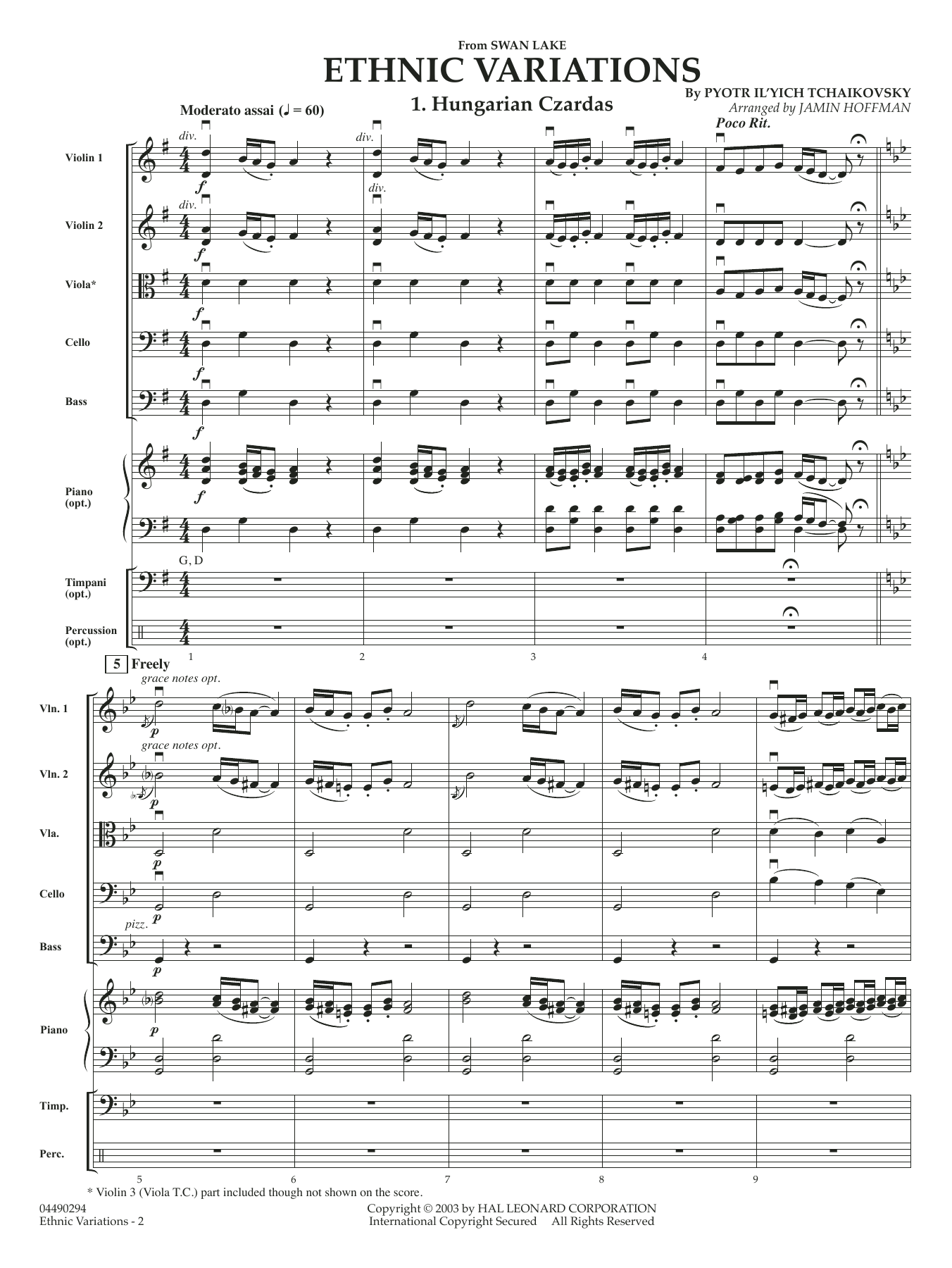

Ethnic Variations (arr. Jamin Hoffman): String Orchestra Conductor Score & Parts
By Pyotr Il'yich Tchaikovsky / Arranged by Jamin Hoffman
Grade: 3-4
Item: 35-PK01714851
$40.00
Pickup currently not available
Buy Extra Parts (Digital PDF Download)
Parts Added to Cart!
Description
The dances ("variations") from Swan Lake offer your students a new insight into the ballet music of Tchaikovsky. Rich, memorable melodies with dramatic flare, coupled with the ethnic dance rhythms make this work a winner for the concert stage. Includes: Hungarian Czardas, Spanish Bolero, and Neopolitan Tarantella.


Ethnic Variations (arr. Jamin Hoffman): String Orchestra Conductor Score & Parts isn't in MakeMusic Cloud just yet...but it could be. Let us know you'd like to see it, and you'll help shape what comes next. In the meantime, start a free trial and dive into thousands of interactive titles your students can play along with today.
Request This Title
Tell us you want it.
Start Your Free Trial
Explore everything that's ready to play right now.
Sample Audio
No sample audio found.
Sample Video
No sample videos found.
Additional Details
Publisher:
Hal Leonard
SKU:
35-PK01714851
More about this title
About the Composer: Pyotr Il'yich Tchaikovsky
Tchaikovsky composed Swan Lake in 1875 and crafted one of ballet's most enduring scores. His gift for melody and orchestration transformed dance music into concert hall staple, and these character dances remain essential listening for understanding 19th-century ballet composition.
As a Russian Romantic, Tchaikovsky wrote music that communicates emotion directly. The dances in Swan Lake showcase his skill at evoking specific places and cultures through orchestration, harmonic color, and rhythmic vitality. For music educators, his work demonstrates how character pieces build student engagement and cultural awareness.
Why we love this
Hoffman's arrangement captures the theatrical personality of these dances while keeping the writing accessible for developing orchestras. Your students get genuine Tchaikovsky substance without the harmonic or rhythmic complexity that would derail rehearsal progress. The ethnic rhythms and memorable themes make this feel less like a study piece and more like a concert work.
What to expect
Colorful and kinetic. The Hungarian Czardas swaggers with Gypsy energy; the Spanish Bolero floats with languorous charm; the Tarantella spins with infectious momentum. Throughout, Tchaikovsky's orchestrations shine bright, giving each section of the string section a chance to feel the melodic spotlight.
Who it's for
String orchestras at the late-intermediate level who can handle varied rhythmic idioms and want repertoire with genuine theatrical appeal. Directors seeking concert pieces that feel substantial without demanding virtuosity are ideal match. This also works well for students encountering ballet music and cultural dance styles for the first time.
How to get the most out of it
- Anchor the Hungarian Czardas with a solid bass line; the rhythmic drive depends on the cellos and basses feeling secure and pushed forward slightly.
- Balance melody and accompaniment in the Spanish Bolero by having first violins sing the line while violas support with steady harmonic rhythm.
- Shape the Neopolitan Tarantella with clear articulation in the staccato figures; this dancing quality vanishes if the strings blur the rhythms together.
- Watch the transitions between dances; each has its own tempo and character, so prepare your ensemble for clean cutoffs and fresh dynamic resets.
How to use it
Program these dances as a standalone suite at a winter concert or spring pops program. They pair well with lighter or contemporary works and give your audience a bridge between classical and accessible music. Use them early in the season to build ensemble confidence on a piece that sounds harder than it plays.
Skills your students will build
- Playing character-specific articulation and phrasing across three distinct dance styles
- Coordination of melodic and accompaniment roles within the string section
- Rhythmic confidence in non-4/4 time signatures and syncopated ethnic idioms
- Dynamic control and balance when supporting soloistic passages in the upper strings
- Rehearsal efficiency by managing multiple key centers and tonal colors within one work