Eternal Father, Strong to Save - United States Navy Hymn: 1st B-flat Trumpet Sheet Music Preview

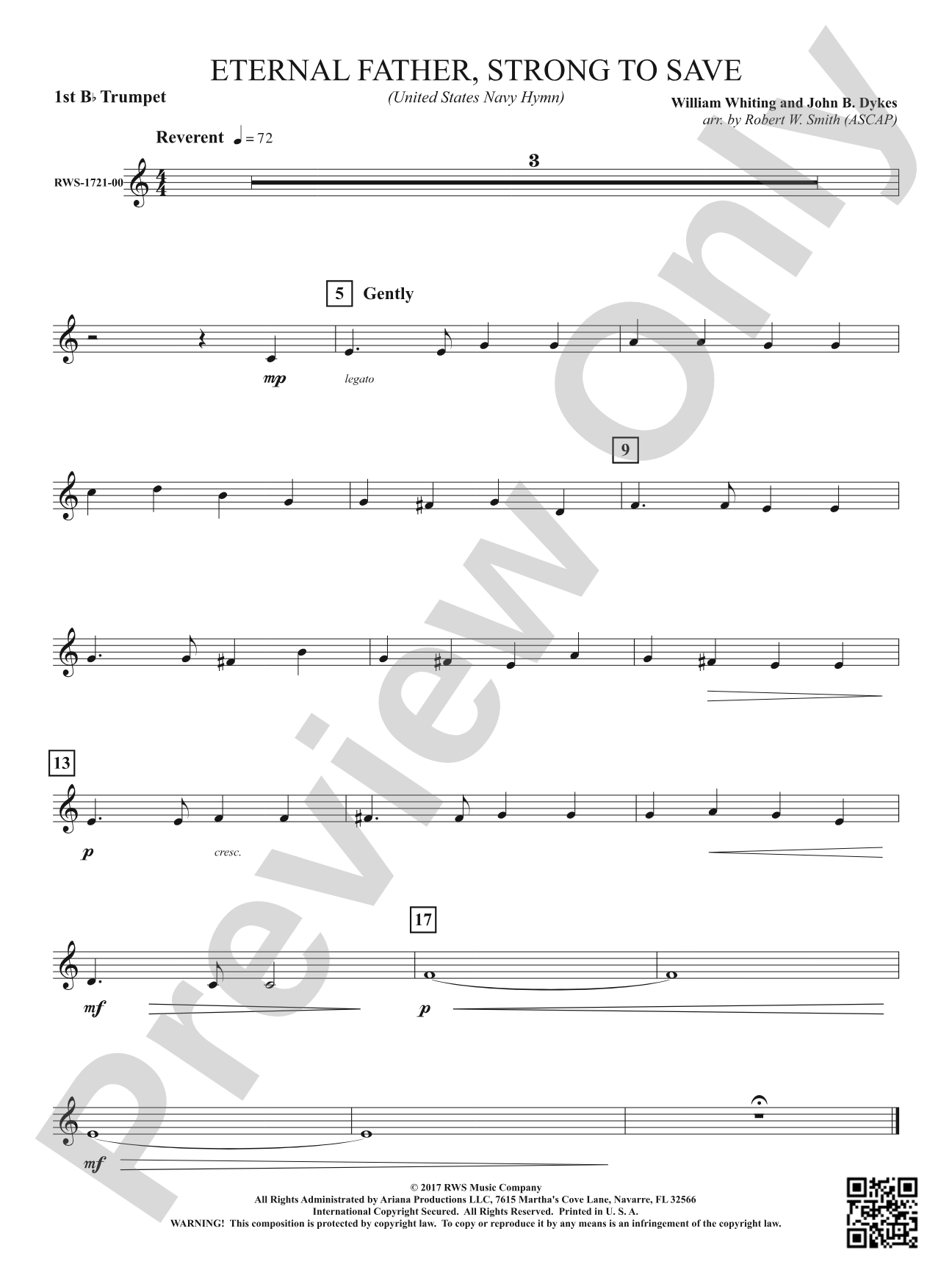
Eternal Father, Strong to Save - United States Navy Hymn: 1st B-flat Trumpet

United States Navy Hymn

By John B. Dykes / arr. Robert W. Smith

Grade: 3

Item: 98-PC-RWS1721_T1

Digital Download
$3.99
Description
This solemn and reverent arrangement was written for the 75th Anniversary of Pearl Harbor ceremonies. Beginning and ending with the tolling of a chime or ship's bell, this simple and elegant arrangement is most appropriate for patriotic ceremonies. It also serves as an optional introduction to Robert W. Smith's "The Greatest Generation."

Original Item#: RWS-1721-00

Eternal Father, Strong to Save - United States Navy Hymn: 1st B-flat Trumpet isn't in MakeMusic Cloud just yet...but it could be. Let us know you'd like to see it, and you'll help shape what comes next. In the meantime, start a free trial and dive into thousands of interactive titles your students can play along with today.

Sample Audio
0:00
0:00
Sample Video
Additional Details
Series: RWS - Concert Band
Publisher: RWS Music Company
SKU: 98-PC-RWS1721_T1

More about this title

About the Composer: John B. Dykes

John B. Dykes (1823-1876) was a prolific English composer and organist whose hymn tunes became foundational to 19th-century sacred music. His gift for memorable melody and emotional directness made his work accessible to congregations while maintaining musical integrity, and his compositions remain central to hymnals across denominations.

Dykes served as organist at Durham Cathedral for much of his career, where his deep understanding of how music functions in worship shaped every tune he wrote. "Eternal Father, Strong to Save" stands as one of his most enduring creations, chosen as the official hymn of the United States Navy and performed at ceremonies of national significance for over a century.

Why we love this

Robert W. Smith's arrangement honors the original hymn while creating a powerful concert band setting that works equally well at a patriotic ceremony or as a dramatic standalone moment in a concert program. The framing device of tolling bells at the beginning and end transforms this familiar tune into a reverent, ceremonial statement without overshadowing the melody or demanding technical virtuosity from your ensemble.

What to expect

Solemn and purposeful, with a quiet dignity that builds from the opening bell tones. The familiar melody carries the weight of naval tradition and remembrance, supported by warm harmonic writing that feels both intimate and grand, creating space for reflection without sentimentality.

Who it's for

Conductors programming patriotic or memorial ceremonies, military band directors, and concert band ensembles seeking repertoire with genuine emotional weight and accessibility. This works equally well for advanced middle school bands and community college ensembles, as the Grade 3 designation reflects musical maturity rather than technical difficulty.

How to get the most out of it

  • Rehearse the bell or chime part separately with your percussion section so the tolls are clearly audible and rhythmically secure; they anchor the entire emotional architecture of the arrangement.
  • Shape the melody gently through the middle section rather than forcing volume; Dykes's tune is strongest when singers and listeners can hear every note of the line with clarity.
  • Balance the harmonic voices so no section overwhelms the tune; this is an arrangement that rewards ensemble listening and blend over individual projection.

How to use it

Program this as a standalone processional or recessional at ceremonies, or use it as an emotional center point within a patriotic concert. Smith's note about it serving as an optional introduction to "The Greatest Generation" suggests it can also function as a thematic anchor connecting multiple works around themes of service and sacrifice.

Skills your students will build

  • Sustained phrasing and dynamic control in a reverent context
  • Precision balance between melody and harmonic support
  • Coordination with percussion effects (bell/chime) integrated into the ensemble texture
  • Understanding how historical melodies function in concert band arrangements

You May Also Like