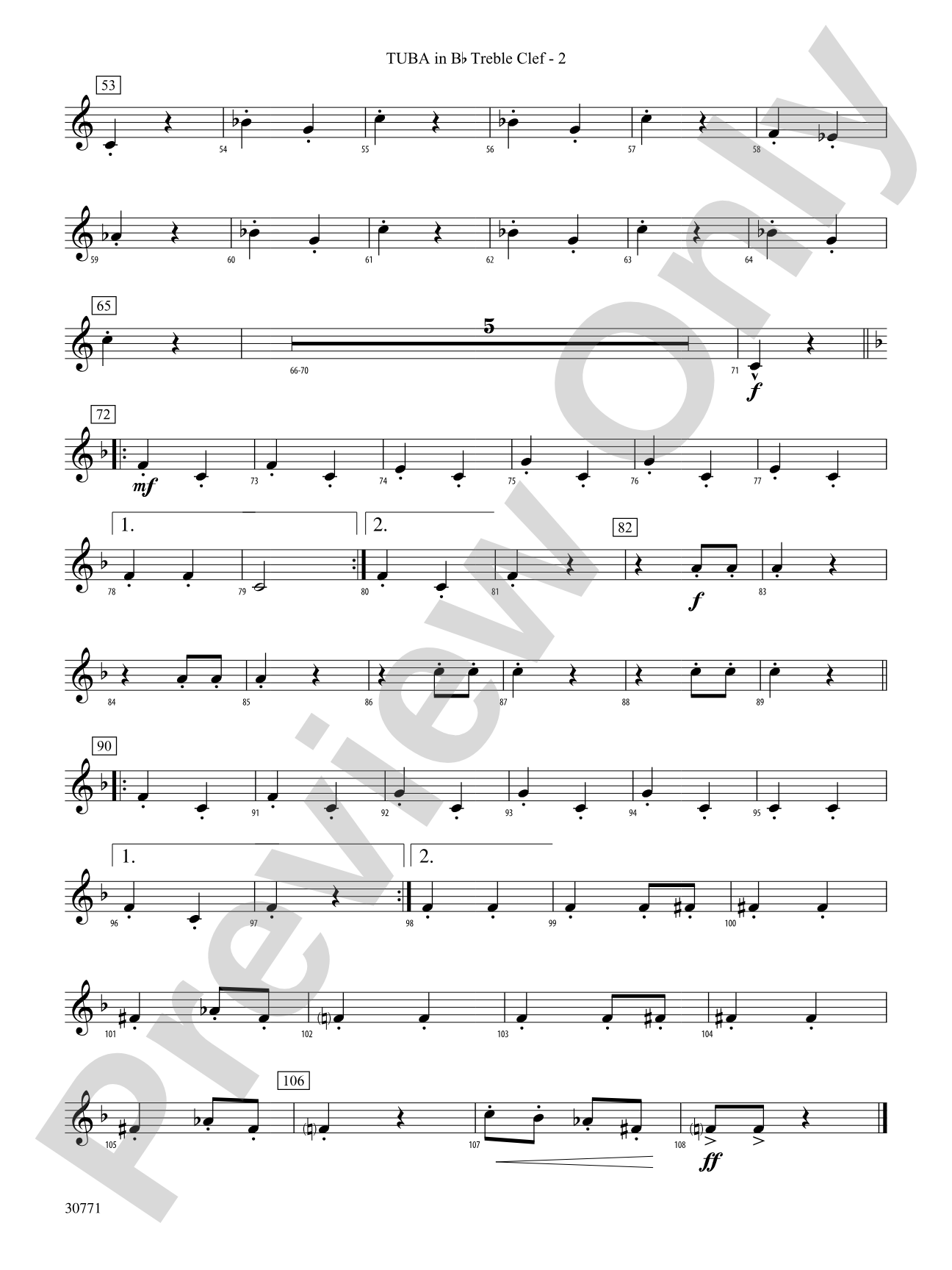
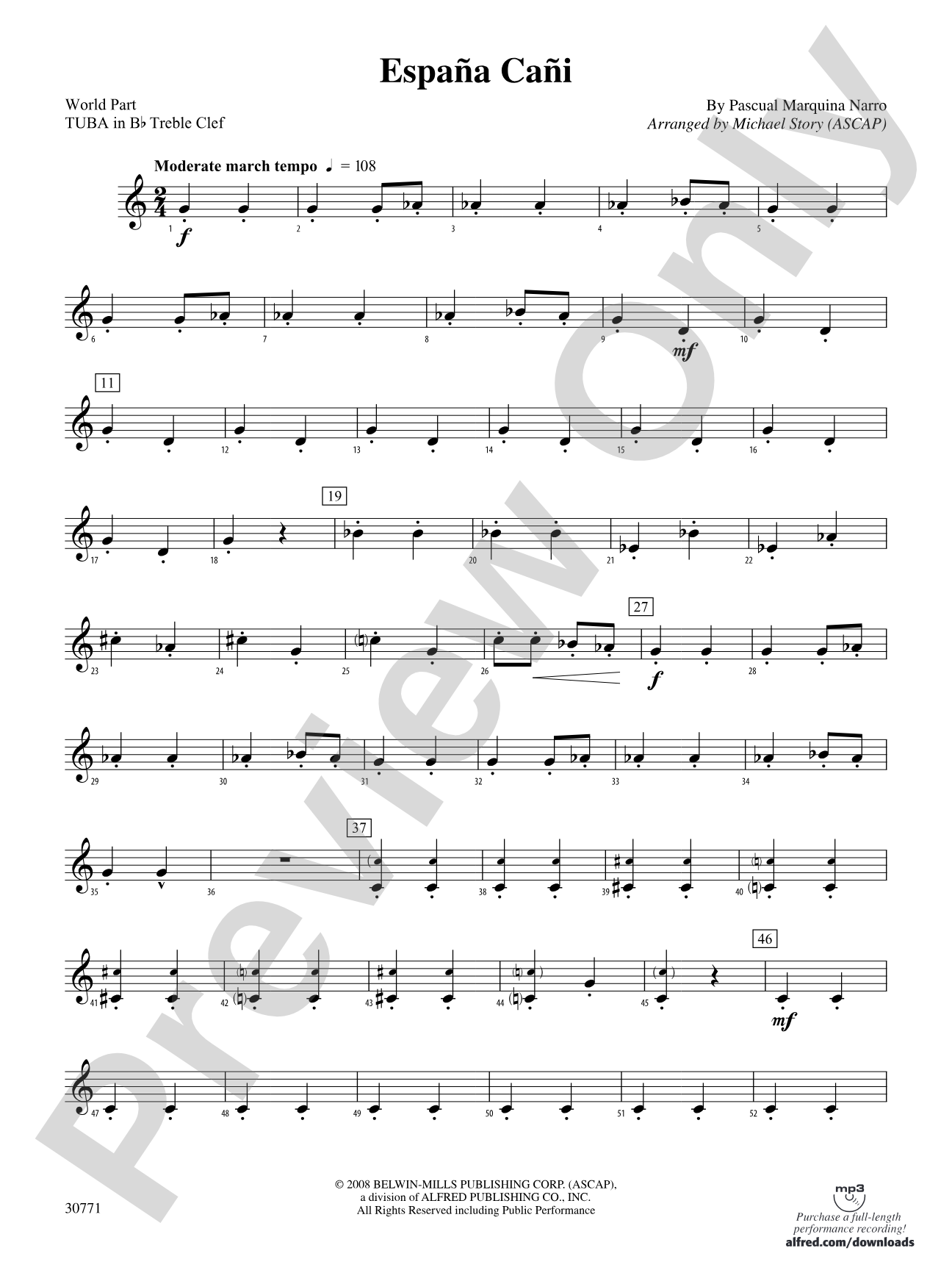
España Cañí: (wp) B-flat Tuba T.C. Sheet Music Preview

España Cañí: (wp) B-flat Tuba T.C.

By Pascual Marquina Narro / arr. Michael Story

Grade: 2 (Easy)

Item: 00-PC-0001669_wpTBBTC

Digital Download
$3.00
Description
The familiar melody of this paso doble is more recognizable by ear than by title. With a Latin flair, Michael Story has masterfully scored this traditional double step for young band with energy and pizzazz. Right in the pocket . . . all we can say is Ole! This title is available in MakeMusic Cloud.

Don't just read it, hear it, play along with it, and watch your students grow with it. In MakeMusic Cloud, España Cañí: (wp) B-flat Tuba T.C. comes alive with professional accompaniment, adjustable tempo, and built-in practice tools that turn solo practice into real progress.

Sample Audio
0:00
0:00
Sample Video
Additional Details
Series: Belwin Young Band
Publisher: Alfred Music
Page Count: 250
SKU: 00-PC-0001669_wpTBBTC

More about this title

About the Composer: Pascual Marquina Narro

Pascual Marquina Narro (1873-1953) was a Spanish composer and bandmaster whose works became staples of the concert band and orchestra repertoire. Born in Valencia, he composed over 200 works during his lifetime, many of them marches and dances that captured the spirit of Spanish musical tradition. His compositions remain widely performed in educational and professional settings, particularly his paso dobles, which blend accessibility with authentic rhythmic character.

España Cañí stands as his most enduring composition, recognized instantly by musicians and audiences worldwide. The piece exemplifies Marquina's gift for writing melodies that are both memorable and idiomatic to the ensemble performing them, ensuring its place in the standard repertoire across multiple instrumentation levels.

Why we love this

Michael Story's arrangement captures the essence of this beloved paso doble while keeping the technical demands manageable for young players. The orchestration is transparent enough for developing musicians to hear their individual parts without drowning in texture, yet the overall sound remains vibrant and engaging. Young bands consistently feel the energy and authenticity of this piece, making the rehearsal experience genuinely musical rather than a technical slog.

What to expect

Spirited and propulsive, with the swagger of Spanish tradition filtered through Michael Story's clear, modern orchestration. The melody sits comfortably in the ear, and the harmonic accompaniment sparkles with Latin rhythmic energy while remaining straightforward enough not to overwhelm younger musicians.

Who it's for

Young concert bands in grades 2-3 looking for a culturally authentic piece that plays significantly larger than its technical difficulty. Any director seeking a crowd-pleasing encore, parade opener, or concert centerpiece that students genuinely enjoy learning will find the musical and pedagogical rewards here.

How to get the most out of it

  • Shape the main melody with a slight swell at natural phrase endings rather than playing it straight; the paso doble style depends on subtle dynamic inflection to maintain character.
  • Lock the rhythm section (timpani and bass drum) early in rehearsal to establish the crisp, driving pulse that defines the traditional double step.
  • Balance the woodwind melody against brass harmonies carefully; the writing allows both sections to share prominence, and clarity comes from hearing both layers distinctly.
  • Allow the Latin percussion color to breathe in softer passages; these moments showcase the arrangement's sophistication and give the band a chance to demonstrate control.

How to use it

Program this as your spring or end-of-year concert opener to establish an upbeat tone immediately, or pair it with other Latin-influenced works to build a thematic concert segment. It also works beautifully as a festival selection where accessibility and audience appeal carry equal weight.

Skills your students will build

  • Recognizing and performing paso doble rhythmic patterns with confidence
  • Balancing melody and accompaniment in exposed harmonic textures
  • Playing with stylistic flair and dynamic nuance appropriate to Latin idioms
  • Coordinating rhythm section (timpani and percussion) to anchor ensemble pulse
  • Reading and interpreting articulation and phrasing in straightforward but musical contexts

You May Also Like