Eskimo Dance: B-flat Bass Clarinet Sheet Music Preview

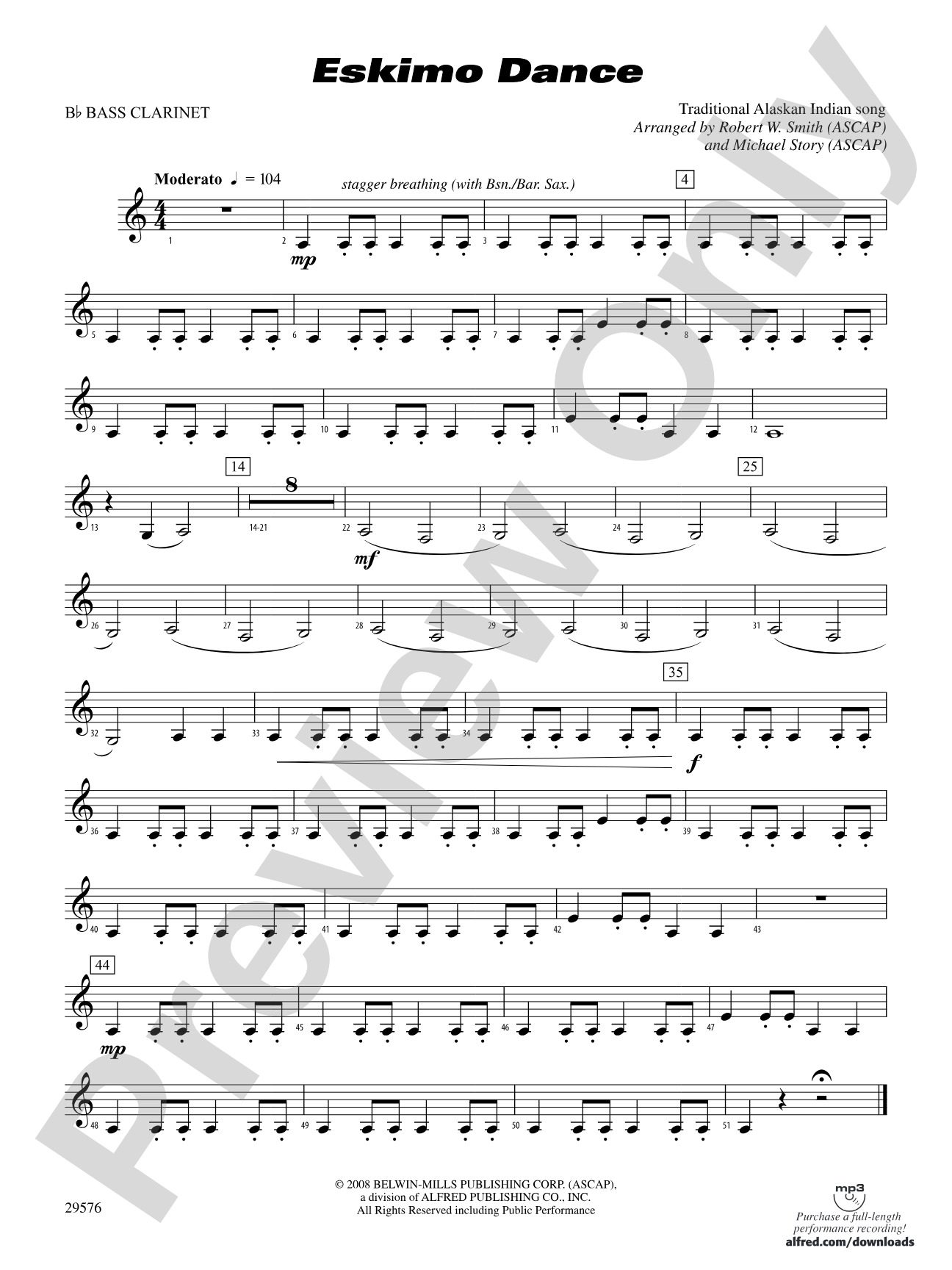
Eskimo Dance: B-flat Bass Clarinet

Traditional / arr. Michael Story and Robert W. Smith

Grade: 2 (Easy)

Item: 00-PC-0001473_BC

Digital Download
$3.00
Description
The most prominent native Eskimo folk tunes are dance songs generally based on the pentatonic scale. The songs are traditionally sung by women all while the men beat drums. Eskimo Dance is based on the Alaskan Indian song "The Three Brothers." Scored for your second year ensemble, this choice will meet multicultural objectives and also serve as gallant performance literature as well. (2:03) This title is available in MakeMusic Cloud.

Don't just read it, hear it, play along with it, and watch your students grow with it. In MakeMusic Cloud, Eskimo Dance: B-flat Bass Clarinet comes alive with professional accompaniment, adjustable tempo, and built-in practice tools that turn solo practice into real progress.

Sample Audio
0:00
0:00
Sample Video
Additional Details
Series: Band Expressions
Publisher: Alfred Music
Page Count: 136
SKU: 00-PC-0001473_BC

More about this title

About the Arranger: Michael Story

Michael Story is a prolific composer and arranger whose work spans concert band, wind ensemble, and educational settings. His arrangements are known for making culturally significant material accessible to young ensembles while maintaining musical integrity and engagement.

Why we love this

This arrangement brings genuine Alaskan Indigenous music into the rehearsal room without condescension or oversimplification. The pentatonic framework gives your second-year band immediate success while the programmatic context around drum-driven rhythms and women's singing traditions opens real conversations about music beyond the Western concert tradition.

What to expect

The piece captures the energy of communal celebration rooted in the pentatonic scale, with rhythmic momentum that feels both grounded and joyful. Drum patterns and folk melody create a sense of gathering and movement, inviting the ensemble to play with purposeful rhythm rather than mechanical precision.

Who it's for

Second-year concert bands seeking repertoire that honors non-Western musical traditions while building foundational musicianship. Directors who want their students to understand that concert band literature extends far beyond European art music.

How to get the most out of it

  • Center the rhythmic vitality in the percussion section; the drums historically drove these dances, so your timpani and snare parts should have presence and clarity without overwhelming the melodic voices.
  • Shape the pentatonic melody with natural phrasing rather than squeezing every note into symmetrical four-bar units; let the folk tune breathe as singers would have performed it.
  • Balance the ensemble so that sustained harmonies in the lower voices anchor the upper woodwind lines; avoid letting the melody float too far ahead of the harmonic foundation.

How to use it

Program this early in a concert to establish cultural breadth and energize the audience; its two-minute length and accessible level make it an ideal opener or a strong bridge between more traditional band fare and world music explorations. It pairs naturally with other folk-based repertoire or can anchor a concert theme about Indigenous cultures.

Skills your students will build

  • Reading and performing pentatonic melodies
  • Ensemble balance with prominent percussion parts
  • Rhythmic precision in drum-driven accompaniment
  • Shaping folk melody with natural phrasing rather than metrical rigidity
  • Understanding non-Western musical traditions and their notation

You May Also Like