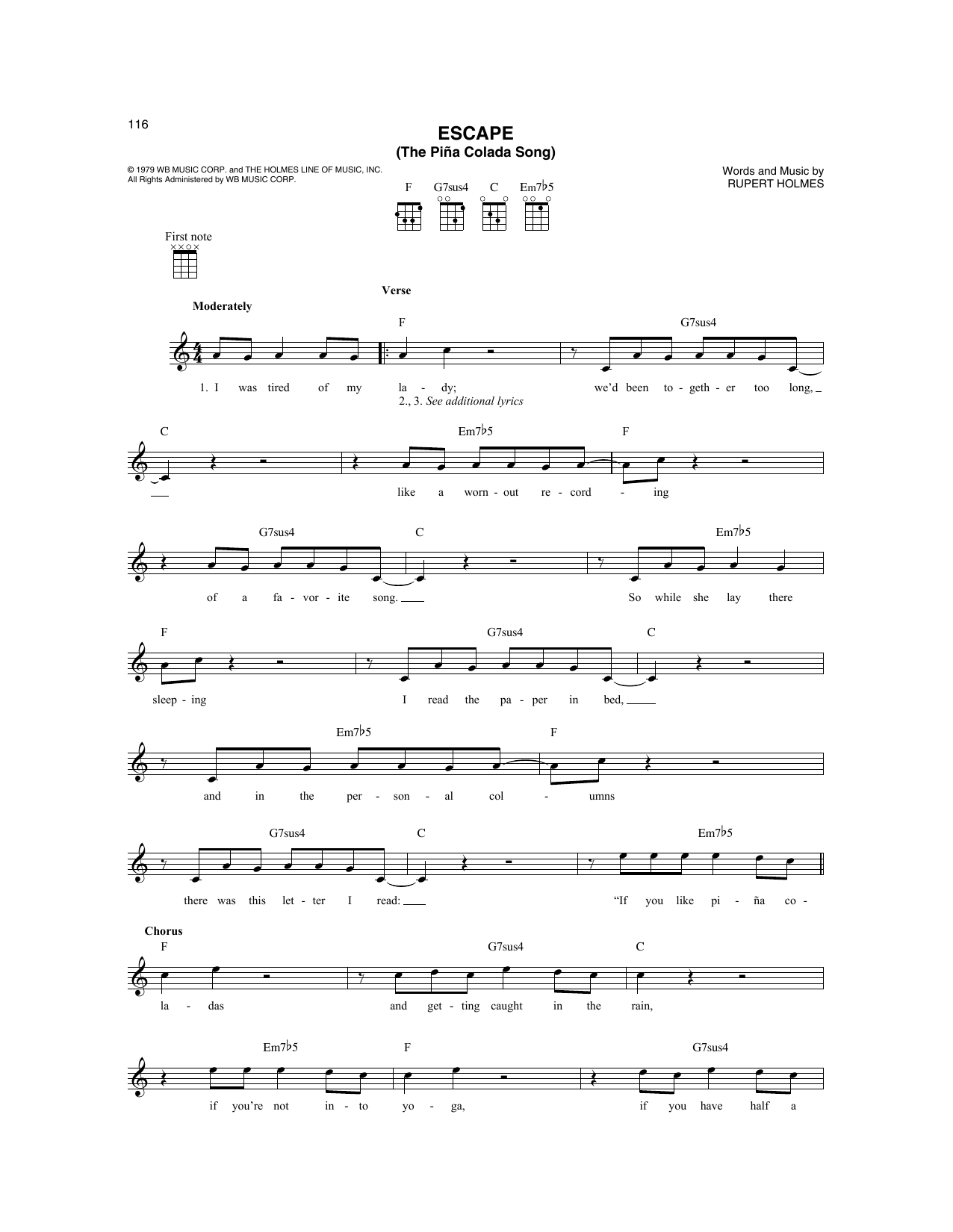
Escape (The Pina Colada Song) Sheet Music Preview

Escape (The Pina Colada Song): Mandolin

As performed by Rupert Holmes

Item: 35-DS01481218

Digital Download
$4.99
One moment…
Description

Discover MakeMusic Cloud: thousands of interactive titles your students can play along with today.

Sample Audio
No sample audio found.
Sample Video
Additional Details
Publisher: Hal Leonard
Page Count: 2
SKU: 35-DS01481218

More about this title

About the Artist: Rupert Holmes

Rupert Holmes built his career as a prolific songwriter, producer, and performer across pop, rock, and musical theater. His 1979 hit "Escape (The Piña Colada Song)" became a cultural phenomenon, reaching number 1 on the Billboard Hot 100 and establishing Holmes as a master of witty, narrative-driven pop songwriting. Beyond this iconic single, Holmes has written extensively for Broadway and composed music across multiple genres, demonstrating versatility that earned him a Tony Award nomination.

Holmes's strength lies in crafting songs with memorable hooks and clever storytelling that appeal to both casual listeners and serious musicians. His work exemplifies how pop songwriting can combine accessibility with genuine musicianship, making his catalog valuable for understanding the craft of contemporary song arrangement.

Why we love this

Rupert Holmes wrote a pop standard that works brilliantly as a solo performance piece while preserving the playful charm that made the original unforgettable. The arrangement respects the song's conversational tone and comedic narrative arc, giving singers room to deliver the lyrics with personality without overshadowing the melodic appeal that made this tune stick in millions of minds.

What to expect

Breezy, tongue in cheek, and unexpectedly romantic. The track balances humor with genuine warmth, delivering that 1970s pop sophistication where a song could be simultaneously clever and deeply engaging. There's an ease to the melody that belies careful construction.

Who it's for

Singers looking for reliable pop repertoire with genuine melodic substance and lyrical substance. This works equally well for solo vocalists, classroom performers, or anyone building a contemporary music portfolio that reaches beyond typical musical theater fare.

How to get the most out of it

  • Treat the vocal line as storytelling rather than pure singing. The lyrics are humorous and self aware, so allow your phrasing to highlight the wit without sacrificing musicality.
  • Pay attention to the rhythmic pocket; this song lives in a relaxed groove, so lock into a steady internal pulse even when the accompaniment shifts.
  • Balance vocal projection with conversational intimacy. The song works best when listeners feel like you're speaking directly to them rather than performing at them.

How to use it

Pair this with other 1970s hits to show how pop songwriting evolved during that era, or feature it as a palate cleanser between more serious repertoire. It's also an excellent teaching tool for understanding how narrative structure and character voice function in vocal performance.

Skills your students will build

  • Storytelling through lyrical delivery and phrasing
  • Maintaining rhythmic steadiness in a laid-back groove
  • Balancing conversational tone with musical legibility
  • Interpreting period-specific pop arranging conventions

You May Also Like