Escape (The Piña Colada Song)  Sheet Music Preview

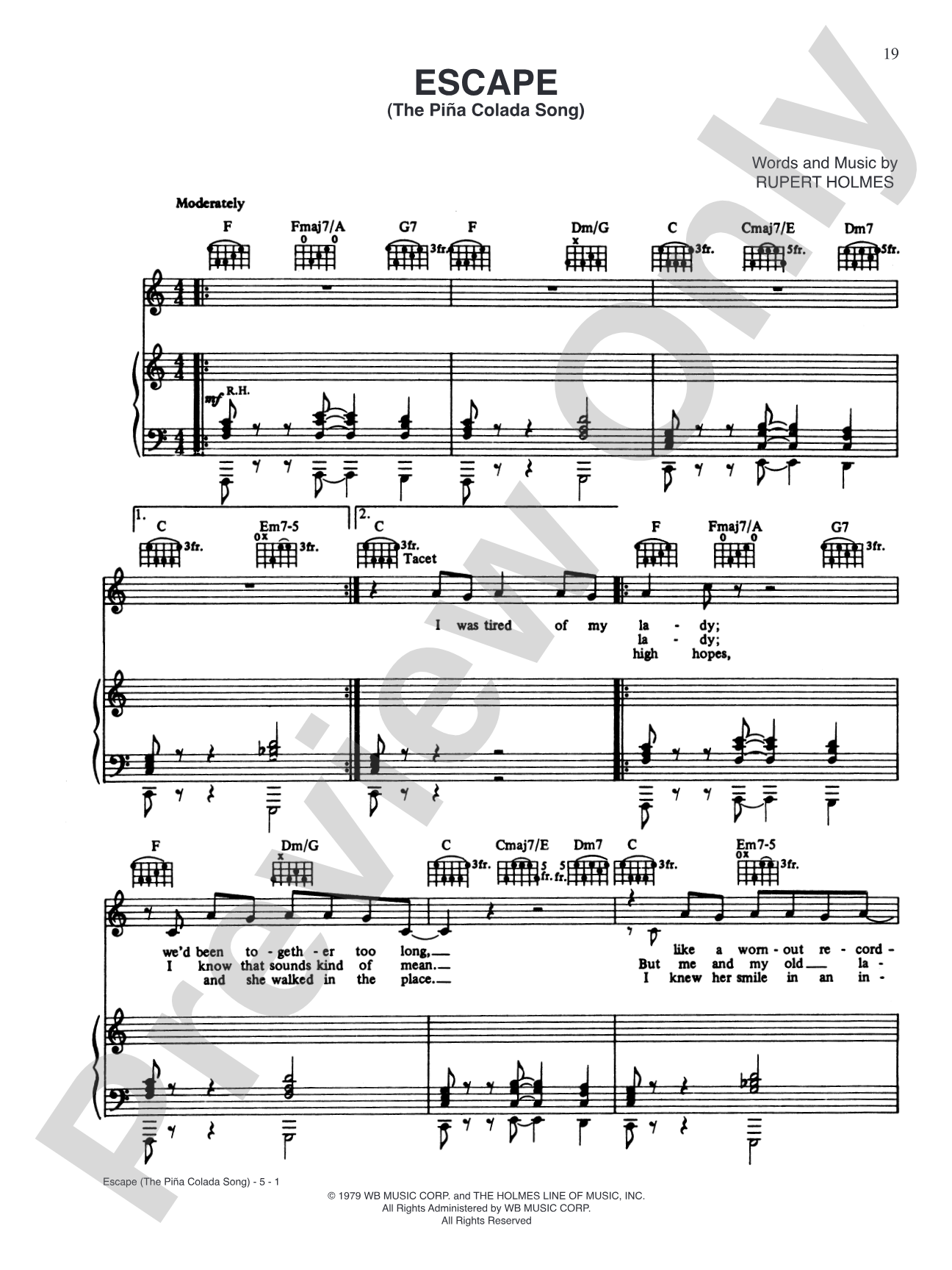
Escape (The Piña Colada Song): Piano/Vocal/Chords

Item: 00-PS-0011026

Digital Download
$3.99

One moment…

Description
From ABBA to the Eagles, this volume contains music from some of the greatest artists of the 1970s. Titles: Bad, Bad Leroy Brown * Dancing Queen * Hotel California * If You Could Read My Mind * Layla * Moondance * Old Time Rock & Roll * Sunshine on My Shoulders * Time in a Bottle * What a Fool Believes * Whenever I Call You "Friend", and many more.

Escape (The Piña Colada Song): Piano/Vocal/Chords isn't in MakeMusic Cloud just yet...but it could be. Let us know you'd like to see it, and you'll help shape what comes next. In the meantime, start a free trial and dive into thousands of interactive titles your students can play along with today.

Sample Audio
No sample audio found.
Sample Video
Additional Details
Series: Essential Home Library Series
Publisher: Alfred Music
Page Count: 144
SKU: 00-PS-0011026

More about this title

About the Composer: Rupert Holmes

Rupert Holmes became a household name in 1979 with "Escape (The Piña Colada Song)," a novelty pop hit that reached number one on the Billboard Hot 100 and won the Grammy Award for Best Pop Vocal Performance. Beyond his work as a performer and songwriter, Holmes has established himself as a composer for theater, television, and film, bringing the same ear for melody and narrative detail that made his pop records memorable.

Holmes' songwriting career spans decades of work across multiple genres. His ability to craft immediate, singable melodies paired with clever lyrics and clear harmonic structures has made his songs enduring resources for musicians learning to interpret popular material with authenticity and warmth.

Why we love this

This folio captures the melodic generosity and harmonic accessibility that made 1970s pop standards so rewarding to play and sing. Vocalists and pianists will find themselves naturally drawn to these arrangements, which honor the original recordings while remaining playable for intermediate musicians in both formal recital and informal accompaniment settings.

What to expect

These songs breathe with the easygoing sophistication and melodic clarity that defined 1970s mainstream pop at its best. Whether you're tackling the narrative arc of "Escape" itself or the glossy warmth of "Dancing Queen," you'll encounter melodies designed to lodge themselves in memory and harmonic progressions that feel inevitable once you've heard them.

Who it's for

Intermediate to advanced pianists and vocalists preparing material for recital, audition, or informal performance settings will find strong options here. This collection also serves singers building a repertoire of accessible popular songs that audiences genuinely enjoy hearing performed live.

How to get the most out of it

  • Study the original recordings to internalize the groove and phrasing that gives these songs their character, then make deliberate choices about what to keep and what to adapt for your voice or touch.
  • Pay attention to the chord voicings provided; they reflect the harmonic textures of the era and often suggest where to anchor the piano's weight within each phrase.
  • Treat the vocal melody as the primary storyteller. The lyrics in these songs carry genuine emotional content, and your phrasing should serve the narrative rather than fight against it.
  • Balance dynamics across the range of the piece. These songs span comfortable singing territory, but uneven dynamics can make longer phrases feel exhausting rather than buoyant.

How to use it

Slot individual selections into recitals that benefit from a lighter, audience-friendly encore or build a mini-concert showcasing the enduring appeal of 1970s songcraft. Many pianists pair selections from this folio with jazz standards or classical crossover material to create programming that bridges classical training with popular repertoire.

Skills your students will build

  • Reading piano/vocal/chords notation and translating chord symbols into idiomatic keyboard voicings
  • Balancing melodic line with harmonic accompaniment in real time
  • Interpreting stylistic nuance within accessible harmonic language
  • Coordinating vocal phrasing with piano texture and understanding where pianist and vocalist lead
  • Sight-reading pop and rock idioms without relying exclusively on recordings

You May Also Like