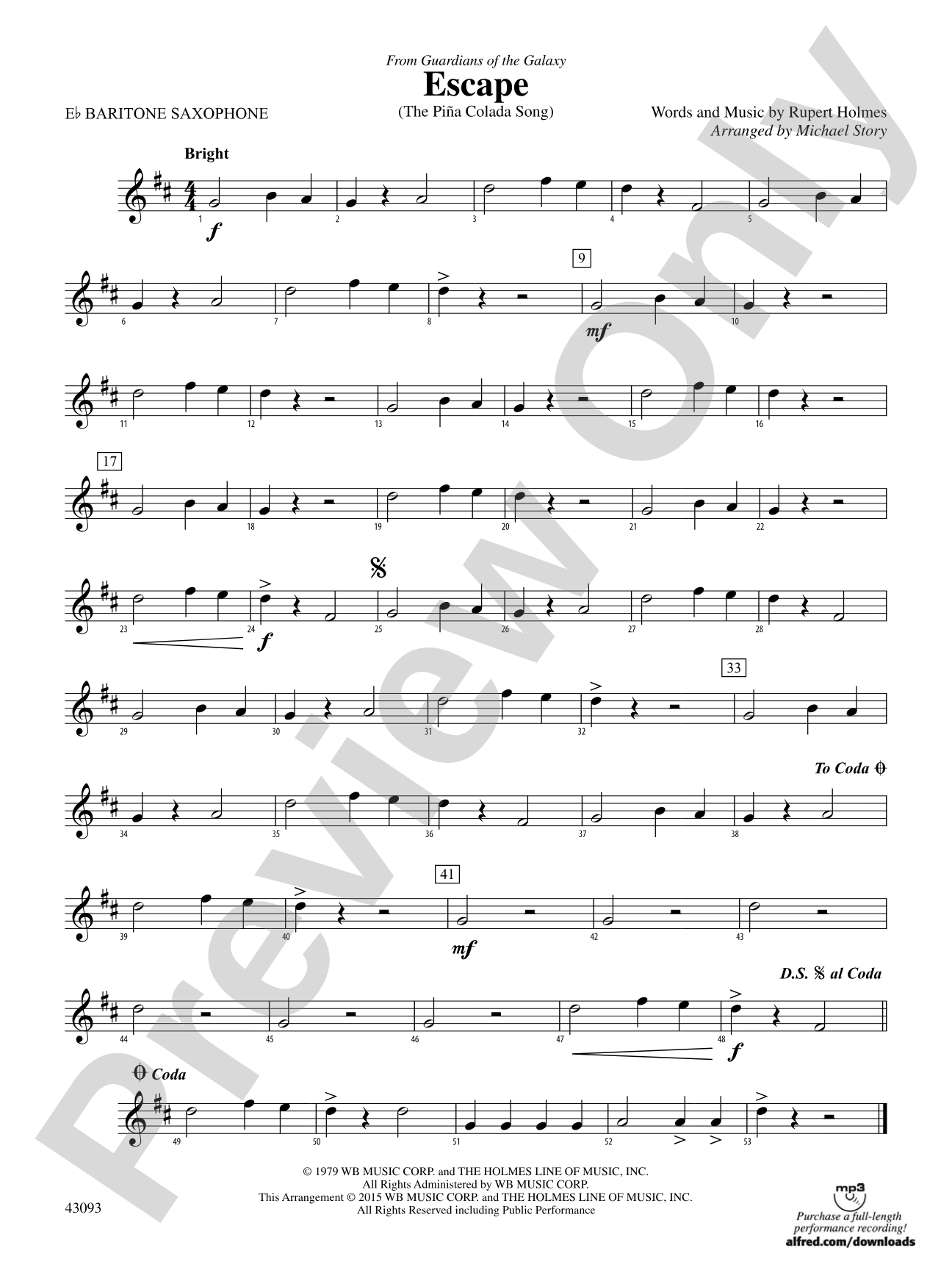
Escape (from Guardians of the Galaxy): E-flat Baritone Saxophone Sheet Music Preview

Escape (from Guardians of the Galaxy): E-flat Baritone Saxophone

The Piña Colada Song

Words and music by Rupert Holmes / arr. Michael Story

Grade: 1 (Very Easy)

Item: 00-PC-0016746_BTX

Digital Download
$3.00
Description
Also known as "The Piña Colada Song" this Rupert Holmes infectious theme has been included in a variety of film scores including Mars Attacks, Shrek, and, most recently, Guardians of the Galaxy. A timeless feel-good tune that features a solo alto sax or your whole section! (2:00)

Don't just read it, hear it, play along with it, and watch your students grow with it. In MakeMusic Cloud, Escape (from Guardians of the Galaxy): E-flat Baritone Saxophone comes alive with professional accompaniment, adjustable tempo, and built-in practice tools that turn solo practice into real progress.

Sample Audio
0:00
0:00
Sample Video
Additional Details
Series: Pop Beginning Band
Publisher: Alfred Music
Page Count: 132
SKU: 00-PC-0016746_BTX

More about this title

About the Composer: Rupert Holmes

Rupert Holmes is a singer-songwriter and composer whose work spans popular music, theater, and film scoring. Best known for "Escape (The Piña Colada Song)," a Grammy-winning hit from 1979, Holmes has built a career writing memorable melodies that lodge themselves in the listener's mind. His compositions appear across decades of film and television, proving his gift for creating music that feels both contemporary and timeless.

Beyond his pop success, Holmes has composed for Broadway and contributed original scores to numerous film projects. His melodic sensibility and accessible songwriting make his work particularly valuable for music educators seeking material that engages student musicians while maintaining genuine musical substance.

Why we love this

Michael Story's Grade 1 arrangement captures the irresistible warmth of Holmes's original without sacrificing any of its charm. The optional alto sax solo gives you flexibility to feature a strong player or blend the entire section, and the straightforward writing means your band will sound polished quickly, leaving rehearsal time for nuance rather than mechanics.

What to expect

Warm, unhurried, and impossible to resist. The arrangement invites a vacation-ready mood without feeling frivolous; there's real musicality in the simplicity. Your band will sound more accomplished than the difficulty level suggests, with enough space in the scoring that each section's contribution feels valued.

Who it's for

Beginning concert bands that want to program something students genuinely enjoy playing. The Grade 1 level makes it accessible for relatively new ensembles while the recognizable melody keeps rehearsals energized and builds confidence. Audiences respond immediately to this tune, making it an excellent choice for early-season concerts or pops programs.

How to get the most out of it

  • Let the melody breathe naturally; this tune thrives on its conversational, easygoing phrasing rather than rigid timing.
  • If you feature the alto sax solo, balance it so it sits above the ensemble but remains part of the texture, not separated from it.
  • Shape the dynamics subtly rather than dramatically; the feel-good quality depends on consistent warmth throughout.
  • Encourage the low reeds and brass to support the melodic line with a relaxed, swinging approach to the rhythm section.

How to use it

This works beautifully as a standalone pops feature or as part of a lighter second half following weightier concert pieces. The 2-minute duration makes it ideal for filling out a program or as a closer that leaves the audience smiling. Consider pairing it with other film themes from the same period to build a recognizable, accessible concert.

Skills your students will build

  • Balancing melody and accompaniment across multiple sections
  • Playing with a relaxed, conversational phrasing style
  • Accompanying featured soloists while maintaining ensemble cohesion
  • Reading and executing straightforward rhythmic and harmonic parts at tempo

You May Also Like