Escape from Dead Raider's Hollow: Baritone B.C. Sheet Music Preview

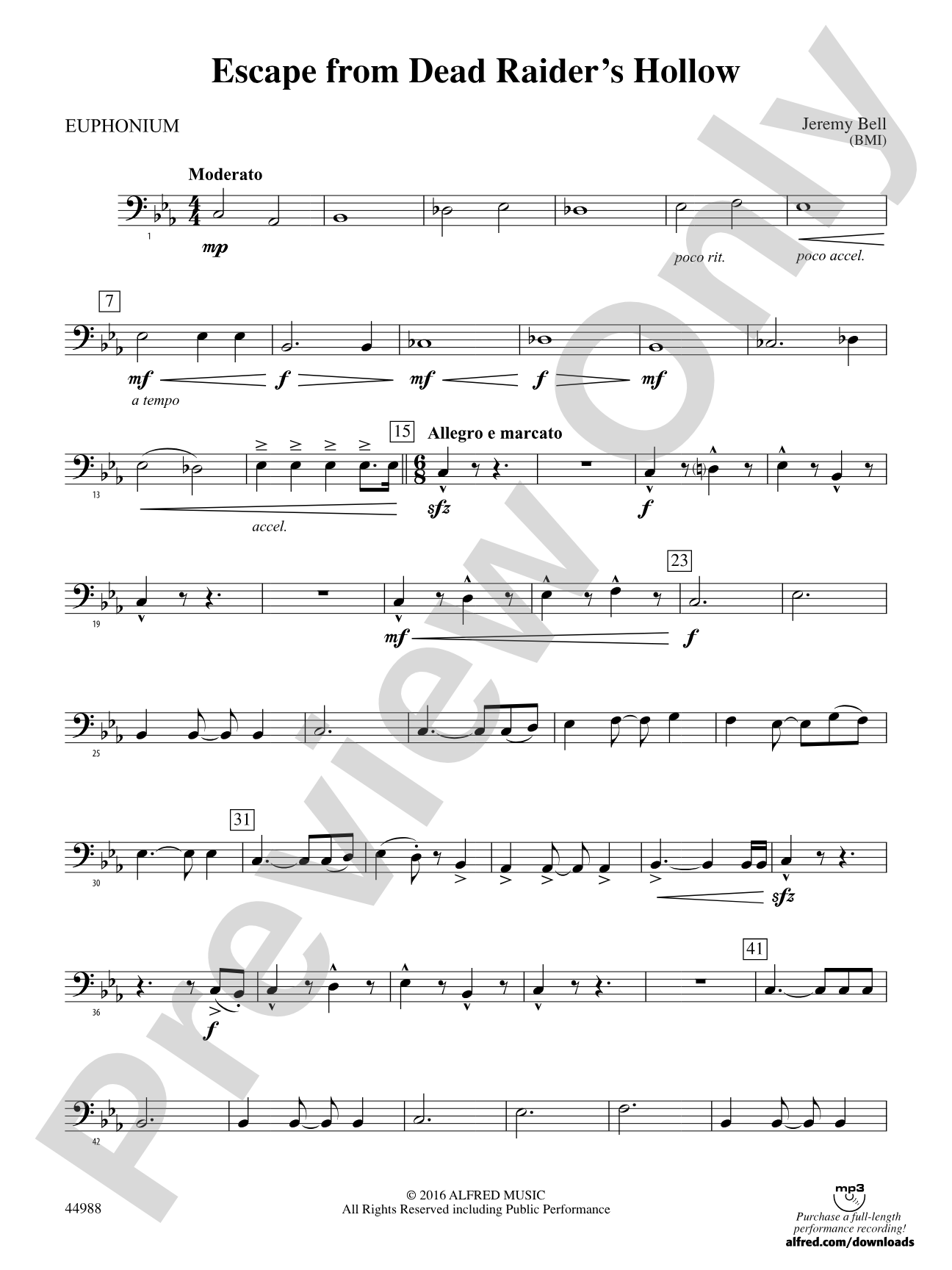
Escape from Dead Raider's Hollow: Baritone B.C.

By Jeremy Bell

Grade: 3 (Medium)

Item: 00-PC-0017453_BBC1

Digital Download
$3.00
Description
"Escape from Dead Raider's Hollow" is a fast-paced adventure. Opening quietly, the introduction gradually builds in volume and energy up to a tempo change where the piece takes off and doesn't relent until the end. Combining rhythms of 3 over a pulse of 2 creates a hemiola effect that drives the piece forward, creating a feeling of anxiety and being chased. This is a bombastic, action-packed piece with loud percussive hits, huge brass, and soaring woodwinds that ends with a bang. (2:30)

Don't just read it, hear it, play along with it, and watch your students grow with it. In MakeMusic Cloud, Escape from Dead Raider's Hollow: Baritone B.C. comes alive with professional accompaniment, adjustable tempo, and built-in practice tools that turn solo practice into real progress.

Sample Audio
0:00
0:00
Sample Video
Additional Details
Series: Young Symphonic
Publisher: Alfred Music
Page Count: 264
SKU: 00-PC-0017453_BBC1

More about this title

About the Composer: Jeremy Bell

Jeremy Bell

Jeremy Bell studied composition at Bradley University under Dr. Stephen Heinemann, then earned his master's degree from Arizona State University where he worked with Dr. Rodney Rogers and Dr. Jody Rockmaker. His output spans band and choral writing alongside a growing portfolio of compositions for television and film, reflecting his work as Entertainment Manager at The SHOUT! House Dueling Piano bar in Glendale, Arizona.

Why we love this

Bell nails the technical challenge that makes this piece sing: hemiola creates genuine forward momentum rather than feeling gimmicky, and the energy never flags from the tempo change onward. The orchestration is generous without being bloated, giving every section moments to shine while the percussion and brass anchors keep the action relentless. It's a concert piece that earns its excitement.

What to expect

Pure adrenaline. The quiet opening draws you in before the tempo change launches into a breathless escape, with layered rhythms creating palpable tension and forward motion. Soaring melodies fight against driving percussion and full brass; it ends with the kind of climax that leaves audiences energized and rehearsals buzzing.

Who it's for

Concert bands at the Grade 3 level looking for high-energy programming that challenges ensemble coordination without requiring advanced technical chops. Bands comfortable with mixed meters and rhythmic independence will find this rewarding; it's equally at home on a Halloween-themed concert or a spring festival program where impact matters.

How to get the most out of it

  • Lock the hemiola (3 against 2) early in sectionals. Have the woodwinds count their triplet figures while the lower instruments maintain the duple pulse; this coordination is what generates the anxious, chased feeling the piece needs.
  • Balance the soaring woodwind lines against the brass foundation. These aren't competing for dominance; let the woodwinds float above a solid, never-rushed brass core.
  • Shape the opening dynamic climb deliberately. The gradual crescendo into the tempo change sets up the payoff; resist the urge to jump to full volume early.
  • Keep the percussion hits tight and articulate. Loud doesn't mean sloppy; crisp attacks on those bombastic moments define the piece's character.

How to use it

Program this as a centerpiece for a concert built around adventure or action themes, or pair it with lighter fare to give your audience a jolt of excitement. Its 2:30 length and immediate impact make it ideal for festival adjudication; it also anchors an autumn or Halloween concert without demanding novelty programming.

Skills your students will build

  • Reading and executing hemiola (3 over 2) with rhythmic independence
  • Balancing independent melodic lines within a cohesive ensemble sound
  • Managing dynamic shapes over extended crescendos
  • Articulating fast rhythmic figures with precision under tempo pressure
  • Sectional coordination across mixed meters and syncopated figures

You May Also Like