Escalator Blues: 2nd B-flat Tenor Saxophone Sheet Music Preview

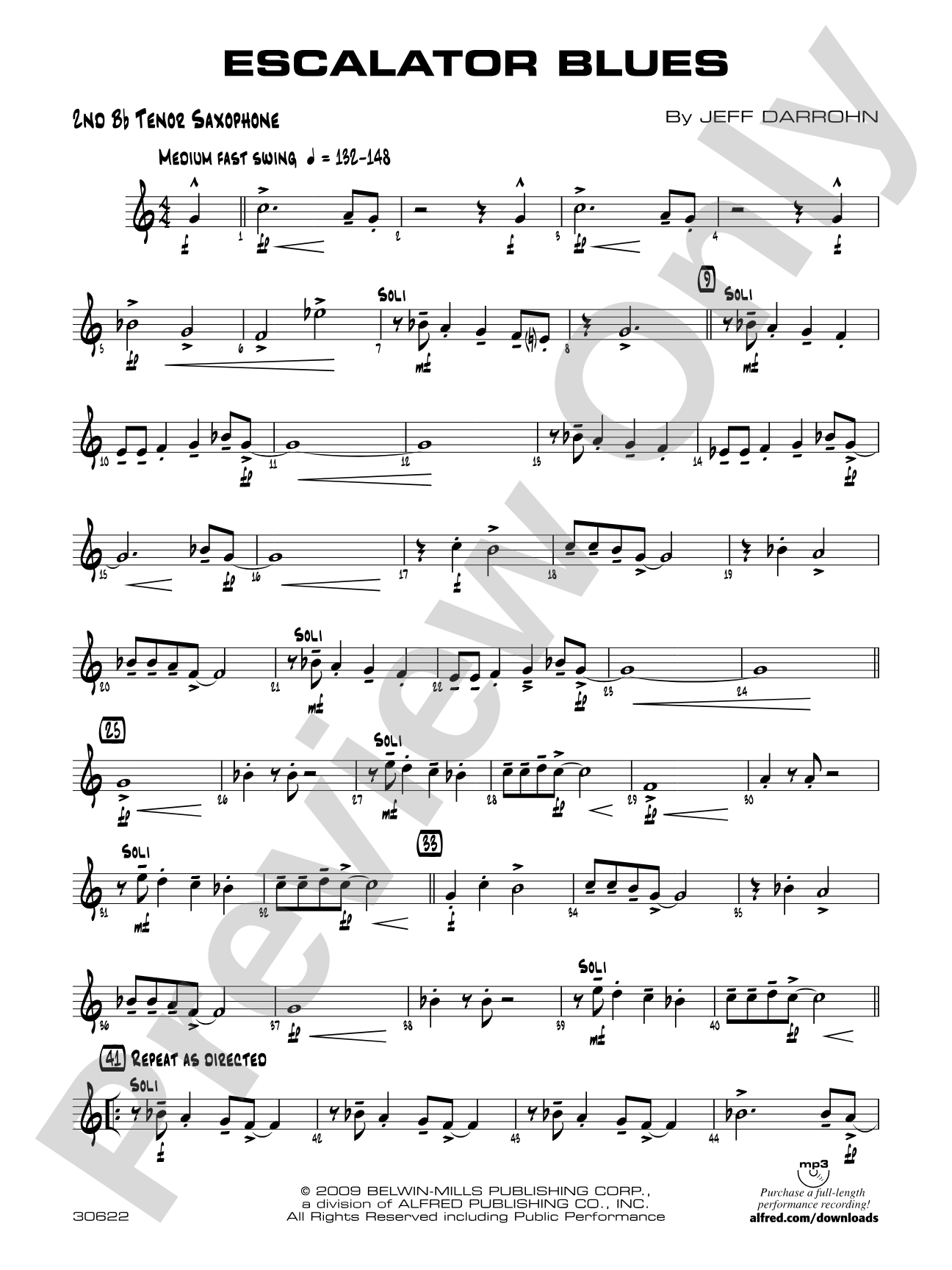
Escalator Blues: 2nd B-flat Tenor Saxophone

By Jeff Darrohn

Grade: 1 (Easy)

Item: 00-PC-0014814_TX2

Digital Download
$3.00
Description
Composer/arranger Jeff Darrohn has created this very interesting blues chart. A 16-bar blues, it has call-and-responses, a few stop-time sections, a building interlude and brief written-out solo breaks for alto and tenor sax, trumpet and trombone. Chock full of educational jazz concepts and easy to play, this chart is definitely a great choice for your young band. (3:25) This title is available in MakeMusic Cloud.

Don't just read it, hear it, play along with it, and watch your students grow with it. In MakeMusic Cloud, Escalator Blues: 2nd B-flat Tenor Saxophone comes alive with professional accompaniment, adjustable tempo, and built-in practice tools that turn solo practice into real progress.

Sample Audio
0:00
0:00
Sample Video
Additional Details
Series: First Year Charts for Jazz Ensemble
Publisher: Alfred Music
Page Count: 82
SKU: 00-PC-0014814_TX2

More about this title

About the Composer: Jeff Darrohn

Jeff Darrohn

Jeff Darrohn is a composer and arranger with roots in Philadelphia and a career spanning performance, education, and composition. He earned his BM from the University of the Arts and spent 17 years as director of bands at Saint David School in Willow Grove, Pennsylvania, where his ensembles consistently earned recognition at competitions and festivals. He also directed the Philadelphia Archdiocesan Elementary Jazz Band for five years.

As a performer, Darrohn has worked alongside jazz luminaries including Lou Rawls, Urbie Green, Buddy DeFranco, and Mel Lewis. Based in London, he leads SAXON, a six-piece saxophone and rhythm section group that performs his original compositions, and contributes arrangements and compositions to several UK and US big bands. His educational writing serves elementary, middle, and high school jazz programs as well as university ensembles.

Why we love this

Darrohn constructs this 16-bar blues with intelligence and restraint, layering in educational concepts (call-and-response, stop-time, building dynamics) without overwhelming young players. The written-out solo breaks for saxophones and brass are the real gift here: students get clear, playable models for improvisation rather than blank spaces, making this a natural stepping stone toward true solo work.

What to expect

The piece moves with the casual confidence of a simple blues, building energy through call-and-response and carefully timed stop sections that keep everyone engaged. It feels like a guided conversation between sections, with written solos that give young players a taste of what jazz vocabulary can sound like without demanding they invent it from scratch.

Who it's for

Grade 1 jazz ensembles with mixed instrumentation and limited improvisation experience. This is ideal for groups encountering blues form and swing style for the first time, or for early-year ensembles that need accessible repertoire with real jazz content.

How to get the most out of it

  • Lock the rhythm section (piano, bass, drums) into a tight groove before adding horns; the swing feel depends entirely on their foundation.
  • Isolate the call-and-response sections in rehearsal so each section hears exactly when to enter and cut off.
  • Shape the building interlude with gradual dynamic growth; resist the urge to jump to full volume too early.
  • Have the soloists listen carefully to the written-out breaks on a recording or from a peer section before playing their own parts, so they internalize the style and phrasing.

How to use it

Program this early in the jazz ensemble season to establish ensemble sound and swing feel without complexity. It also pairs well on a concert with other Grade 1 charts, giving young groups a solid opening set while they develop improvisation skills on harder material later in the year.

Skills your students will build

  • 12-bar blues form and harmonic movement
  • Call-and-response phrasing and ensemble entrances
  • Stop-time playing (maintaining time while the rhythm section drops out)
  • Swing feel and groove orientation
  • Reading and executing written-out solo lines
  • Dynamic shaping and ensemble balance in a jazz context

You May Also Like