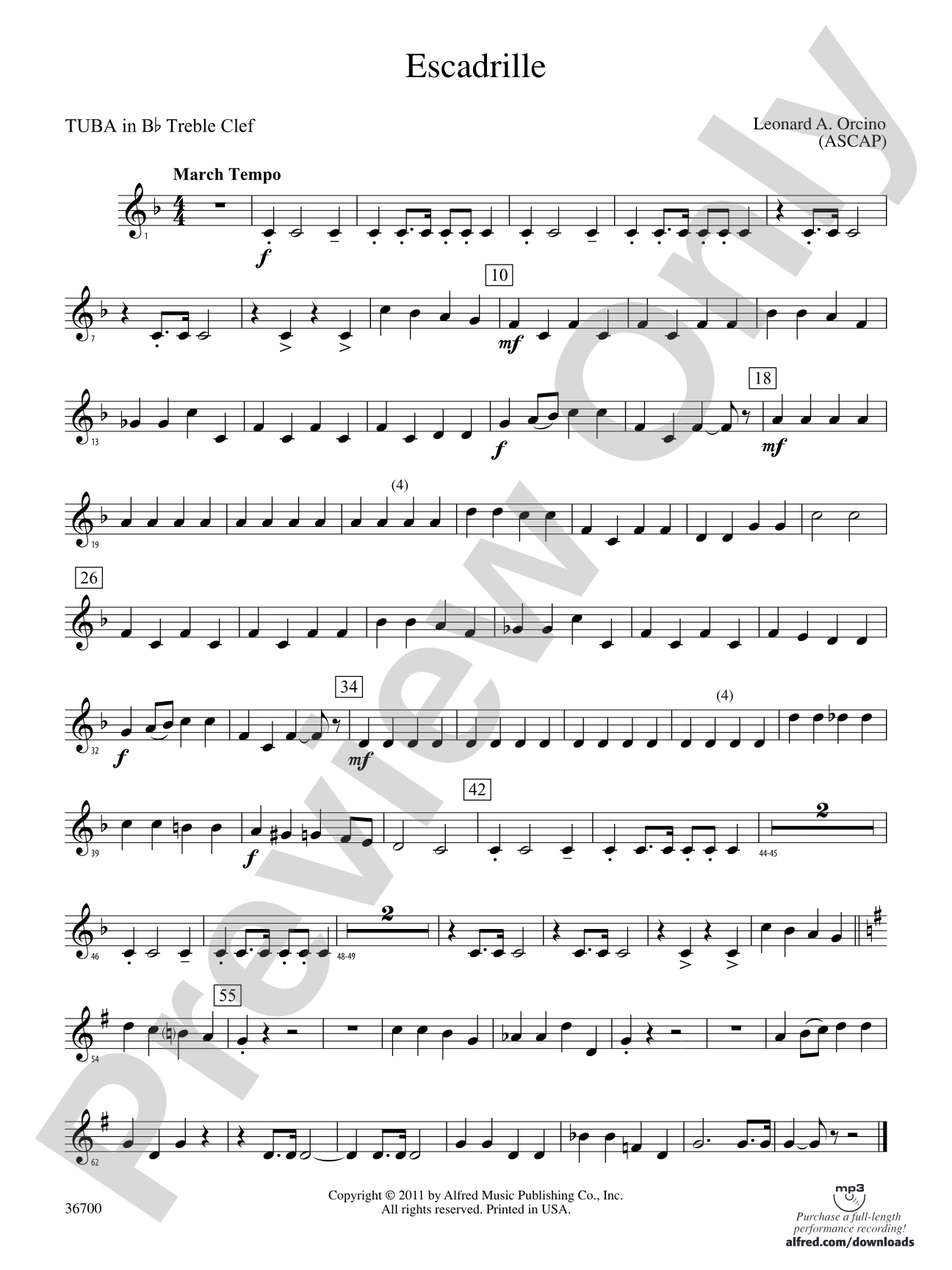
Escadrille: (wp) B-flat Tuba T.C. Sheet Music Preview

Escadrille: (wp) B-flat Tuba T.C.

By Leonard A. Orcino

Grade: 2 (Medium Easy)

Item: 00-PC-0015128_wpTBBTC

Digital Download
$3.00
Description
Early in World War I (1916), prior to the USA entering the conflict, Americans joined the French Air Corps. They were originally called the Escadrille Americaine---the name was changed to Escadrille de Lafayette after protest from the Germans that America was not in the war. The Escadrille had a reputation for daring recklessness and a party atmosphere. The corps mascots were two lion cubs, "Whiskey" and "Soda." The insignia was an American Indian head with a flowing war bonnet. The entire squadron merged with the American Air corps (1918) once the USA entered the war.

Don't just read it, hear it, play along with it, and watch your students grow with it. In MakeMusic Cloud, Escadrille: (wp) B-flat Tuba T.C. comes alive with professional accompaniment, adjustable tempo, and built-in practice tools that turn solo practice into real progress.

Sample Audio
0:00
0:00
Sample Video
Additional Details
Series: Young Symphonic
Publisher: Alfred Music
Page Count: 128
SKU: 00-PC-0015128_wpTBBTC

More about this title

Why we love this

Orcino crafts a piece that captures genuine historical drama without sacrificing accessibility. A Grade 2 work with this much character and narrative depth gives young musicians real material to sink their teeth into, and the Young Symphonic series ensures the orchestration stays playable across mixed ability levels.

What to expect

Escadrille captures both the audacity and the camaraderie of a legendary flying corps. You'll hear moments of soaring energy and daring adventure alongside quieter passages that suggest reflection and loss. The writing honors the legend while remaining transparent enough for young musicians to navigate.

Who it's for

Concert bands at the Grade 2 level seeking repertoire with genuine historical substance. Directors building programs around American history or World War I themes will find a piece that educates and engages without oversimplifying the subject matter.

How to get the most out of it

  • Balance the lyrical passages by keeping accompanying parts warm and resonant rather than thin. Young bands often underplay their harmonic foundation in slower sections.
  • Shape phrases around the historical narrative. Lean into moments of heroic energy, then pull back for reflection. This piece invites storytelling, not just note-reading.
  • Attend to articulation clarity in faster passages. Clean tonguing and consistent note releases will help the band sound unified even at brisk tempos.
  • Let the melodic content breathe. Resist the urge to push tempo in lyrical sections; younger players often need extra space to sustain tone quality.

How to use it

Pair this with other American repertoire from the early 20th century for a historically themed concert, or use it as a centerpiece in a military history or patriotic program. The Grade 2 level makes it ideal for spring concerts or culminating performances where your band can celebrate growth without reaching beyond their technical grasp.

Skills your students will build

  • Sustained melodic phrasing across longer lines
  • Dynamic shaping and control in contrasting sections
  • Ensemble balance between melody and accompaniment
  • Rhythmic accuracy in moderately complex passages
  • Historical awareness and narrative interpretation in music

You May Also Like