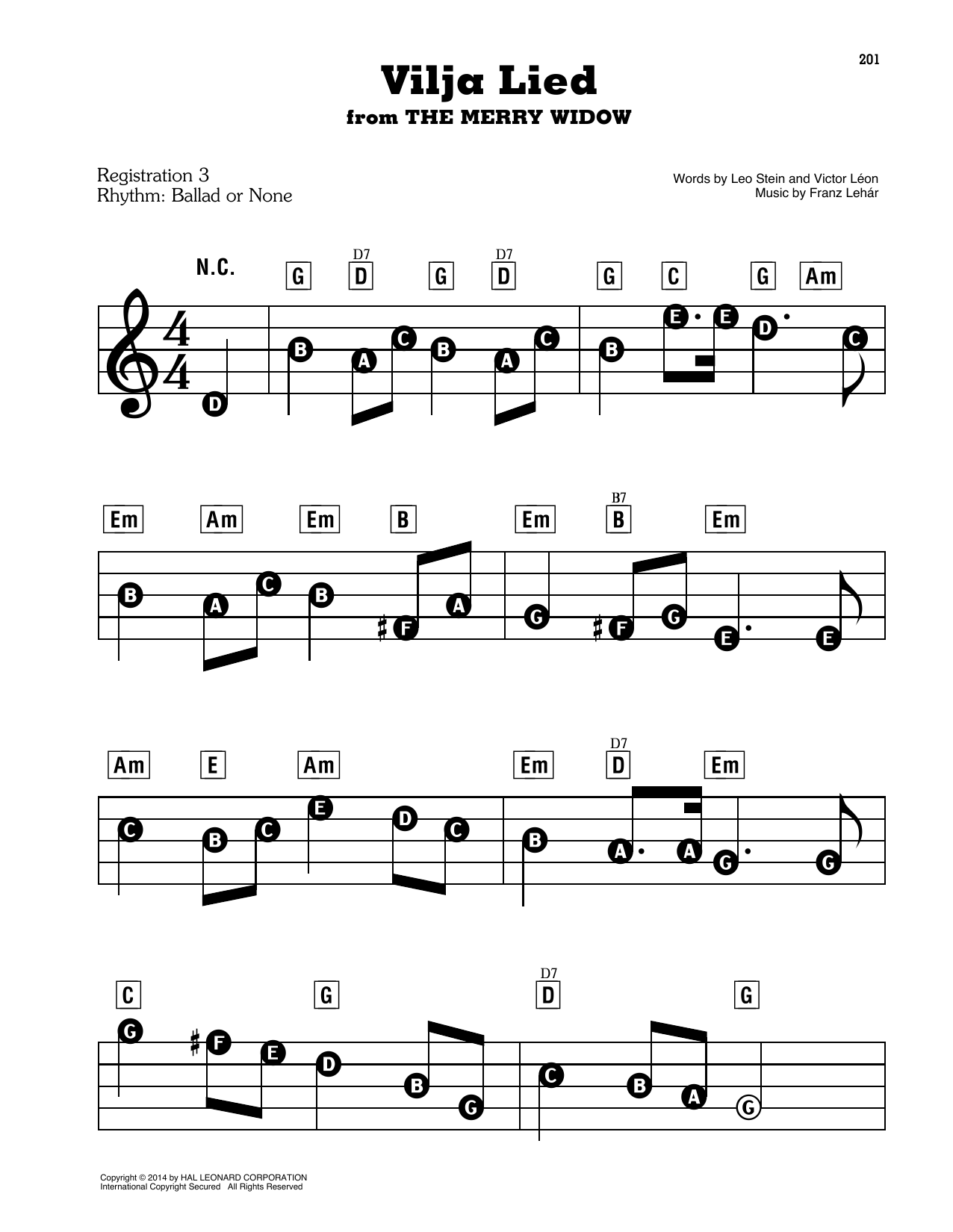
Es Lebt' Eine Vilja ("Vilja Lied") Sheet Music Preview

Es Lebt' Eine Vilja ("Vilja Lied"): E-Z Play Today

As performed by Victor Leon

Item: 35-DS00499809

Digital Download
$4.99
Description

Es Lebt' Eine Vilja ("Vilja Lied"): E-Z Play Today isn't in MakeMusic Cloud just yet...but it could be. Let us know you'd like to see it, and you'll help shape what comes next. In the meantime, start a free trial and dive into thousands of interactive titles your students can play along with today.

Sample Audio
No sample audio found.
Sample Video
Additional Details
Publisher: Hal Leonard
Page Count: 3
SKU: 35-DS00499809

More about this title

About the Artist: Victor Leon

Victor Leon was an Austrian librettist and playwright whose work shaped the operetta tradition of the late 19th century. He collaborated with composer Carl Millöcker and others to create works that balanced sophistication with popular appeal, drawing on the Viennese operetta conventions of his time.

Why we love this

This E-Z Play arrangement makes a genuine operetta selection accessible to pianists who might otherwise skip this repertoire. The 3-page format respects the song's character without demanding virtuosic technique, so your students encounter real theatrical music without the typical classical difficulty barrier.

What to expect

Warmth and longing flow through this operetta gem, with the kind of lyrical phrasing that defined Viennese musical theater. The setting feels both intimate and theatrical, inviting pianists to sing through their fingers while honoring the piece's dramatic roots.

Who it's for

Pianists working through E-Z Play Today books who want exposure to classical song literature beyond the usual teaching repertoire. Community pianists and amateur players seeking material with cultural and historical weight that doesn't demand conservatory-level chops.

How to get the most out of it

  • Shape the melody with the ease of a singer; imagine a soprano carrying the line even as your hands manage the accompaniment.
  • Let the harmony breathe in those German operetta moments where the music naturally pulls toward rubato without marking it explicitly.
  • Balance dynamics so the tune reads clearly above the accompaniment, especially through any busier passages in the middle section.

How to use it

Pair this with other German or operetta selections for a program exploring European vocal traditions. It works well alongside art song or light classical offerings when you want to avoid programming only orchestral transcriptions.

Skills your students will build

  • Shaping melodic lines with vocal sensibility in a piano context
  • Maintaining clarity between melody and accompaniment in the middle register
  • Recognizing and executing the harmonic language of late 19th-century operetta
  • Interpreting stylistic rubato in German romantic material

You May Also Like