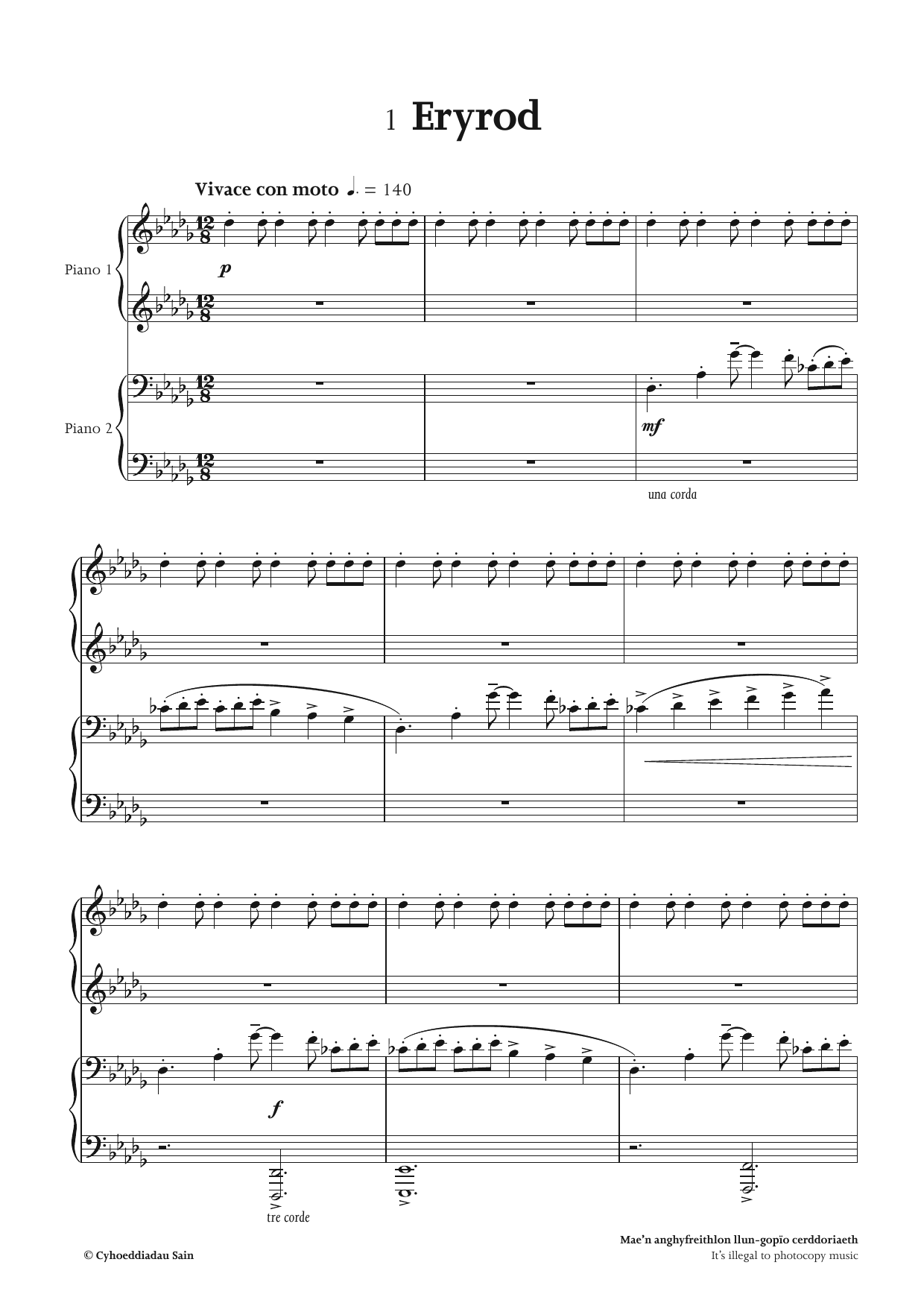
Eryri brings a distinctly Welsh sensibility to piano writing without relying on folk tune quotation. Roberts crafts something that feels both rooted in place and contemporary, giving pianists genuine interpretive challenges across 17 pages of developed material.
What to expect
Eryri evokes landscape and contemplation without becoming programmatic in the obvious sense. The music feels spacious and sometimes austere, with moments that open outward before pulling back inward.
Who it's for
Pianists preparing recital material who want something beyond the standard repertoire, or students ready to grapple with contemporary classical writing that demands both technical facility and interpretive maturity. This works well for advanced high school and college pianists.
How to get the most out of it
Listen closely to how the harmonic language shifts; Roberts often withholds resolution in unexpected ways, so precision in voicing matters more than rushing through passages.
Pay attention to the title's reference to Snowdonia. The piece benefits from a performer who understands the geography and mood it evokes, even if only through research.
Balance texture against line. When multiple voices operate simultaneously, resist the urge to blend them into wash; each strand carries its own weight.
How to use it
Position this as a contemporary showpiece on a recital where you want to signal serious artistic engagement. It pairs naturally with 20th century European works or with other Welsh composers' output if you are building a regional programming theme.
Skills your students will build
Voicing independence across multiple registers
Sustaining architectural coherence across extended formal structures
Interpretive decision-making in contemporary harmonic language
Pedal control and resonance shaping
You May Also Like
Scan to Complete Your Purchase
Use your phone's camera to scan the code below
You'll log in on your phone and the order will be added to your account