Equus Sheet Music Preview

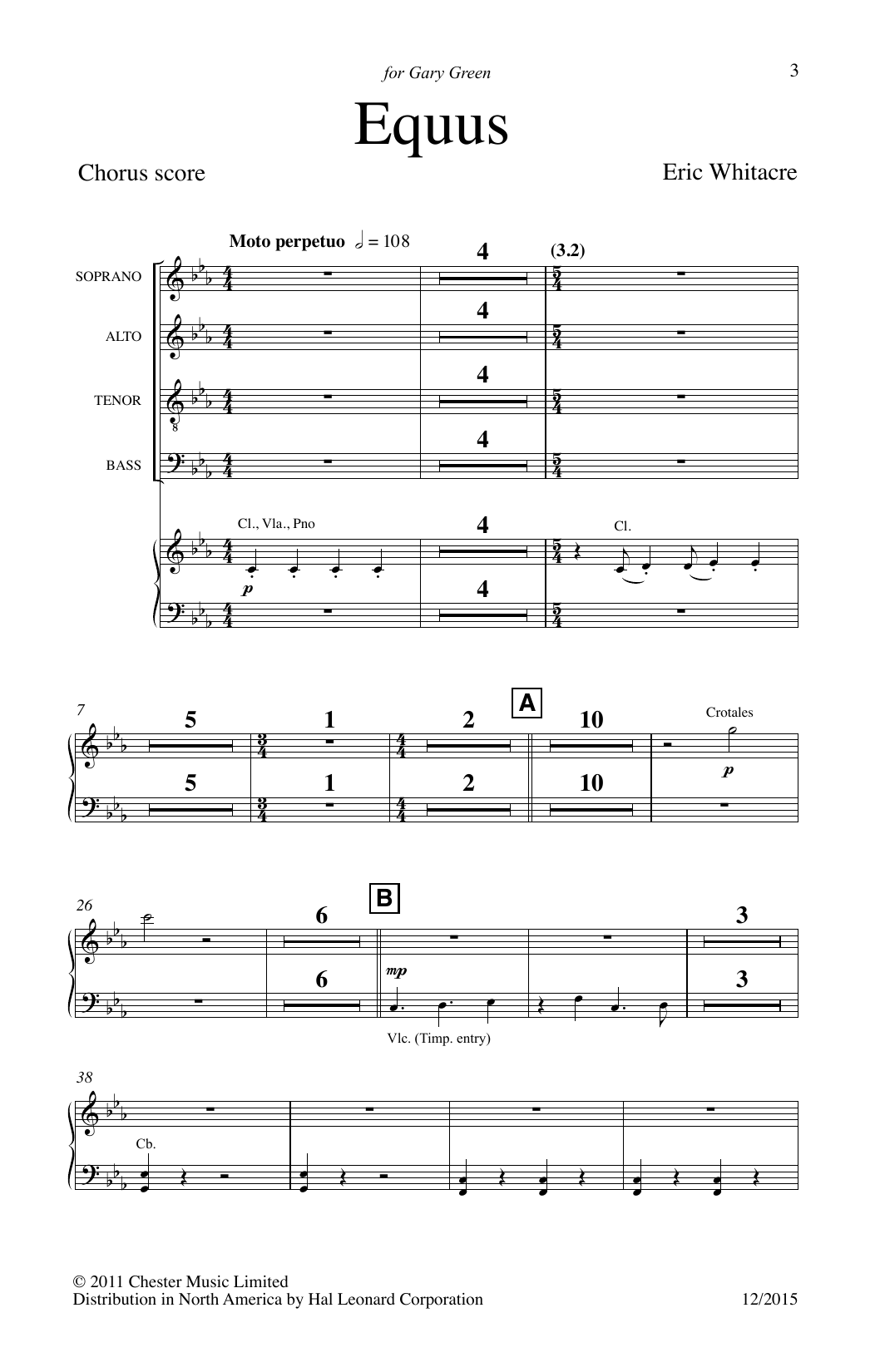
Equus: SATB Choral Octavo

By Eric Whitacre

Item: 35-DS00400711

Digital Download
$3.65

One moment…

Description

Equus: SATB Choral Octavo isn't in MakeMusic Cloud just yet...but it could be. Let us know you'd like to see it, and you'll help shape what comes next. In the meantime, start a free trial and dive into thousands of interactive titles your students can play along with today.

Sample Audio
No sample audio found.
Sample Video
Additional Details
Publisher: Hal Leonard
Page Count: 51
SKU: 35-DS00400711

More about this title

About the Composer: Eric Whitacre

Eric Whitacre stands among the most performed living choral composers, known for his ability to blend contemporary harmonic language with deeply human emotional expression. His works have defined the sound of modern concert choral music, earning him recognition as a composer who understands both the capabilities and vulnerabilities of the singing voice across all levels of ability.

Why we love this

Whitacre's gift for writing vocally sustainable yet harmonically sophisticated music shines throughout Equus. The piece demands genuine musicianship from singers while remaining accessible to intermediate choirs, making it equally rewarding for a strong high school ensemble or a college auditioned group. This is the kind of work that singers remember performing years later.

What to expect

Equus unfolds with contemplative beauty and emotional directness, creating space for the listener to sit with the music's harmonic colors. Whitacre's orchestration of voices here feels both intimate and expansive, drawing the ensemble and audience into shared stillness.

Who it's for

This octavo suits intermediate to advanced SATB choirs seeking contemporary concert repertoire that challenges musicianship without requiring extended vocal techniques. It works equally well for competitive festival programs, concert performances, and groups interested in exploring 21st century choral literature.

How to get the most out of it

  • Balance the harmonic density by assuring each voice line has independence. Whitacre's textures can blur if singers prioritize blend over clarity of individual lines.
  • Attend carefully to the text and its relationship to the music. Whitacre's word setting shapes phrasing naturally; let the language guide your tempo flexibility rather than imposing external interpretive choices.
  • Schedule extra rehearsal time for voice part confidence before integrating all four parts. The harmonic language rewards singers who know their own line thoroughly.

How to use it

Equus serves beautifully as a centerpiece in a concert exploring contemporary sacred or secular themes, or as a contrasting element alongside larger multi-movement works. Its 51 pages suggest a substantial piece that anchors a concert half rather than functioning as a shorter opener or closer.

Skills your students will build

  • Reading and sustaining complex harmonic progressions
  • Balancing individual line integrity within homophonic textures
  • Responding to text-driven phrasing and subtle dynamic shapes
  • Listening across four parts to identify harmonic function and voice leading

You May Also Like