

Episode, K. 216: String Orchestra Conductor Score & Parts
By Wolfgang Amadeus Mozart / arr. Sandra Dackow
Grade: 1
Item: 00-PK-0001128

$42.00
Pickup currently not available
Buy Extra Parts (Digital PDF Download)
| Product | Price | Quantity |
|---|---|---|
| Episode, K. 216: Score | $8.00 | |
| Episode, K. 216: 1st Violin | $5.99 | |
| Episode, K. 216: 2nd Violin | $5.99 | |
| Episode, K. 216: Viola | $5.99 | |
| Episode, K. 216: Cello | $5.99 | |
| Episode, K. 216: String Bass | $5.99 | |
| Episode, K. 216: Piano Accompaniment | $5.99 |
Parts Added to Cart!
Description
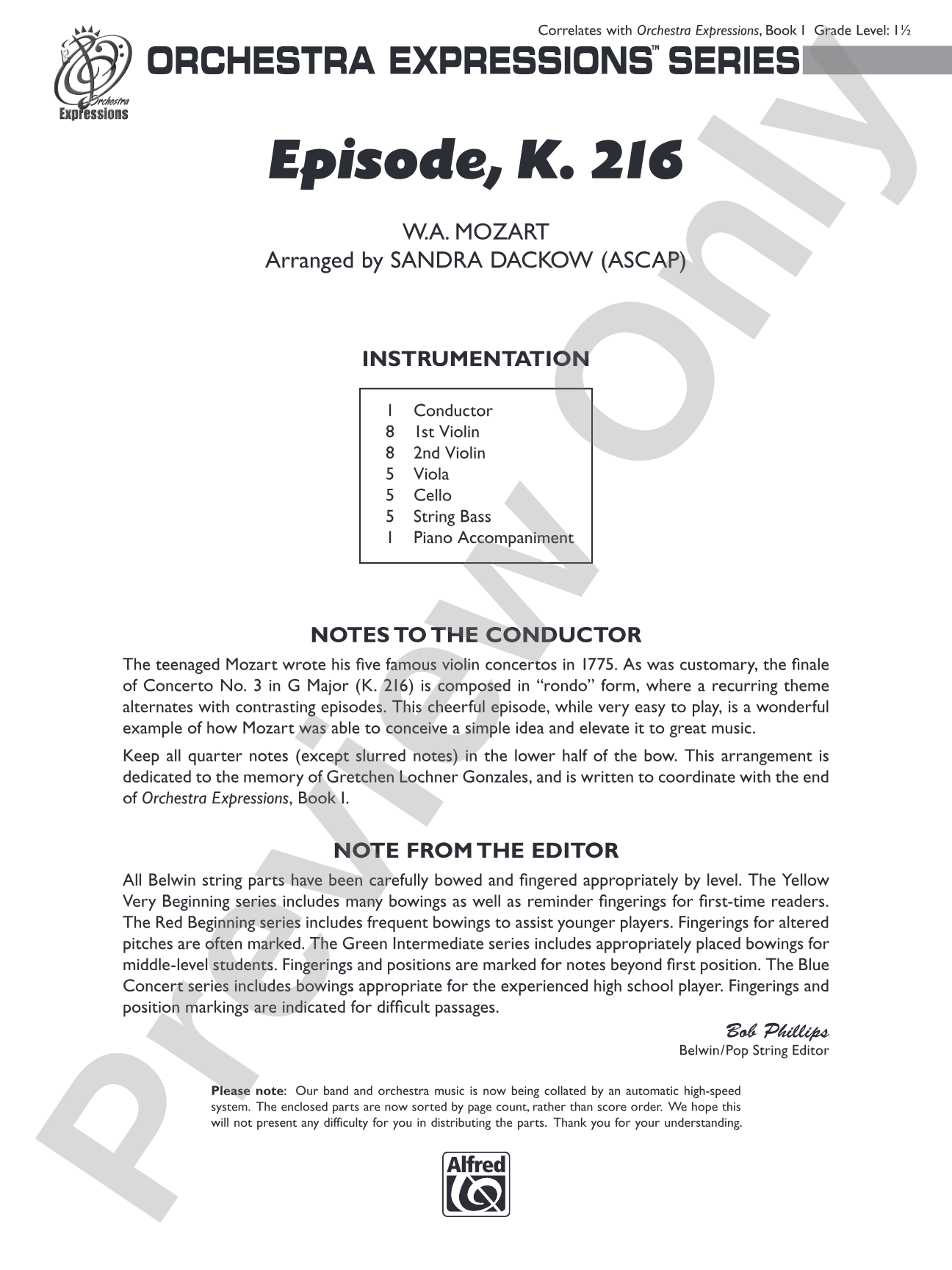
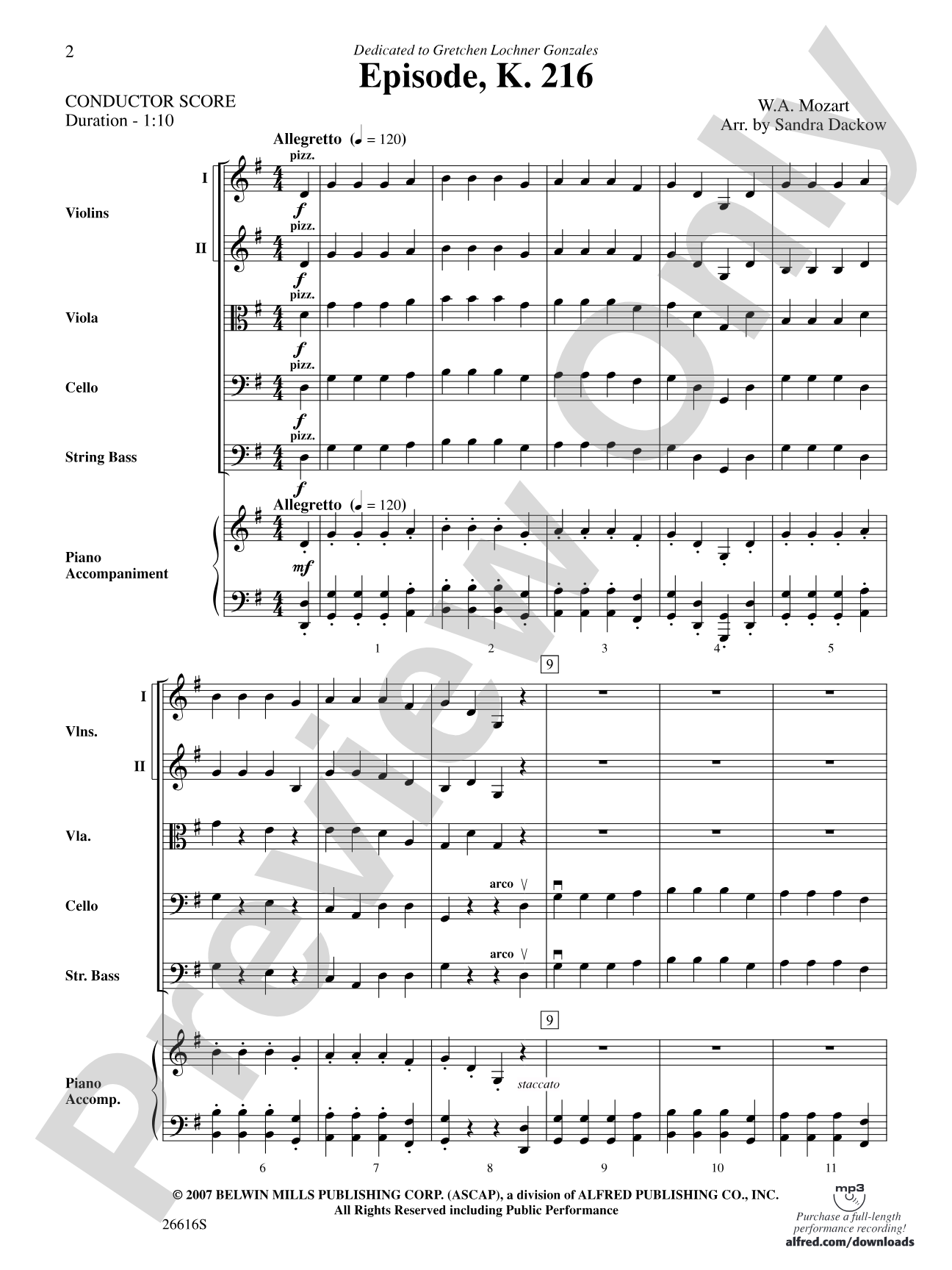
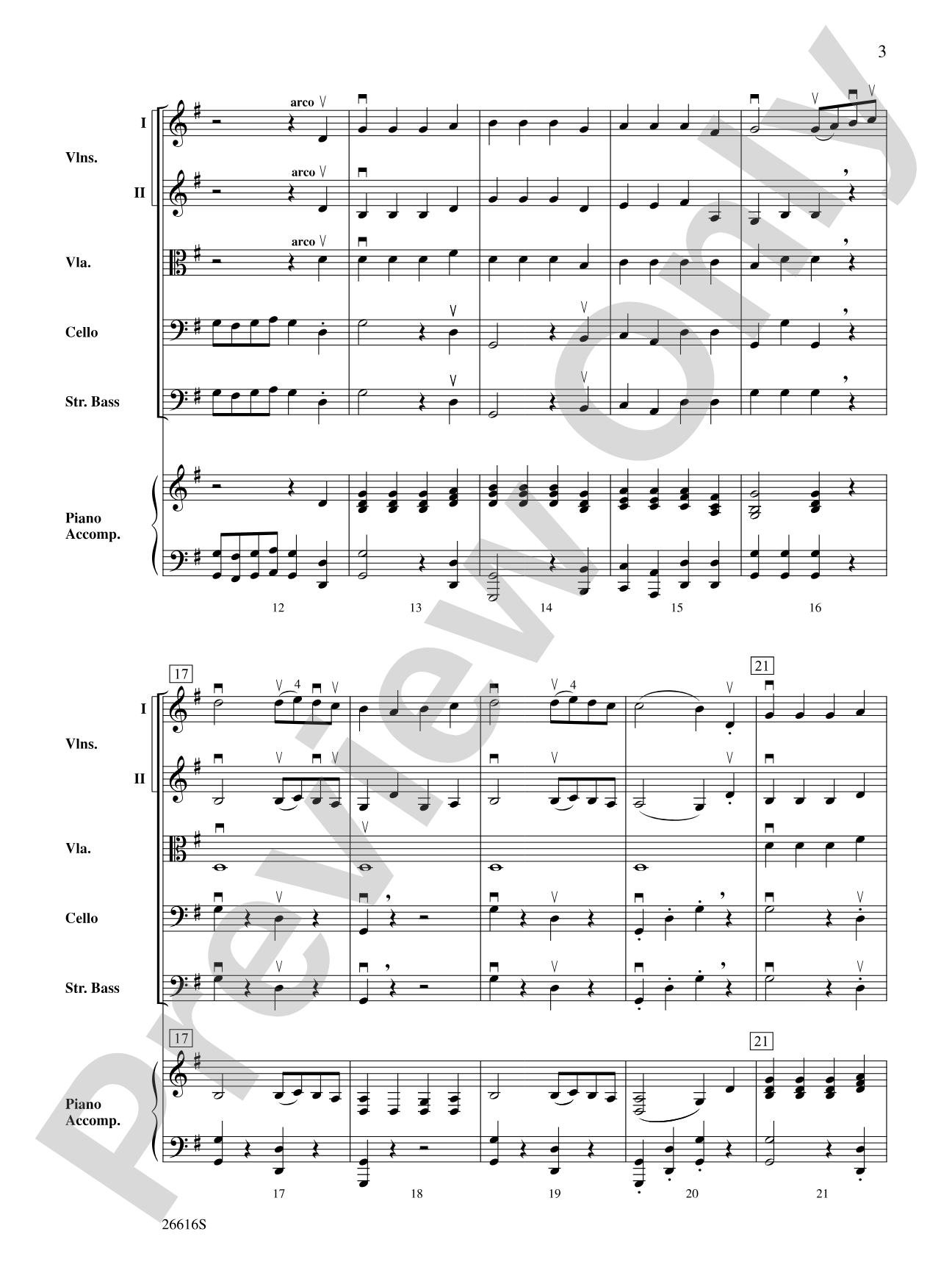
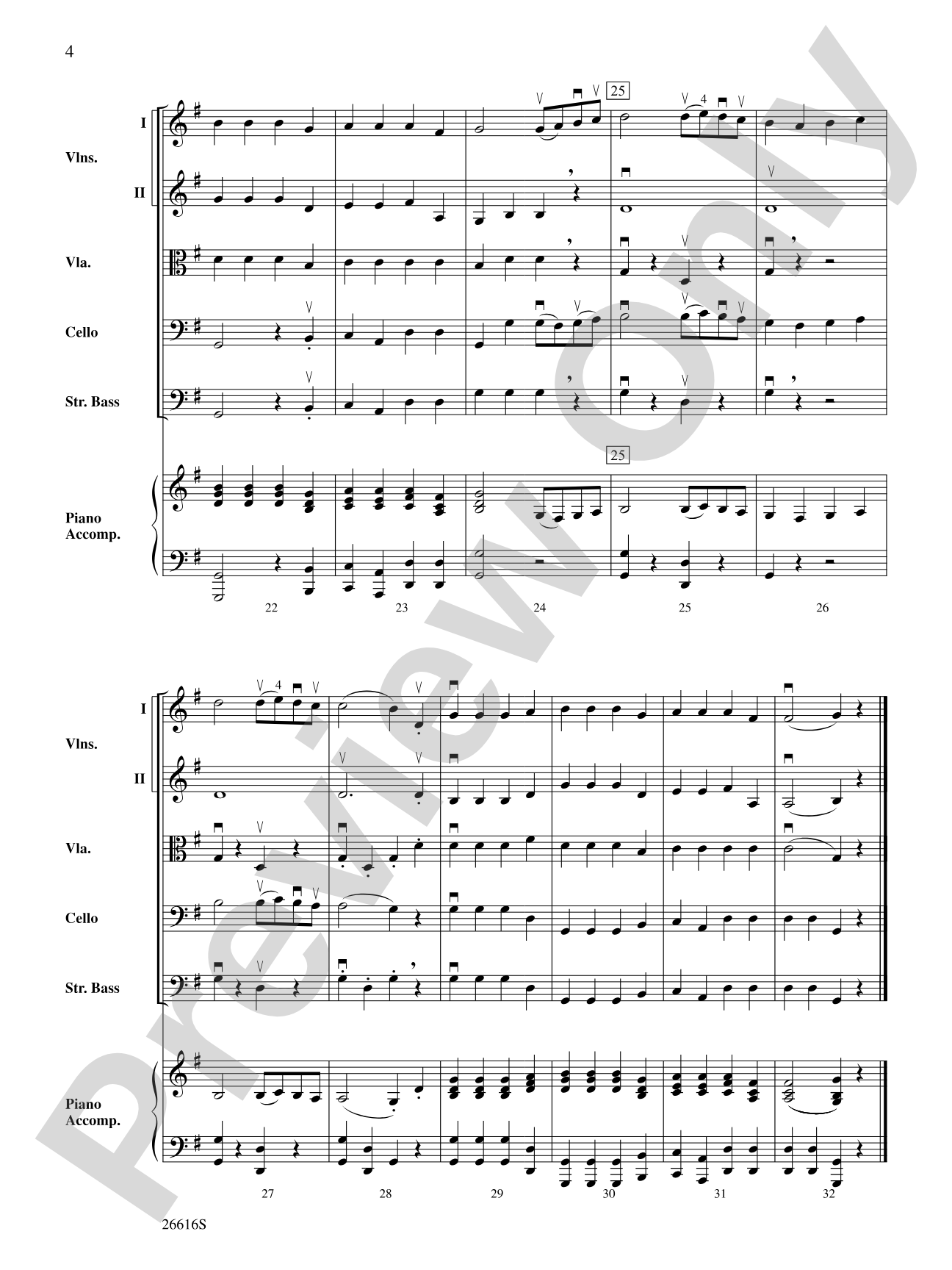
A fabulous arrangement of this simple but great Mozart piece, and a cheerful introduction to Rondo form for the beginning orchestra. Correlates with the last unit of Orchestra Expressions, Book One. This title is available in MakeMusic Cloud.


Don't just read it, hear it, play along with it, and watch your students grow with it. In MakeMusic Cloud, Episode, K. 216: String Orchestra Conductor Score & Parts comes alive with professional accompaniment, adjustable tempo, and built-in practice tools that turn solo practice into real progress.
Open in the Player
Jump straight in and assign it today.
Start Your Free Trial
Open this title and explore the full library in minutes.
Sample Audio
1
Audio File
--:--
0:00
0:00
Sample Video
No sample videos found.
Additional Details
Series:
Orchestra Expressions
Publisher:
Alfred Music
Page Count:
32
SKU:
00-PK-0001128
More about this title
About the Composer: Wolfgang Amadeus Mozart
Wolfgang Amadeus Mozart (1756-1791) composed across every major genre of his time and left a catalog of over 600 works despite his brief life. His music balances formal clarity with emotional depth, making it enduringly valuable for music education. Many of Mozart's pieces reward repeated listening and study, revealing new layers of craftsmanship at every level of musical development.
Why we love this
This arrangement introduces students to authentic Classical form through music that sparkles rather than instructs. Sandra Dackow's scoring lets each part sing without overwhelming young players, so everyone hears their contribution to the whole. It's the rare pedagogical piece that feels like a real piece, not a stepping stone.
What to expect
Bright and conversational, like a chamber conversation among friends. The melodies unfold with natural grace, and the return of familiar themes carries a quiet sense of recognition and order. It's accessible without being simplistic.
Who it's for
Beginning string orchestra students encountering Classical form and rondo structure for the first time. This arrangement works equally well for Grade 1 ensembles building fundamental skills and upper-level students reviewing foundational concepts with fresh ears.
How to get the most out of it
- Shape the rondo sections with clear articulation in the returning themes. Young players often rush familiar material; precision restatement keeps the form audible.
- Balance the melody across your first violins while letting the lower strings anchor the harmonic foundation. This gives the piece transparency without requiring solo-level projection.
- Observe Mozart's original phrasing and breathing points. Resist the urge to subdivide or over-shape; the elegance lies in letting the melodic line speak directly.
How to use it
Use this as a concert closer on a program that includes more demanding works; its cheerful clarity provides satisfying contrast and leaves the audience with a sense of grace. It also serves as an excellent benchmark piece mid-year to demonstrate how form creates coherence when students have internalized the rondo pattern.
Skills your students will build
- Recognizing rondo form (A-B-A-C-A structure) through listening and performance
- Playing with consistent ensemble intonation across repeated melodic sections
- Balancing melody and accompaniment within a Classical harmonic framework
- Sustaining even tone quality across the range of the string section