Entrance of the Shogun: 2nd Percussion Sheet Music Preview

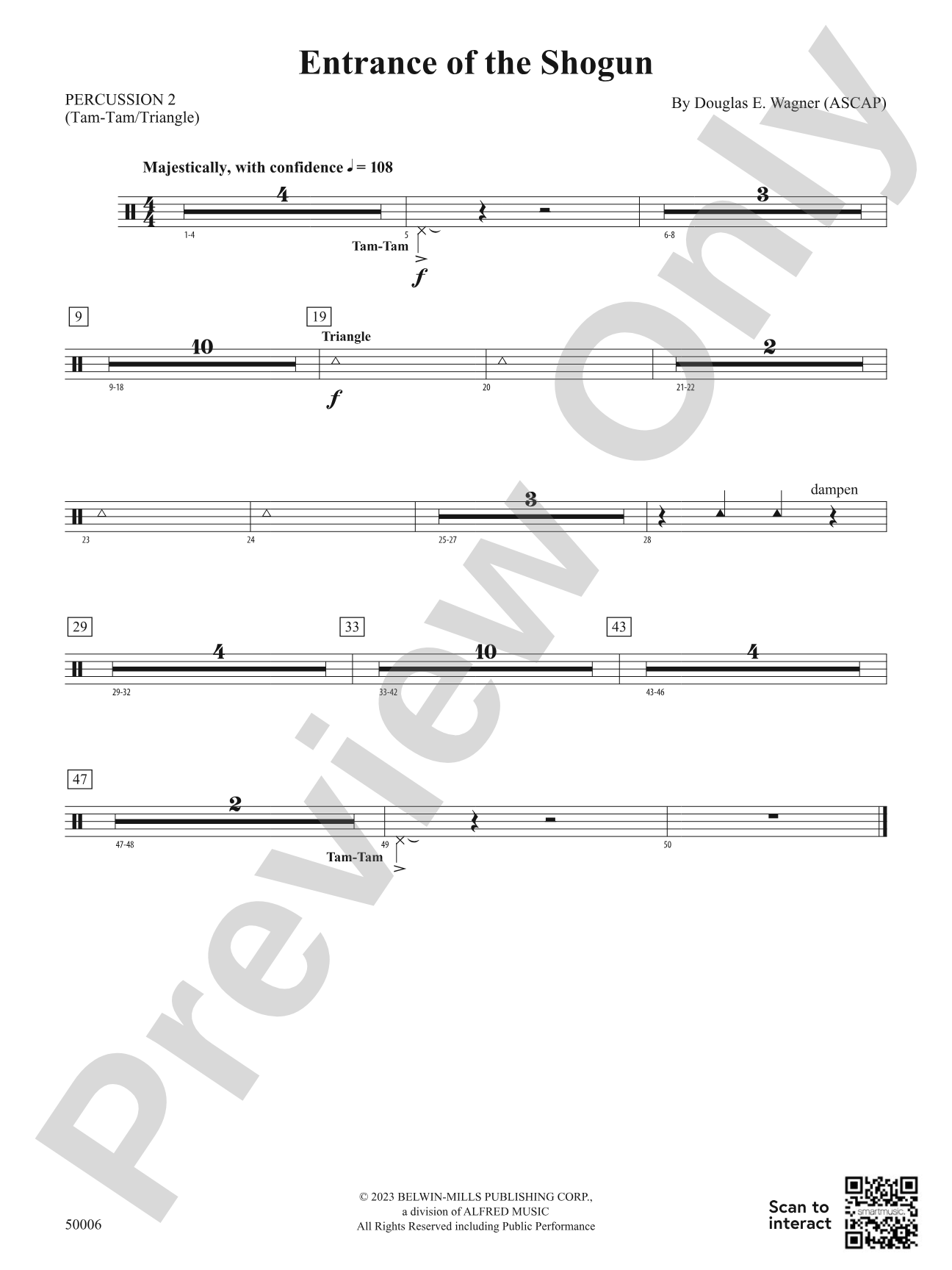
Entrance of the Shogun: 2nd Percussion

By Douglas E. Wagner

Grade: 0.5

Item: 00-PC-0018989_PC2

Digital Download
$3.00
Description
Entrance of the Shogun, by veteran composer Douglas E. Wagner, is a stunning work that uses only the first few notes of the B-flat concert scale. With easy rhythms and a dramatic sound, your students will love this piece while exploring the history of the Shoguns. (1:50)

Don't just read it, hear it, play along with it, and watch your students grow with it. In MakeMusic Cloud, Entrance of the Shogun: 2nd Percussion comes alive with professional accompaniment, adjustable tempo, and built-in practice tools that turn solo practice into real progress.

Sample Audio
0:00
0:00
Sample Video
Additional Details
Series: Belwin Very Beginning Band
Publisher: Alfred Music
SKU: 00-PC-0018989_PC2

More about this title

About the Composer: Douglas E. Wagner

Douglas E. Wagner

Douglas E. Wagner brings three decades of high school music direction experience to his work as a prolific composer. A graduate of Butler University with degrees in music at both undergraduate and graduate levels, Wagner has established himself as one of the most widely performed composers in American music education, with over 3,500 published titles spanning concert band, choir, orchestra, handbell ensemble, organ, piano, and voice.

Since 1973, more than seventeen million copies of Wagner's compositions have been purchased by educators and performers worldwide. His music regularly appears in concert halls, on radio and television broadcasts across the United States, and in performances internationally. He now resides in Indianapolis, Indiana, where he continues his full-time work in composition.

Why we love this

Wagner's ability to deliver genuine musicality within the tightest possible technical constraints sets this piece apart. Beginning bands rarely encounter work that sounds this polished and confident while asking so little technically; the dramatic orchestration and cultural context turn a very accessible scale study into an experience that builds genuine ensemble pride.

What to expect

Stately and processional, with an exotic edge created by the unfamiliar tonality and orchestration. The piece carries genuine ceremonial weight despite its simplicity, evoking the formality and pageantry of Japanese court tradition while remaining grounded in straightforward, confident ensemble playing.

Who it's for

Conductors leading beginning concert bands who need repertoire that sounds mature while respecting the technical reality of their ensemble. This works equally well for students reading from the B-flat concert scale for the first time and for more experienced players working on ensemble blend and musicianship.

How to get the most out of it

  • Shape the opening with clear dynamic contrast. The drama comes from how you sculpt the melodic line dynamically, not from technical fireworks, so lean into the forte sections and pull back intentionally during softer passages.
  • Balance the parts so the melody reads clearly without drowning out the supporting voices. With limited pitch variety, part independence becomes your primary textural tool.
  • Use the historical context to inform pacing. Research the ceremonial nature of a Shogun's entrance and let that ceremonial quality guide your tempo choices and ensemble cohesion.

How to use it

Program this as the opening selection on a concert to establish momentum and showcase how quickly young ensembles can produce polished, confident sound. It pairs naturally with other accessible pieces that explore world music traditions, or stand alone as a statement piece that proves musical maturity and cultural awareness don't require advanced technique.

Skills your students will build

  • Reading and performing from a limited pitch set with emphasis on ensemble precision
  • Dynamic shaping and phrasing on simple melodic material
  • Part independence and balance in a homophonic texture
  • Ensemble unity and steady pulse through straightforward rhythmic material
  • Understanding of non-Western musical traditions and cultural context

You May Also Like